Product6 publishers3 min readPublished
Norway's planned AI glasses ban makes bystander consent a question of place
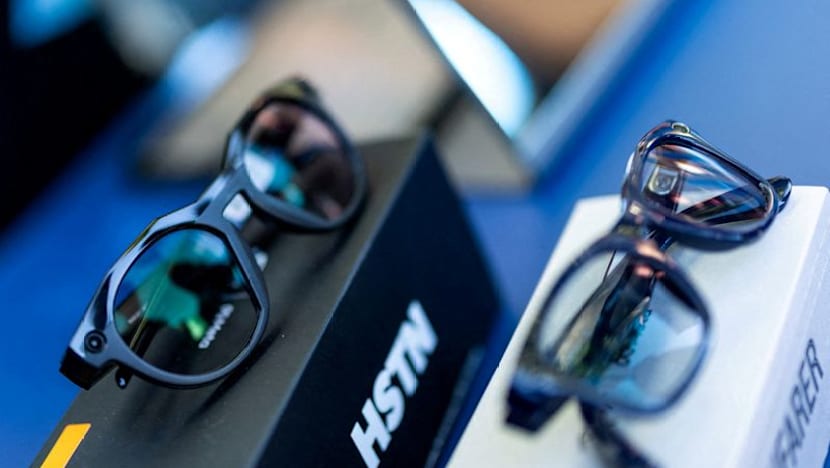
Norway will ask parliament to temporarily ban AI glasses in at least 12 kinds of place, including schools, beaches and gyms. Private use stays legal, so what a pair of glasses may record would depend on where the wearer stands and who is nearby.
The Product Desk · Product desk
Drafted by a language model from the sources cited here and checked against its claim ledger before publication. How we use AISend a correction
What happened
- Ars Technica describes Norway as the first major country to propose a temporary ban on AI glasses in selected public places.
- The government has not chosen which devices count: glasses with a camera and microphone, glasses with a camera and AI features, or other body-worn tech that can do the same.
- Torgeir Micaelsen became digitalisation minister about four weeks ago, and his predecessor, Karianne Tung, had not backed a ban, TV 2 reported.
Compiled by The Product DeskSomething wrong?How this is made
Why it matters
- exposure The ban would apply inside gyms, pools, clinics and schools, so their front-desk staff are likely to be the ones asking customers to take the glasses off.
- constraint Until the device definition is settled, a maker cannot be sure a redesign takes a product out of scope, because one option covers any body-worn tech that can do the same.
- precedent As the first major country to try this, Norway is writing the version other governments will be compared against: a temporary ban keyed to places and bystanders, with private use left alone.
Anyone heading out to an Equinor platform already has to leave their AI glasses ashore [11]. Norway's biggest company has banned them from its offices and offshore facilities, and schools in Oslo have bans of their own, according to Ars Technica [11]. The government now wants to do the same by law, for a limited time, across a far longer list of places [1][16].
"I am worried that new, powerful technology is being introduced where people risk being photographed, filmed or audio-recorded without knowing it," Torgeir Micaelsen, the digitalisation minister, said, as quoted by The Next Web [4]. A temporary ban "will give us time to conduct a thorough assessment and hold an informed debate that can lay the foundation for permanent regulation", he said, according to Ars Technica [14].
Here's what institutions actually did before any minister spoke: they stopped the glasses at the door. Several UK venues banned Meta's Ray-Bans, and New York barred smart glasses from its courtrooms [10]. Hans Anders, a Dutch eyewear chain, acted on sales instead. Last week it stopped selling Meta's Ray-Ban glasses in the Netherlands and Belgium [9]. Norway's plan follows the venues. The government said it is not planning a total ban: private use stays allowed, as does use where others are not at risk of being filmed without consent [5].
The place list falls into two groups. One is where crowds gather: parks, beaches, museums, shopping centres and public events [2]. The other is places for children, patients and people getting changed, including schools, kindergartens, playgrounds, youth clubs, doctors' offices and swimming pools [3][15]. Gyms make The Next Web's list only as "gyms with changing rooms" [3]. The trigger there is a room. Ars links the wider worry to filming without consent, including of children and of women in settings such as changing rooms [12]. Universities and colleges may yet be added [5].
The device side is less settled. Micaelsen's concern, in The Next Web's translation, covers being audio-recorded [4]. Two of the three device definitions the government is weighing name a camera, so glasses with a microphone and no camera would match the minister's worry and neither of those two definitions [17].
I think makers selling into Norway should treat location as an input to recording, and only for features that can capture someone besides the wearer. The cost is rework, because the bill has not yet reached parliament and an expert group has still to advise on lasting rules [7]. Two tests sort the features. The first is whether a feature can capture anyone other than the wearer. If it cannot, the exemption as the government described it applies wherever the glasses are used [5]. The second test applies only to features that can capture others, and asks whether the wearer is in a listed place. A listed place is what the bill targets [1]. An unlisted one is legal for now, and it is the case the expert group's lasting rules will have to settle [7].
What to watch
- Which device definition the bill adopts: camera plus microphone, camera plus AI features, or any body-worn tech that can do the same.
- Whether universities and colleges are added to the list, and whether the minority government's bill clears parliament.
- What lasting rules the expert group proposes, and whether they keep the ban tied to places and bystanders.