Invest1 distinct publisher2 min readPublished
Strict liability is what makes California utility equity risky, and Newsom's last-session package would compress it in exchange for penalties that round to nothing.
The Investor · Invest desk

Compiled by The InvestorSomething wrong?How this is made
Strict liability is the whole of the risk case on California utility paper. State law makes a utility pay for fires its equipment ignites even when no judge finds negligence [11], so the loss is bounded by what burned rather than by what the company did. Home insurers that rebuild for policyholders can then come after the utility for reimbursement [11]. That is the open end Newsom's package would close, by shifting more property damage onto insurers [12] and by limiting what utilities owe victims and their lawyers [5].
What flows back to the public is small enough to measure precisely. The maximum shareholder fine works out to one per cent of the damage figure that triggers a CEO's bonus forfeiture [1], and about 0.05 per cent of the fund the state capitalised in 2019 [2]. The governor's office has not published the full proposal [14], so those are the terms as described by the people writing them.
The timing is not accidental. Newsom says the $21 billion fund, paid in by shareholders and ratepayers [3], will run out soon [8], and Southern California Edison is now formally on the hook for a 2025 fire that investigators this month attributed to one of its transmission towers [4]. A coalition of PG&E, Edison and San Diego Gas & Electric is pressing lawmakers to pass the plan [9]. Read as credit analysis rather than politics: the backstop that let these companies keep raising capital after the 2018 bankruptcy [1] is close to exhausted, and the sponsors want the replacement mechanism in place before the next claim clears.
The cost does not disappear at that point, it re-routes. Newsom's stated aim is stabilising electricity rates that are already among the highest in the country [5]. The Personal Insurance Federation of California says property insurance rates will rise if the plan passes [15], and its president, Rex Frazier, argues the obligation should stay with the utilities that started the fires [16]. For a household in a fire-exposed county, the utility bill and the homeowners premium arrive at the same address.
Both sides are describing the same transfer and disagreeing about who is currently disadvantaged. Newsom says the status quo leaves victims last in line [c8a]. Joy Chen of Every Fire Survivor's Network calls the plan a transfer of liability to three for-profit monopolies [17]. The California Professional Firefighters backed it in a letter on Monday [18]. For investors the resolution turns on one clause nobody has seen yet: whether the limits reach Edison's pending claims or only fires that start after enactment.
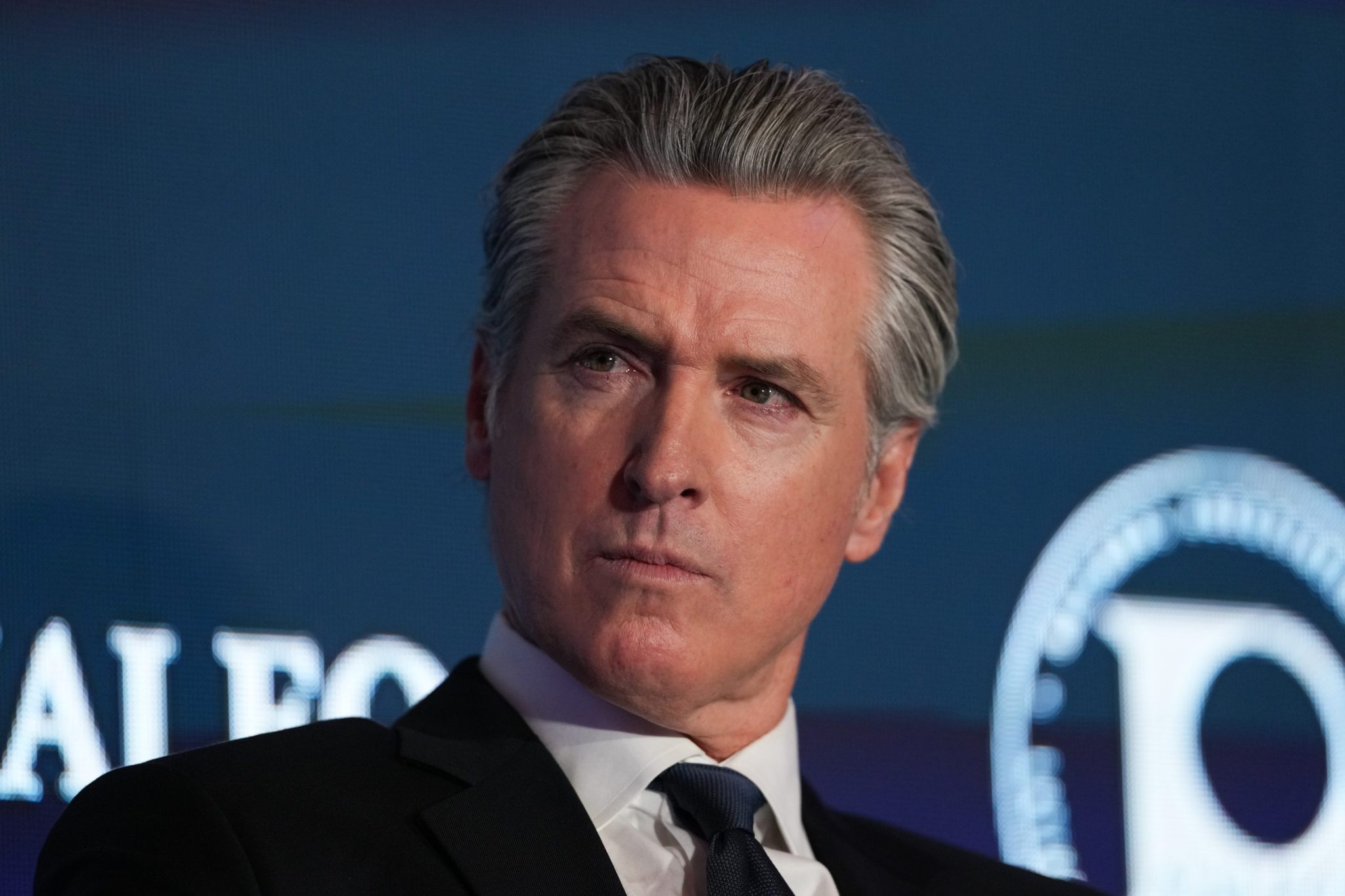
Ranked by verification strength, evidence, and original report placement.
As the final legislative session of his governorship ends, Newsom is trying to broker a deal with lawmakers aimed at further shielding utilities from financial trouble if their equipment sparks a wildfire.
Newsom says the state needs to act quickly because he expects the wildfire fund to run out soon, and his plan would require survivors to get paid by utilities sooner.
Newsom told reporters: "Status quo is not going to work. It's not going to work for victims, who consistently are last in line. And that's at the core of this reform."
The last-minute legislative battle could help shape Newsom's legacy as he considers a run for president in 2028.
Under California law, utilities have to pay damages for fires ignited by their equipment even if a judge does not find them negligent, and home insurers that pay policyholders' rebuilding expenses can try to get reimbursed by utilities.
The most destructive wildfire in California history killed 85 people and destroyed more than 18,000 buildings in Northern California, started two days after Newsom won the governorship in 2018, and was determined by investigators to have been caused by Pacific Gas & Electric equipment; facing tens of billions in liability, PG&E filed for bankruptcy weeks after Newsom's inauguration.
Follow any of these and your For You feed starts watching them — no settings page required.
Evidence-backed comparisons of source perspectives and observed adoption signals. Read the methodology
Which Builder, Operator, and Investor concerns the observed source mix emphasized—not a truth score.
Evidence, demonstrated adoption, hype gap, incentives, and confidence are assessed independently, each on its own current evidence. How these are measured.
Named stakeholders and hard fund figures, but the plan text is unpublished and only one publisher is in the cluster
The report supplies firm, checkable anchors: the $21 billion 2019 fund, the $18 billion supplement, the $1 billion bonus-forfeiture threshold, the $10 million shareholder fine cap, the six-of-ten utility-caused-fires statistic, and on-record quotes from Newsom, the insurance federation, a survivor group, the firefighters union and a UC Berkeley economist. Against that, the governor's office has not released full details, no bill text or cap magnitude exists in evidence, and there is a single source with no corroborating publisher.
Nothing enacted: active lobbying and a deadline, no deal
Adoption of the policy itself is near zero — the Legislature has until Aug. 31, Democratic leaders have not committed to contents, and Newsom may need a special session. What is observable is mobilization rather than uptake: the three investor-owned utilities are lobbying for passage, the firefighters union has filed written support, and insurers and survivor groups are opposing. The prior $21 billion fund and its $18 billion supplement show the same policy channel has been used before, which is why the score is not floor-level.
Both the reform pitch and the 'massive transfer' framing outrun an unpublished plan
Characterizations on all sides are stronger than the disclosed record supports. Newsom's 'core of this reform' framing of faster victim payouts has no described mechanism; critics' 'massive transfer of liability' has no quantified cap to size it; and the accountability side of the package as disclosed is small enough to be rhetorical — a $10 million fine cap is one percent of the $1 billion bonus trigger. The gap is moderate rather than large because the underlying facts that matter (strict liability today, Edison's fresh attribution, fund depletion risk) are solidly reported.
Every named party has a direct financial or political stake and is on the record
The source makes the incentive map explicit and unusually legible: three investor-owned utilities lobbying to cap their own tail liability, an insurance trade federation resisting a cost shift onto its members, survivor groups defending payout rights, a labor union endorsing, ratepayers funding the existing fund, and a term-limited governor whose legacy and a possible 2028 presidential run ride on the outcome. Nothing about the alignment has to be inferred.
Direction of the policy is clear; magnitude and outcome are not
Confidence is capped by single-source reporting on an unfinished negotiation with unpublished terms. What can be relied on: current law imposes liability without negligence, Newsom is pushing to compress it before Aug. 31, insurers would pick up more property damage, and the disclosed penalties are small. What cannot: the size of any cap, whether a deal passes at all, and what survivors would actually receive or forfeit.
security
California's AI security push is really a hiring order: one AI cyber officer per agency1 distinct publisher
invest
Brin's $102m Doesn't Fight Prop 40. It Funds Two Measures That Would Void It1 distinct publisher
invest
California's billionaires are spending about 1% of their tax exposure to kill Proposition 401 distinct publisher
invest
A 5% one-time tax on paper wealth turns a valuation into a wire transfer2 distinct publishers
Distinct publishers with included, body-backed reporting in this cluster.
1 article · August 25, 2026