Science1 publisher2 min readPublished
Only eight New Zealand communities have joined the WHO's age-friendly cities network
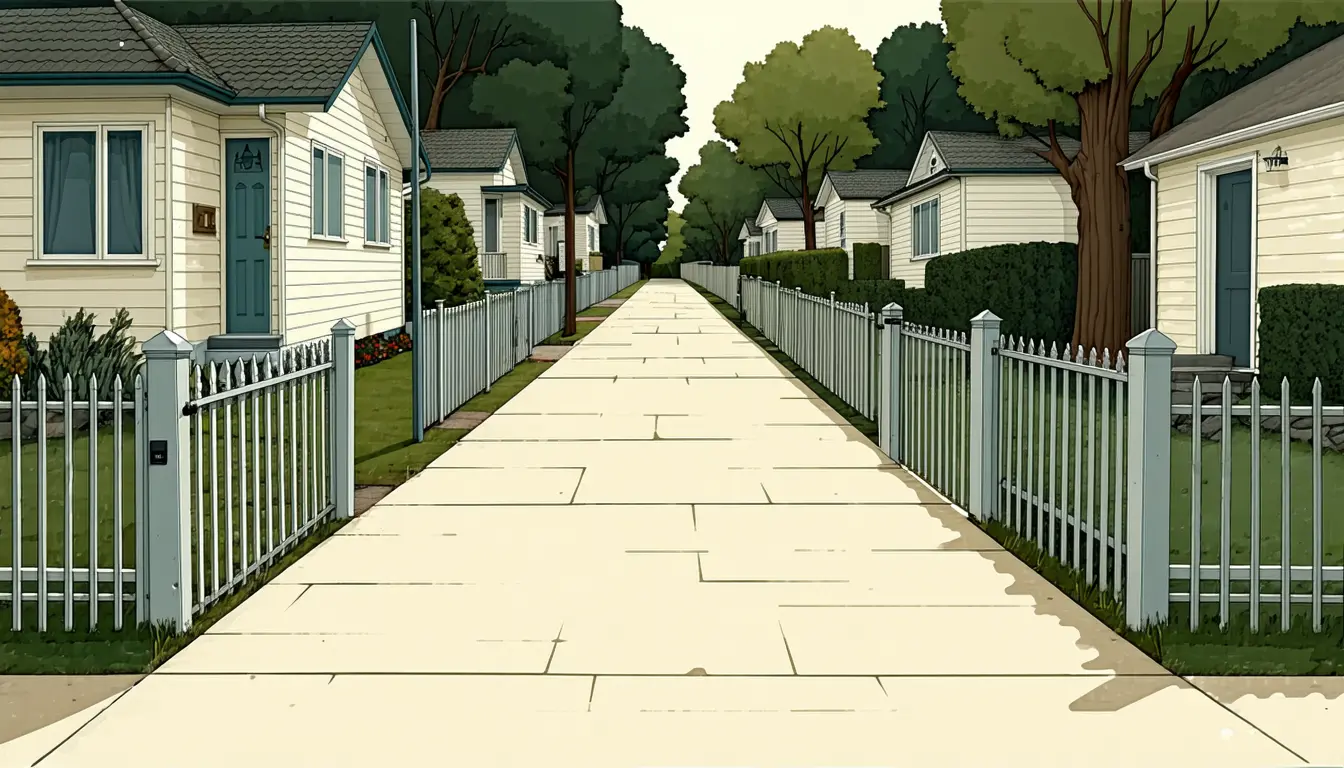
More than 95 percent of New Zealanders over 65 live in private homes, so a phys.org analysis puts streets and housing at the centre of preparing for a super-aged decade. Its own account shows New Zealand's participation is thin and lightly evaluated.
The Scientist · Science desk
What happened
- Within a decade more than one in five New Zealanders, around 1.2 million people, will be 65 or older, the threshold at which a population is officially called super-aged.
- More than 95 percent of New Zealanders aged 65 and over currently live in private homes, a share the analysis sets against a debate focused on superannuation, hospitals and residential aged care.
- Eight New Zealand communities, among them Auckland, Hamilton and Napier, have made the formal commitment that joining the WHO network requires.
- Christchurch, one of the oldest of New Zealand's major cities, is outside the framework and has had little coordinated engagement despite its long-running earthquake rebuild.
Compiled by The ScientistSomething wrong?How this is made
Why it matters
- constraint The framework hands its practical guidance to local government, so the money that decides whether an older resident can walk to a shop comes out of council footpath and transport budgets, not a health vote.
- decision A council now chooses between sitting in the national affiliate network and making the formal international commitment, and the second choice puts its urban development pipeline under the framework.
- contradiction The analysis recommends a framework whose New Zealand record it reports as weakest exactly where evaluation lives, so a council that signs on inherits a program with no agreed way to show it worked.
Five percent of 1.2 million is 60,000. If the current split between private homes and everything else holds as the cohort grows, that is roughly how many over-65s would be in residential care and retirement villages, with about 1.14 million in ordinary housing. The 95 percent is a present-day measurement and the 1.2 million is a projection, so the product is a scenario that holds only if the share stays put for a decade.
The analysis leans on a second figure: nearly 60 percent of ill health among people aged 70 and over is linked to factors that can potentially be changed. The wording there is careful. "Linked to" is an association and "potentially" is a judgement about modifiability, and neither apportions the 60 percent between footpath quality, warm housing, transport, income, smoking or clinical care.
Uptake of the WHO framework is reported as membership. Since 2010, 1,829 cities and communities have joined, covering more than 400 million residents, an average of about 219,000 people per member. Joining takes a formal commitment to the framework. The article says progress among New Zealand's participants has been uneven, "particularly when it comes to measuring whether age-friendly initiatives are actually working."
The national numbers sit underneath that. The Office for Seniors runs New Zealand's own age-friendly network as a WHO affiliate member, with 36 communities at various stages of developing policies and programs. Eight have gone on to the formal international commitment. If those eight are among the 36, then 28 have not.
Where people live tells you where an intervention would have to land. It does not rank what limits them. Putting footpaths above hospital beds takes unmet-need data: falls, trips not taken, shops and clinics out of reach by neighbourhood, or outcomes tracked before and after in the eight communities that signed up. The article's own description of uneven measurement says that work has not been done here.
One part of the case survives that gap. Accessible sidewalks, reliable public transport and public spaces that are easy to navigate work better for people of many ages and abilities, so a council can justify them without the demographic projection at all. The authors recommend that councils treat age-friendly design as a principle cutting across urban development. On these figures, I would take the design case as sound and the claim that the built environment is New Zealand's binding constraint on aging well as untested.
What to watch
- Whether Christchurch or Dunedin joins the WHO network, and whether the remaining rebuild capital work adopts age-friendly design standards.
- Whether any of the eight member communities publishes before-and-after measures of walkability or service access instead of program counts.
- Whether the Office for Seniors sets a common evaluation standard across the 36 affiliate communities.