Security1 publisher3 min readPublished
New Zealand adds 33 names, including two Cyber Army of Russia Reborn operators
The 36th round since March 2022 pulls named CARR hackers, an alleged bulletproof hosting operator and a GRU unit commander into New Zealand law, and into NZ screening files.
The Watch · Security desk
Drafted by a language model from the sources cited here and checked against its claim ledger before publication. How we use AISend a correction
What happened
- New Zealand announced a new round of sanctions targeting 33 individuals and entities accused of supporting Moscow's war against Ukraine.
- The package places particular focus on cyber actors, individuals linked to the forced relocation and re-education of Ukrainian children, and entities supporting Russia's military-industrial complex.
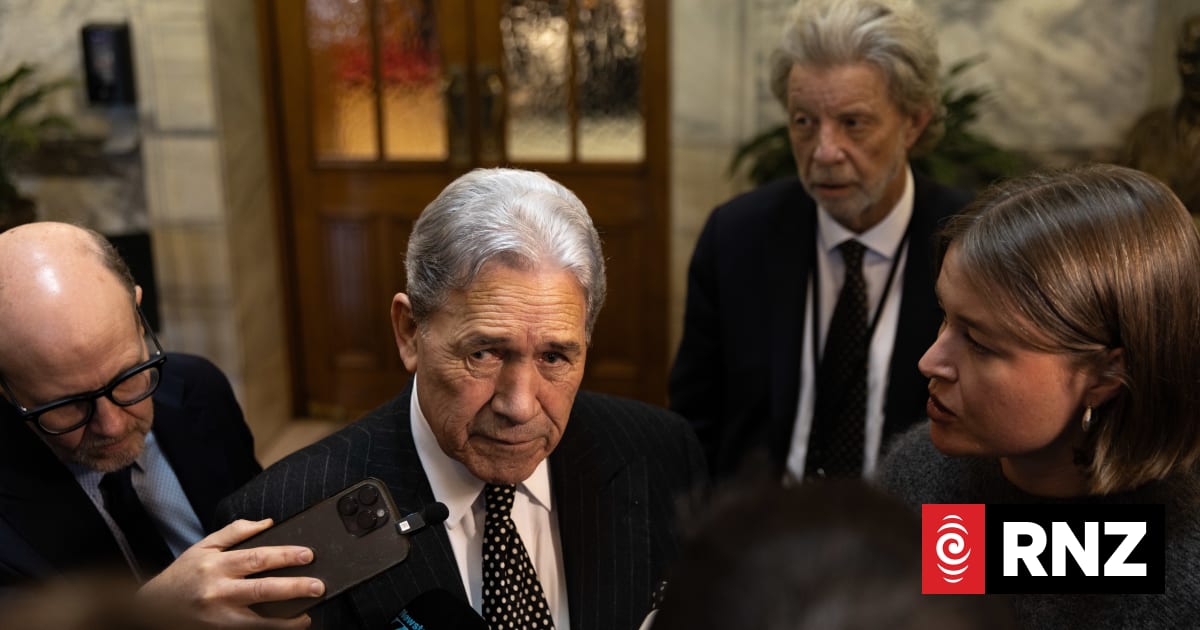
- Foreign Minister Winston Peters said the package also targets individuals involved in creating and spreading anti-Ukraine propaganda, as well as actors from the DPRK and Iran providing support to Moscow.
- Peters said: "Children should never be used as instruments of war," expressing concern over efforts to abduct and re-educate Ukrainian children through state-directed programmes.
- Yuliya Pankratova and Denis Degtyarenko are members of the pro-Russian hacktivist group Cyber Army of Russia Reborn (CARR); the US Treasury sanctioned both in 2024 over alleged cyber operations targeting US critical infrastructure.
Compiled by The WatchSomething wrong?How this is made
Why it matters
New Zealand has designated 33 Russian, DPRK and Iranian individuals and entities over support for Russia's war against Ukraine, with explicit emphasis on cyber actors, on people linked to the forced relocation and re-education of Ukrainian children, and on entities supporting the Russian military-industrial complex [1][2][3]. Two of the names are Cyber Army of Russia Reborn operators the US Treasury sanctioned in 2024, so for anyone with New Zealand exposure the question is no longer whether these people are listed somewhere but whether your screening feed reads the New Zealand list at all [5].
According to US officials, Yuliya Pankratova, who uses the alias "YUliYA", led CARR, and Denis Degtyarenko, known as "Dena", was one of its primary hackers [6]. American officials alleged Degtyarenko compromised an industrial control system at a US energy company and developed training material for compromising SCADA systems [7]. Pankratova has also been associated with Z-Pentest, another pro-Russian group accused of targeting critical infrastructure [8].
New Zealand also designated Aleksandr Volosovik, known online as "Yalishanda", whom US prosecutors accuse of helping operate Media Land, a Russian bulletproof hosting provider allegedly used by criminals against hospitals, schools and banks [9]. In July the US Justice Department unsealed charges against Volosovik and two other Russian nationals, alleging activity that caused more than $62 million in losses to victims in the United States and elsewhere [10].
The package includes Andrey Averyanov, a senior Russian military intelligence officer who previously commanded GRU Unit 29155 [11]. Western governments have tied that unit to cyberattacks, sabotage and covert operations, and its cyber division has been accused of targeting governments, defence organisations and think tanks in Ukraine and NATO countries [12]. New Zealand had already sanctioned members of the unit [13].
On the information side, the Internet Development Institute and its director Alexey Goreslavsky were designated; the institute finances digital media and content promoting Russian state narratives [14]. The British government has said IRI was established by Russia's presidential administration, received hundreds of millions of dollars in state funding, and backed films and video games carrying Kremlin-aligned narratives [15]. The IT services firm LANIT, already sanctioned by the United States, Canada and Ukraine, was added over work for Russia's Defence Ministry and sanctioned defence companies including Rostec [16].
The mechanics matter more than the headcount. This is the 36th round under the Russia Sanctions Act, which took effect in March 2022, and New Zealand has now listed more than 2,000 Russian individuals, entities and vessels [17][18]. The 33 new names are roughly 1.6 percent of that total [21]. Measures generally mean asset freezes, travel bans, and a prohibition on New Zealanders making funds or other assets available to designated parties [19]. That prohibition is the operative clause: an extortion payment, a hosting invoice or a reseller settlement that lands with a designated CARR operator or with Media Land is now a New Zealand legal problem, not just a reputational one [22]. At least three of these designations duplicate existing US, Canadian or Ukrainian listings, which makes this alignment rather than fresh attribution [23].
Foreign Minister Winston Peters said cyber activity has real-world consequences and that cyber actors are increasingly used to gather intelligence and enable sanctions evasion [20]. On the child-relocation element he said children should never be used as instruments of war [4].
Watch how quickly the 33 names propagate into commercial screening data, and whether NZ-facing subsidiaries treat the list as in scope rather than deferring to a US-only feed.