Product1 distinct publisher3 min readPublished
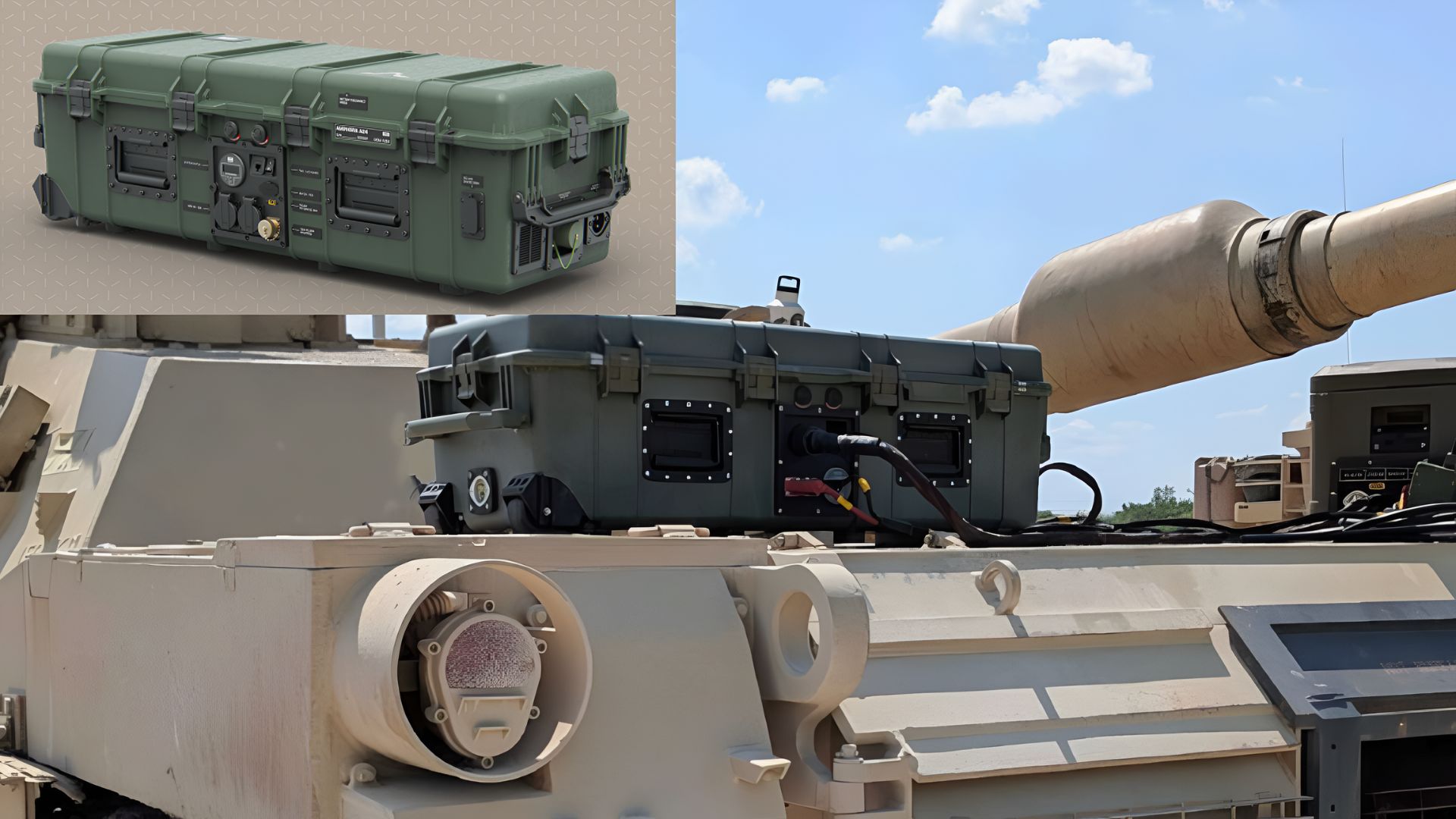
Chariot Defense's Amphora is a control layer over generators, solar and vehicles a brigade already owns. The 60 percent fuel claim is a duty-cycle claim, and the Army will be the one measuring it.
The Product Desk · Product desk

Compiled by The Product DeskSomething wrong?How this is made
The contract is small next to the money already inside the company. Chariot has raised $41 million since being founded in August 2024 [14], so the $7.6 million from DIU [1] is around 19 percent of its funding to date [19]. What that buys is not revenue at scale. It is access to hardware no lab can stand in for: whatever tactical generators, solar arrays and vehicles a particular brigade happens to own [4], on a 12-month delivery clock [3].
Read the fuel claim against the mechanism the company describes and it resolves into a statement about run time rather than burn rate. Amphora is presented as a power management computer rather than a conventional battery pack, moving energy in both directions and routing it to where it is needed [5]; the route to lower consumption is reducing how much generators are needed, with stored energy and other sources carrying the load under software control [22]. So the 60 percent depends almost entirely on the shape of demand. A unit whose generators are oversized for its average load, and whose peaks are short, has a lot of idle capacity to reclaim. A unit running close to capacity has very little. "Up to 60 percent in combat scenarios" [7] stacks two qualifiers on one figure and states no baseline, and the 36-hour silent operation number [8] names no load it is silent under.
The less advertised part of the package may outlast the fuel number. Amphora collects energy data and feeds it to command and control networks [9]. Metering changes the character of the resource: power stops being something a unit finds out about when a generator strains and becomes a quantity that gets reported and planned against. It also makes the vendor's own claim checkable by the customer, which is a different kind of scrutiny than a datasheet gets.
Adam Warmoth's framing is that power availability decides what equipment troops bring to the fight [10], and that a shortage forces a unit to choose which systems stay online [11]. Follow that logic and the control layer is the thing making the choice, or at least the thing the choice is made through. Chariot builds neither drones nor electronic warfare systems [17], which keeps it out of competition with the loads whose demand it arbitrates [12], and Warmoth came from Anduril, where he worked on scaling counter-drone programs [16].
What PRISM tests, then, is narrower than the marketing suggests and harder. The question is whether a single management architecture holds across a brigade's existing inventory [18][6], not whether the software works on a bench. Generators, solar arrays and vehicles bought over years will not present themselves identically, and the failure mode here is a compatibility list rather than a broken box. Fuel deliveries, heat and noise are the standing costs of the generator-first arrangement [13]; a routing layer only touches them to the extent it can talk to everything already on the ground.
Ranked by verification strength, evidence, and original report placement.
Chariot Defense won a $7.6 million Defense Innovation Unit contract to deploy its software-defined power systems with U.S. Army brigades.
The deployment will field Chariot's Amphora systems this fall under the Portable Resilient Integrated Storage Module (PRISM) program.
The contract carries a 12-month delivery timeline, with brigade deployments scheduled for this fall.
Adam Warmoth, Chariot Defense founder and CEO: "Power availability decides what equipment troops get to bring to the fight."
Warmoth said power constraints increasingly affect which technologies soldiers can operate, and a shortage could force units to decide which systems remain online.
Drones, electronic warfare systems and edge computing hardware now compete for limited power supplies; drones need charging infrastructure and electronic warfare systems require sustained power.
Follow any of these and your For You feed starts watching them — no settings page required.
Evidence-backed comparisons of source perspectives and observed adoption signals. Read the methodology
Which Builder, Operator, and Investor concerns the observed source mix emphasized—not a truth score.
Evidence, demonstrated adoption, hype gap, incentives, and confidence are assessed independently, each on its own current evidence. How these are measured.
One outlet, vendor-sourced technical numbers
The cluster contains a single trade publication whose verifiable facts (contract value, program name, timeline, funding history, founder background) are checkable but uncorroborated here, while the performance figures that carry the story are unattributed to any test. No DIU or Army voice, no third-party measurement, no competitor baseline appears.
Contract signed, fielding still ahead
Adoption is a single funded government award with brigade deployments scheduled but not yet executed. There is no disclosed unit count, no operator usage data, and no prior deployment history for a company founded in August 2024.
Headline promises what the program will test
The headline states the system 'delivers up to 60% lower military fuel use', converting an unmeasured, duty-cycle-dependent vendor projection into achieved performance, while the article's own closing line concedes the Army deployment is what will test efficiency. The contract itself is not overstated; the capability framing is.
Vendor-supplied numbers, venture-backed narrative
Every performance figure originates with a company that has raised $41 million and needs a DIU award to read as program traction; the founder's Anduril lineage and the a16z-led Series A are both narrative assets the coverage reproduces. No countervailing government or competitor source is present to discipline the framing.
Facts firm, performance unresolved
Confidence is moderate-low: the contractual and financial spine of the story is specific and plausible, but the claims that make it consequential are unverified and originate with the vendor, and there is no second publisher or official confirmation in the cluster.
product
CACI puts electronic warfare on a factory floor: 61,000 sq ft in Rochester for the Army's TLS Manpack1 distinct publisher
product
DIU picks an Australian battery for PRISM, and the spec that matters is -76F to 140F1 distinct publisher
product
Rillet's $100M reads as proof mid-market ERP is rip-and-replace, mostly at the cheap end1 distinct publisher
invest
Tiny corp wants Etched's numbers. Jane Street led $700M at $21B without publishing any1 distinct publisher
Distinct publishers with included, body-backed reporting in this cluster.
1 article · August 24, 2026