Science1 distinct publisher2 min readPublished
The fifth antenna of a project begun in 2009 entered service on Aug 3. It leaves 12 mid-size dishes serving more than 40 spacecraft, with part of that capacity already promised to backup duty.
The Scientist · Science desk

Compiled by The ScientistSomething wrong?How this is made
The count that decides who gets a pass is 12. With DSS-23 tracking, the network operates 12 of the 13 34-meter antennas it intends to have [1], which works out to better than three of its 40-plus supported spacecraft for every one of those dishes [2]. Measured against the fleet that existed in July, the new antenna is an increase of about nine percent [3]. Teams that have been bidding against each other for downlink get one more slot in the auction.
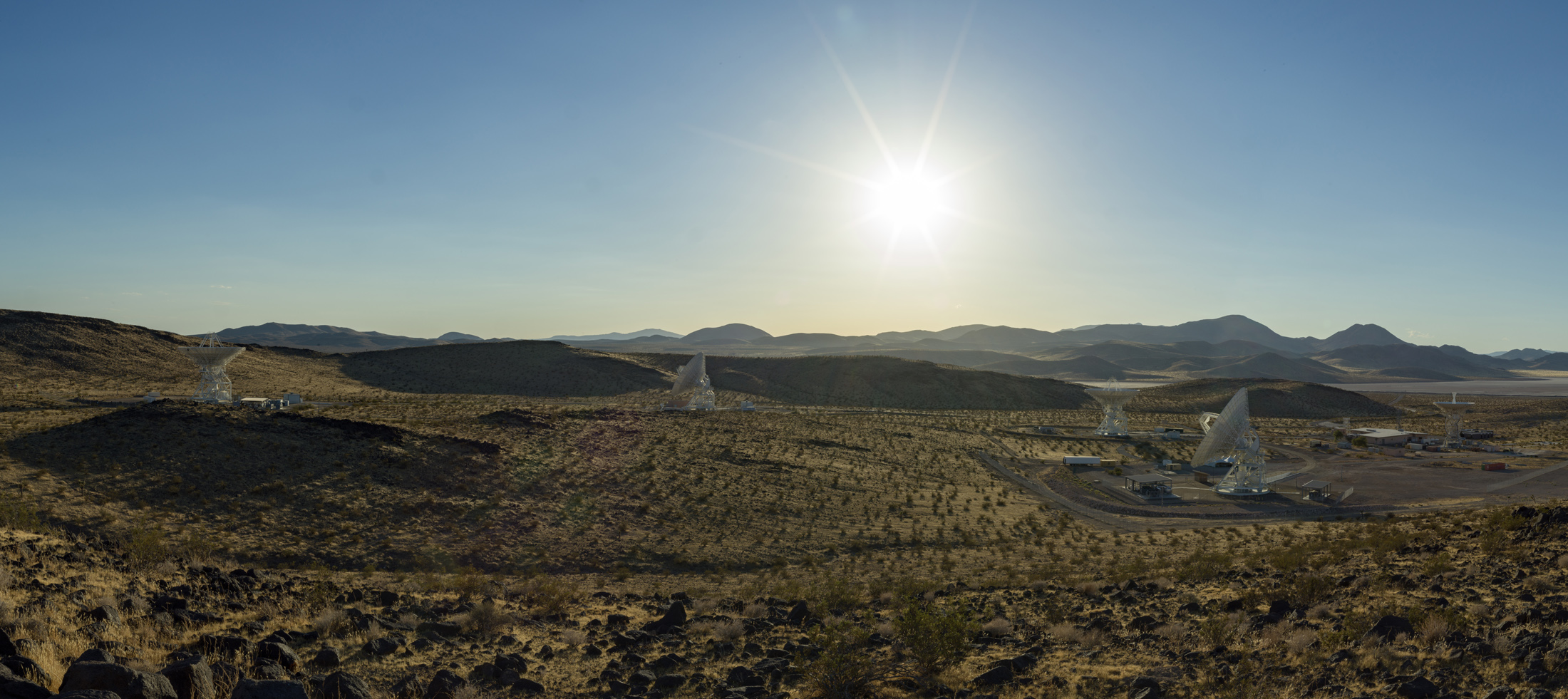
The whole increment landed at one longitude. Goldstone now fields four 34-meter dishes next to its single 70-meter [4][9], which is a third of the network's 34-meter aperture count sitting in one part of California [5]. That helps a spacecraft whose geometry favors the western United States, and does nothing for a pass that has to happen while Goldstone is pointed away.
The design choice underneath these antennas is about serviceability. A beam-waveguide dish sends the signal down into a stable, climate-controlled underground room instead of carrying heavy receivers on the moving structure, which keeps the electronics reachable and lets one antenna work across several radio bands [10]. It also makes commissioning the hard part. Germaine Aziz, who manages the Aperture Enhancement Project at JPL, said the challenge was not building the antenna but turning mechanical, electrical, software, radio frequency and infrastructure systems into a single mission-ready asset [13]. The calendar agrees with her. Construction began in February 2020 [7], the 133-ton reflector framework was bolted onto the pedestal in December 2024 [8], and the first operational track came on Aug 3: roughly five and a half years end to end [7], of which about eight months went to panel installation, calibration and the test campaign after the framework went up [d7b].
Part of what DSS-23 adds is already committed. The plan NASA describes is for each complex to array its 34-meter dishes to provide a communications equivalent of that site's single 70-meter antenna, three in the network altogether [8], each of which has run for more than 50 years and is getting more costly to maintain and repair [12]. JPL's director, Dave Gallagher, puts the network's continuous operations at over 60 years [14]. An arrayed stand-in occupies several dishes at once, so backup for the oldest apertures and passes for the 40-plus missions come out of the same 12 antennas until DSS-33 reaches Canberra in 2029 [11][1].
Ranked by verification strength, evidence, and original report placement.
The Deep Space Network uses giant dish antennas at three global facilities to support more than 40 spacecraft exploring the solar system and interstellar space; the complexes are Goldstone, Madrid and Canberra.
Deep Space Station 23 (DSS-23) is a new 34-meter-wide (114-foot-wide) radio frequency antenna at the Goldstone Deep Space Communications Complex near Barstow, California, managed by NASA's Jet Propulsion Laboratory.
DSS-23 is the latest antenna added under the Deep Space Network's Aperture Enhancement Project, which began in 2009 to upgrade and expand the network by adding six new 34-meter multifrequency beam-waveguide antennas.
After a testing campaign from May through July, DSS-23 began operations on Aug. 3, tracking NASA's Chandra X-ray Observatory.
Since entering operations, DSS-23 has communicated with dozens of missions such as Mars Reconnaissance Orbiter, Psyche, Juno and Voyager 1.
Follow any of these and your For You feed starts watching them — no settings page required.
Evidence-backed comparisons of source perspectives and observed adoption signals. Read the methodology
Which Builder, Operator, and Investor concerns the observed source mix emphasized—not a truth score.
Evidence, demonstrated adoption, hype gap, incentives, and confidence are assessed independently, each on its own current evidence. How these are measured.
Concrete first-party specifics, no outside corroboration
The single source is the operating agency itself, but it supplies dated, checkable specifics: construction start (February 2020), framework installation (December 2024), test window (May-July), operational start (Aug. 3), antenna counts by site, and the 2029 completion milestone. That makes the factual spine strong and internally consistent, while the absence of any independent or non-NASA source caps the score.
In live operational service across many missions
This is not a prototype or a roadmap item: the antenna passed a test campaign, took its first operational track on Chandra, and has since supported dozens of deep-space missions named in the release. Adoption is high because the asset is integrated into a production network, though usage is disclosed qualitatively ('dozens of missions') with no tracking-hour figures.
Modestly overstated framing over real but incremental capacity
The release's language — 'adds muscle', 'brings us closer to a completely modernized network', 'primes the network for a new era' — runs ahead of what the numbers show: one additional dish lifting mid-size aperture from 11 to 12 antennas against more than 40 supported spacecraft, with some of that aperture explicitly reserved for arraying as backup to the aging 70-meter dishes, and full project completion still three years out. The underlying delivery is genuine, so the gap is moderate rather than large.
Owner-operator publishing about its own milestone
The sole source is NASA's own newsroom describing an asset NASA funded, built and operates, timed to a ribbon-cutting and quoting three of its own executives on the value of continued network investment. That is a strong promotional and budget-justification incentive. It is partially offset by the release volunteering unflattering context — that the 70-meter dishes are increasingly costly to maintain and that integration, not construction, was the hard part.
Reliable primary facts, single-publisher ceiling
Confidence is solid on the verifiable operational and engineering facts, which come from the operator of record and are mutually consistent. It is held below high because there is exactly one publisher, no independent verification of the capacity and backup-equivalence claims, and no cost or schedule-risk data against which to test the forward-looking 2029 milestone.
science
Roman's faint-end science is riding on a stray-light model built at Ames1 distinct publisher
science
A spiral galaxy at redshift 2 suggests Webb's little red dots are partly a resolution problem1 distinct publisher
science
Europe's fifth heat wave of 2026 turns extreme heat into a summer operating condition1 distinct publisher
science
Chandra spends 634,000 seconds on one quasar and finds a cluster's hot gas already there1 distinct publisher
Distinct publishers with included, body-backed reporting in this cluster.
1 article · August 25, 2026