Build1 distinct publisher3 min readPublished
VulnCheck says SPEAKINGSTONE beacons as root over cleartext UDP with no authentication. Control passes to anyone who occupies that channel, and a second implant in the same firmware image turned up in 22 countries.
The Engineer · Build desk

Compiled by The EngineerSomething wrong?How this is made
The hijack needs no vulnerability. It needs a device that accepts a command from the network and cannot check who sent it. VulnCheck says SPEAKINGSTONE's beacon is cleartext UDP to a hard-coded cloud C2, with no authentication and no transport encryption [4]. There is no handshake or credential in that path to defeat, so a reply that arrives and parses is a command [2]. VulnCheck's own framing is blunter than mine: anyone who occupies the C2 position obtains root command execution on the device, regardless of who planted the implant [5]. The team also shipped the exploit that takes that position, along with a version scanner, PCAP, a Nuclei template, and Snort, Suricata and YARA rules [6].
Read the two disclosures together and the firmware is the finding. SPEAKINGSTONE runs as root inside MoreQuick's MQWrt image on ZBT routers [2], and DARKLANTERN is an unauthenticated remote root command injection in infosrvd, which VulnCheck describes as a MoreQuick "revProto" backdoor daemon shipped in the same image [7]. One path is inbound and one is outbound, and both end at root [1]. A daemon called infosrvd is at least named well enough to survive a review checklist.
The outbound design is what breaks your inventory. SPEAKINGSTONE opens no listening port [3], so an outside-in port sweep of the WAN address returns nothing useful, and detection has to come from firmware version checks or from watching egress [3]. That is the one piece of good news in the disclosure: a cleartext UDP beacon to a fixed endpoint is among the easier things to spot on a network you control, and VulnCheck published the capture and the IDS rules to spot it with [6].
Now the number. VulnCheck Target Intelligence put DARKLANTERN in 22 countries, with the largest share in the United States [8]. That figure reflects what their scanning can reach, and it likely understates the real total: a unit whose infosrvd answers only on the LAN side would not show up in an internet-side count at all [5]. The granularity gap in the same bulletin is instructive. For Zimbra it gives roughly 6,900 exposed instances and for GeoServer roughly 1,100 [11], but for the router implants it gives a country list and no device total [4]. Plan on your own fleet count being unknown.
Which leaves the awkward part of remediation. The daemon is part of the vendor image rather than a third-party component you can patch out, so getting rid of it depends on MoreQuick or the brand owner shipping a build without it, or on replacing the firmware or the hardware [6]. And the brand is not the unit you can search on, because VulnCheck names white-label MediaTek units, "Deep Orange" among them, carrying the same MQWrt firmware [7]. Identification runs on the firmware string, not the label on the case.
Ranked by verification strength, evidence, and original report placement.
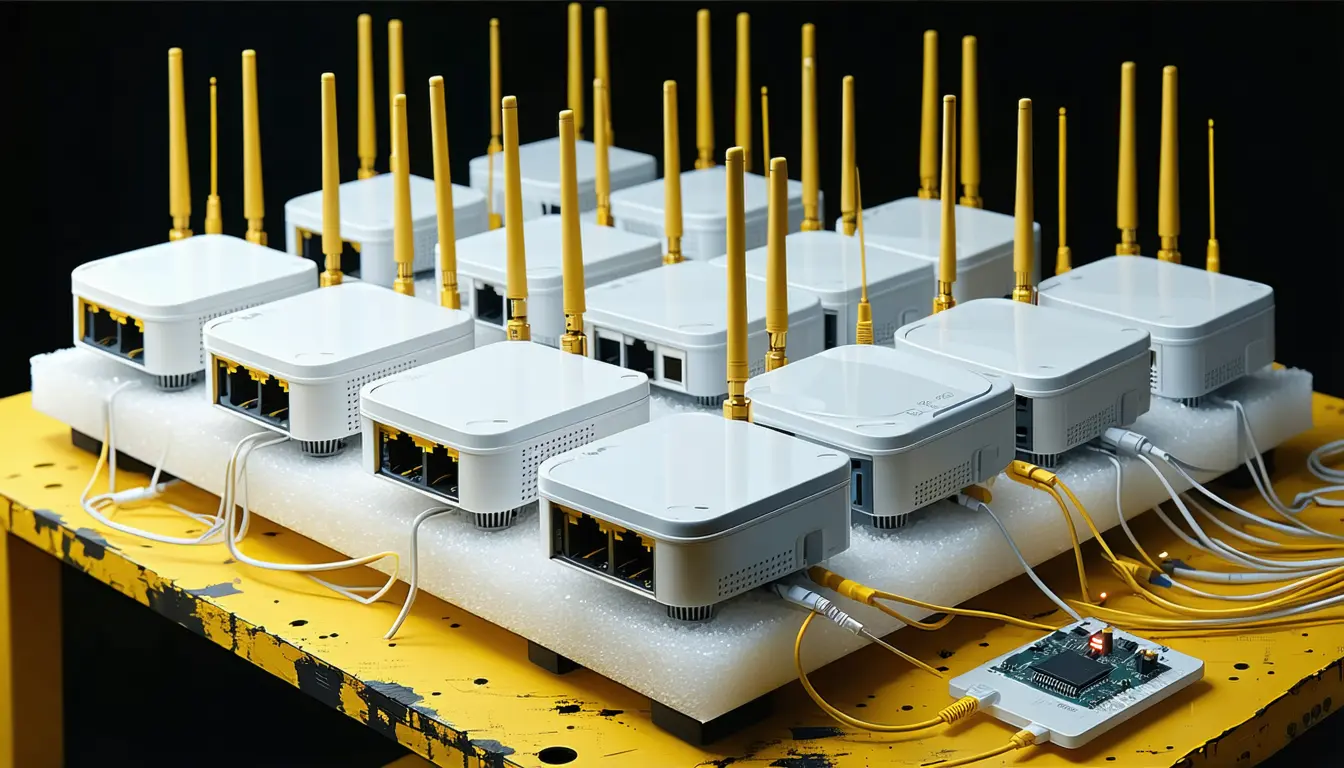
VulnCheck disclosed DARKLANTERN and SPEAKINGSTONE, two freshly discovered implants in Zbtlink routers sold worldwide.
SPEAKINGSTONE is a VulnCheck-discovered cloud command-and-control implant shipped in the MoreQuick "MQWrt" firmware that runs as root on ZBT routers.
SPEAKINGSTONE is a fully outbound, phone-home implant that opens no listening port.
SPEAKINGSTONE beacons over cleartext UDP to a hard-coded cloud C2 with no authentication and no transport encryption.
Because the channel is unauthenticated and cleartext, control is not limited to whoever planted the implant; anyone who occupies the C2 position obtains root command execution on the device.
VulnCheck shipped an exploit that takes the C2 / adversary-in-the-middle position against SPEAKINGSTONE, along with a version scanner, PCAP, Nuclei template, and Snort, Suricata and YARA rules.
Distinct publishers with included, body-backed reporting in this cluster.
Follow any of these and your For You feed starts watching them — no settings page required.
product
Two Nim implants shipped inside a US-branded router VulnCheck bought on Amazon1 distinct publisher
build
An all-zero MAC address bypasses the root command check in ZBT-derived white-label routers2 distinct publishers
security
FBI disrupts the Nanjing contractor that sold QScan and QTRouter to Chinese espionage operators1 distinct publisher
security
ZBT router firmware ships two factory implants that beacon out on UDP/100001 distinct publisher
Evidence-backed comparisons of source perspectives and observed adoption signals. Read the methodology
Which Builder, Operator, and Investor concerns the observed source mix emphasized—not a truth score.
Evidence, demonstrated adoption, hype gap, incentives, and confidence are assessed independently, each on its own current evidence. How these are measured.
Specific and testable, but single-sourced to the finder
The technical core is unusually concrete for a firmware-implant story: a named daemon, a named firmware image, a stated transport, a stated privilege level, and shipped signatures a defender can run to check the claim without taking VulnCheck's word for it. What is missing is everyone else. No CVE identifier anchors either router implant, though the same bulletin cites CVEs for every other item in it; ZBT/Zbtlink and MoreQuick have not been heard from; and no outside researcher has confirmed that the beacon behaves as described.
A map where a number should be
Twenty-two countries with the heaviest concentration in the United States tells you the firmware travelled; it does not tell you how many boxes are running it. That gap is a choice rather than a telemetry limit — the same bulletin counts about 6,900 Zimbra servers and about 1,100 GeoServer instances from the same scanning product. And a scan-derived country list only sees units whose infosrvd answers from the internet, so LAN-only devices running the identical image never enter the tally, in either direction.
Restrained prose, unquantified reach
The alarming part of this story is factual and stated flatly: an unauthenticated cleartext channel hands root to whoever holds the far end. VulnCheck does not dress that up, claims no in-the-wild abuse of either implant, and names the preconditions elsewhere in the bulletin when they exist. The small lean is in the space where a device count belongs — "sold worldwide" and a 22-country spread carry an impression of scale that no figure in the write-up supports.
Finder, publisher and seller are one party
This is a subscriber deliverables list — the week's work, presented as such — and each implant arrives bundled with the exploit VulnCheck sells access to. The research and the product are the same artifact, so the write-up has an obvious interest in the implants being interesting, and no adversarial reader has been anywhere near it. The counterweight is that the published signatures and version scanners are checkable by the customer, which is an odd way to overstate a finding.
Trust the mechanism, hold the scale loosely
We are reasonably confident in what the code does and how it can be reached: that description is coherent, internally consistent and shipped with verifiable artifacts. We are much less confident about how much hardware this touches, whether a fixed build exists, or how the affected vendors will respond — and with no CVE identifiers and no second account, there is nothing yet to correct the record against.