Science1 publisher3 min readPublished
Mung bean genetics swung the following wheat crop by up to a tonne per hectare
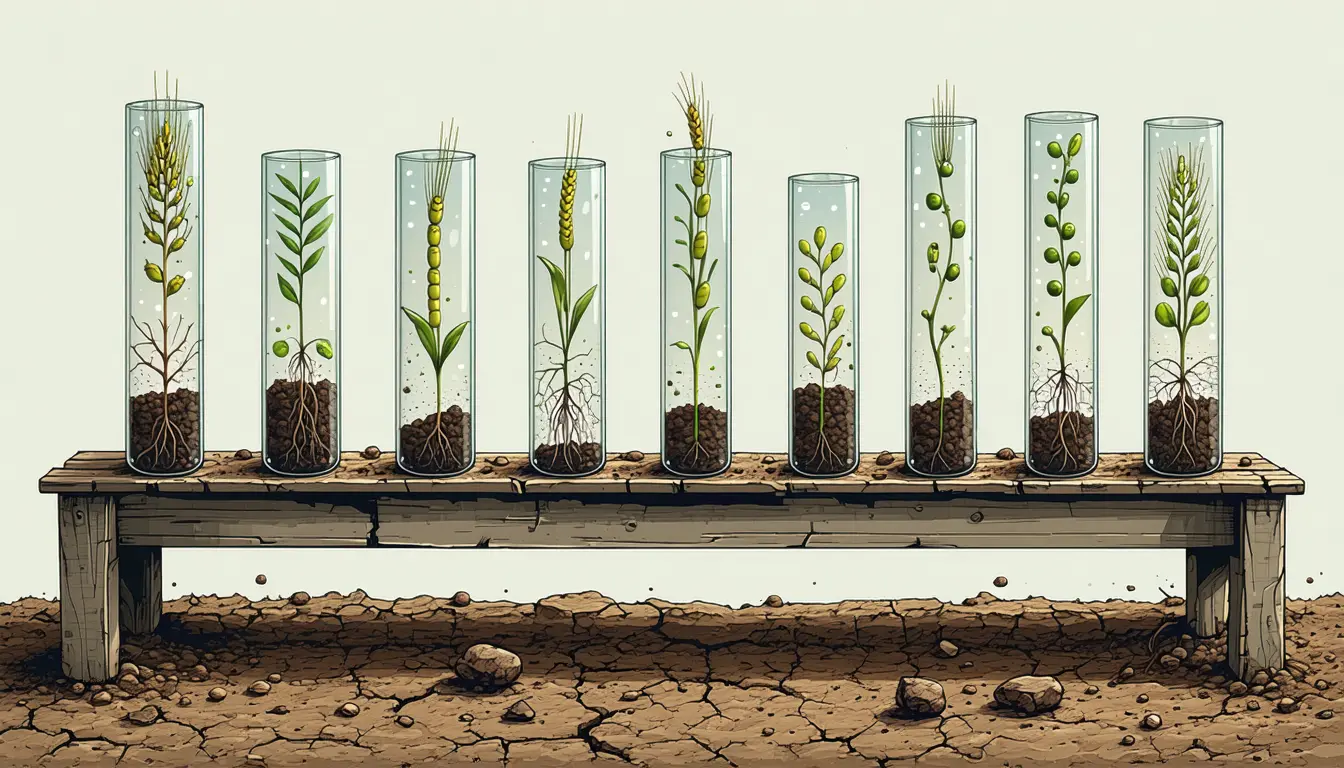
University of Queensland researchers planted more than 300 mung bean lines and then one wheat variety over all of them, and the wheat that followed varied enough that they now want breeders to select for what a crop leaves in the soil.
The Scientist · Science desk
What happened
- A University of Queensland team grew more than 300 genetically diverse mung bean types at a research station in southern Queensland, then planted the same wheat variety across all the plots.
- The wheat that followed varied by up to a tonne per hectare depending on which mung bean line had been in the ground before it.
- The work appears in two papers, one in Nature Genetics and one in Plant Communications.
Compiled by The ScientistSomething wrong?How this is made
Why it matters
- constraint Legacy cannot be scored from a variety's own plot data. Measuring it means growing a second crop after the first, so every evaluation of the trait costs an extra season.
- decision Growers already decide which crop follows which. The Queensland argument puts variety choice inside that decision. That puts seed purchasing into rotation planning.
- cost In a grower's budget, the fertilizer saving would pay for this, and so far it exists as a simulation output.
- capability Smith says drones, genomics and crop models now allow work at population scale. That makes what a plot leaves behind a trait a breeding program could actually measure and weight.
Holding the wheat constant makes this experiment readable. One wheat variety went into every plot, so differences in the wheat trace back to which of the more than 300 mung bean lines grew there the season before [6]. The design cannot say what any legacy consists of, but it does give a clean comparison between them.
"Some mung beans lifted the following wheat by 45%, while others halved it," Smith said [8]. Both statements describe one spread: 45 percent up against a halving is about 95 percentage points [17], and the trial's absolute range was a tonne per hectare [7]. Divide one by the other and the implied reference wheat yield is around 1.05 tonnes per hectare [16]. The percentages sit on a small base, and they come from a single station in southern Queensland [6].
"We already know that every crop leaves a legacy, such as altered soil nutrients, water, structure and microbial communities," Smith said [3]. That is four candidate channels, and a trial that varies the preceding genotype and measures the following yield does not separate them. "We've shown the effect is real and heritable, but we don't know yet what is driving it. The next step is understanding the biology behind it, and that will require a community effort," she said [12]. The fertilizer-bill framing phys.org put on the work assumes the nutrient channel is the active one [15]. The account of the trial does not give fertilizer rates for the plots [19].
A breeding program could act on the genetic result. Hickey said the team can point to specific regions of the mung bean genome that influenced how well the following wheat performed [9]. "What's striking is that some of those regions work against each other; the genetics that make one crop high-yielding can be the same genetics that leave fewer soil resources behind for the next crop," he said [10]. Mung bean yield and following-wheat legacy are not independent traits.
The team then simulated applying selection pressure equally to mung bean yield and to the wheat that follows. "That showed gains in both crops, highlighting the opportunity to breed for system-level productivity with reduced input requirements," Hickey said [11]. No plot in the field was grown on less fertilizer to test it. The reduced input requirement is an output of that simulation.
Smith said the same logic applies to other rotations, including canola and wheat or chickpea and barley [13], and that the findings needed to be tested more broadly [20]. She also said the instruments have caught up: drones, genomics, crop models and the computing power to tie them together now allow work at the population scale crop breeding requires [14]. The two papers appeared in Nature Genetics and in Plant Communications, the second with Shanice Van Haeften as first author [2][18].
What to watch
- Which of the four channels Smith lists - nutrients, water, soil structure, microbial communities - the follow-up biology work identifies as the driver.