Product1 publisher3 min readPublished
Microsoft ships 80 TOPS of on-device AI inside a fanless 12-inch Surface Pro
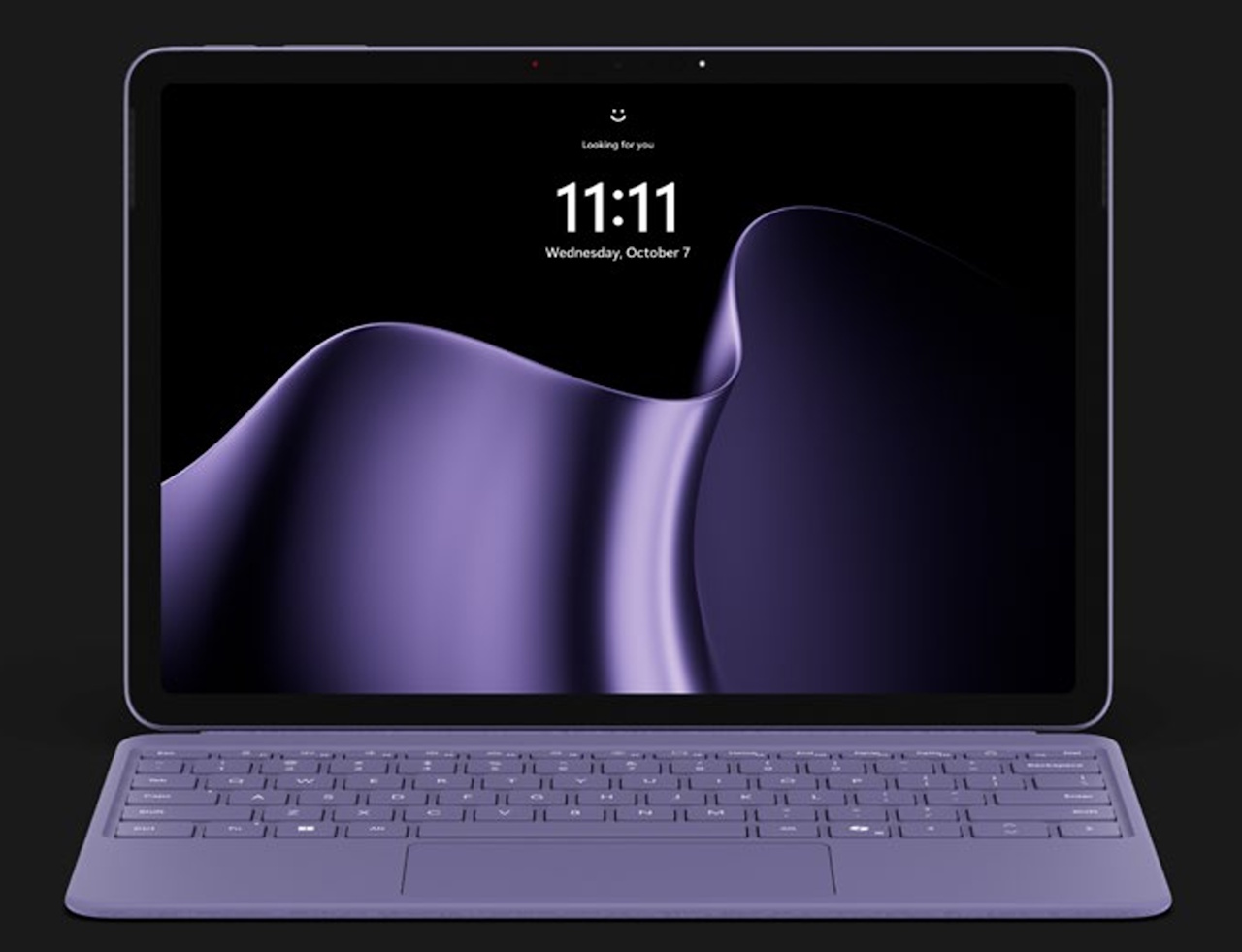
The second-edition 12-inch Surface Pro pairs a Snapdragon X2 Plus NPU rated at 80 TOPS with a fanless chassis and a 24GB memory ceiling. Notebookcheck's sustained CPU test on the first edition shows what the cooling costs.
The Product Desk · Product desk
What happened
- Microsoft's Surface Pro 12-inch (2nd edition) runs a 6-core Snapdragon X2 Plus whose NPU is rated at up to 80 TOPS for Copilot and local tasks such as AI photo and video generation from text prompts.
- The tablet has an MSRP starting at $1,149.99 in black, platinum or violet, and goes on sale October 13, 2026 from the Microsoft Store.
- Notebookcheck measured the fanless first edition at an average Cinebench R15 Multi Continuous score of 844, below the 1293 of a fan-cooled 2023 Surface Pro 9 running an Intel i7-1255U.
Compiled by The Product DeskSomething wrong?How this is made
Why it matters
- constraint The NPU rating describes a peak, and the chassis decides how long that peak lasts, so any local AI job that runs for minutes will finish slower than the benchmark deltas imply.
- decision A fleet buyer who wants the on-device NPU and a buyer who wants memory headroom are now shopping for two different Surfaces, and the high-memory one is an Intel machine.
- exposure Whoever deploys these owns the hardware risk: application compatibility can be checked in advance, and the scanner or label printer without an ARM driver turns up at the desk it is plugged into.
- cost At this entry price the NPU comes attached to an LCD-only tablet with a 24GB cap, so local inference is still being sold at premium-tier money.
A user asks the 12-inch tablet for a video clip from a text prompt, and what they learn first is how long a fanless chassis holds its peak. Notebookcheck's sustained-load measurement on the first edition is the nearest thing in the record to that experience: 844 against 1293 works out to 65 percent, so roughly a third of the sustained throughput goes to a machine with no fan [5][6]. That test loads the CPU, not the NPU rated at 80 TOPS [2], and both share one chassis [3].
Microsoft's own figures are deltas against the prior model on short benchmark runs: up to 95 percent faster NPU on Procyon AI, 60 percent faster GPU on 3DMark Steel Nomad Lite, and 17 percent faster Office on Procyon Office Productivity [4]. Office is the workload most of a fleet runs between nine and five. It gained 17 percent.
The reason to want the NPU, in Notebookcheck's framing, is generating Word documents, web pages and social content on the device without paying for cloud AI services [16]. That work shares memory with Windows and everything else open, and memory is where this model is capped: 16GB or 24GB of LPDDR5x, with 256GB or 512GB of storage [7]. The Intel-based 13-inch Surface Pro for Business can be fitted with up to 64GB, about 2.7 times as much [8][9].
Windows on ARM is the other half of the rollout. Notebookcheck says ARM-based CPUs are not 100 percent compatible with regular Windows x32/64 apps, drivers or peripherals, unlike Intel or AMD machines [10]. Its example is Avid Media Composer, which it says is used on every Hollywood blockbuster making over $500 million and does not run on Snapdragon computers, while Office, Edge, Outlook and Teams run fine [11]. Apps can be looked up at Works on WoA and OnARM.Net; Notebookcheck says there is no equivalent site for drivers or peripherals [12].
Notebookcheck's account covers only the 12-inch tablet on this chip [18]. The battery ratings move both ways against the first edition, with video playback down half an hour to 15.5 and web use up an hour to 13 [14][15]. The screen is a 90Hz LCD at 2,196 x 1,464 and 500 nits, and the OLED panel is reserved for other top-end Surface models [17].
Two axes sort the order. One is whether the user's applications run natively on ARM. The other is whether their AI work finishes in seconds or runs for minutes. Native and bursty is where the 80 TOPS helps most: a Copilot summary, one image from a prompt. Native and sustained meets the 844 score. Emulated and bursty pays translation overhead on a machine with nowhere to send heat. Emulated and sustained, on a desk with a peripheral nobody could look up in advance, is the configuration to keep off the purchase order.
What to watch
- Independent sustained-load testing of the second edition after the October 13, 2026 on-sale date, especially NPU work held at peak for minutes.
- Whether Microsoft adds a memory tier above 24GB to the Snapdragon Surface configurations, or leaves high-memory buyers on Intel.
- Whether a driver and peripheral compatibility lookup for Windows on ARM appears before fleet buyers commit.