Product1 publisher3 min readPublished
Meta's rival to Apple's Vision Pro Personas starts with a full-body phone scan
Meta plans to ship its Codec Avatar holograms, first shown in 2019, on VR glasses due in spring 2027 as a rival to Apple's Vision Pro Personas. A Gizmodo reviewer found them convincing, though appearing in full body first takes a phone scan of several minutes.
The Product Desk · Product desk
What happened
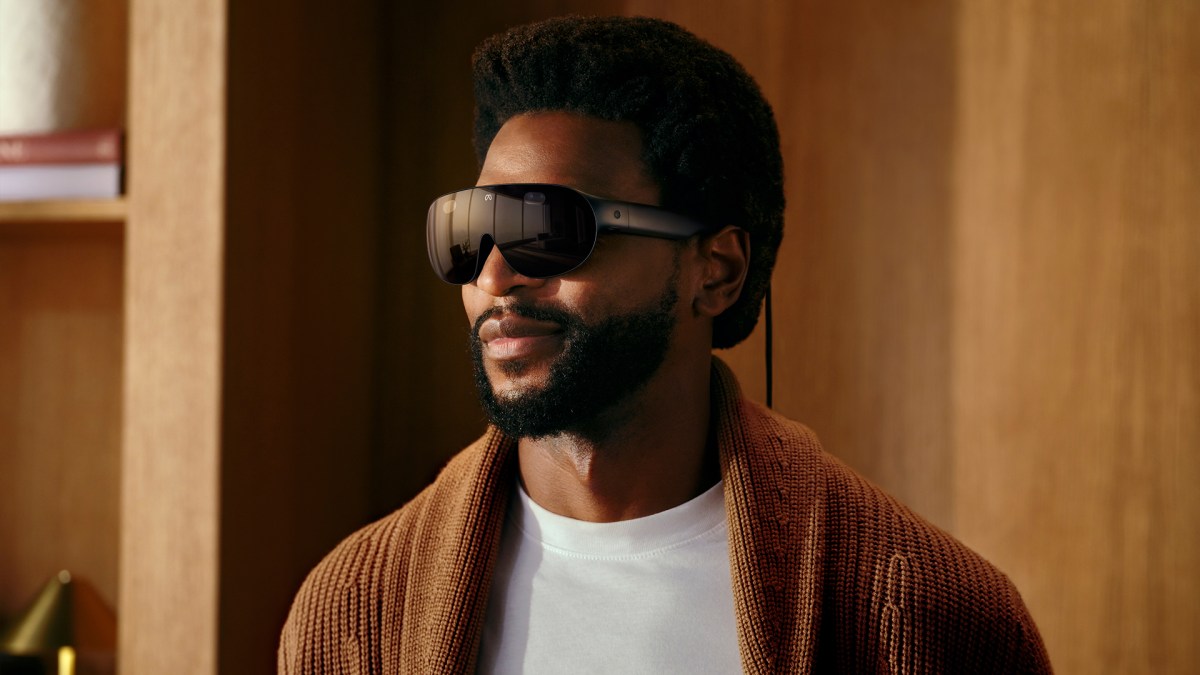
- The glasses share the Vision Pro's hand-and-eye input and use a similar 5K micro OLED display, and Gizmodo says they are aimed at Apple's Personas for 3D calls.
- In Gizmodo's hands-on, a Meta employee appeared as a full-body hologram, legs included, with real-time expressions and gestures.
- A lighter face-only version, built from a five-minute phone scan and a scripted voice recording, is headed for Meta's Ray-Ban Display glasses.
Compiled by The Product DeskSomething wrong?How this is made
Why it matters
- cost The setup work falls on each person who will appear as a hologram, so a team trial of full-body calls needs every one of them scanned before the first meeting can happen.
- constraint Anyone planning around full-body calls has nothing to test until spring 2027, and possibly longer if the day-one holograms stop short of the whole body.
- contradiction Meta's photorealism pitch goes further than what the reviewer saw, so buyers who take Meta's description at face value should expect a softer image in the headset.
Before anyone can appear in a room as one of Meta's full-body holograms, they have to scan their entire body with a phone camera. A Meta representative told Gizmodo the process takes several minutes [12]. The reviewer came away with the sense that Meta is still working this step out [12]. "Sure, you could lean your phone somewhere and twirl for the camera, but that somehow feels a little less refined," Gizmodo's reviewer wrote [13].
Meta is pitching the finished hologram [7]. The first thing a user actually does is the scan, and after that comes a call in which nobody moves much. According to the review, walking around ruins the illusion, because the holograms track to the viewer's position "like a low-poly PS1 game" [10]. Their bright, CGI-like lighting also makes them stand out as silhouettes against a real room [10].
The reviewer still judged the feature close to ready. "Not uncanny valley, but maybe a small uncanny hill is how I would describe it," the reviewer wrote [9], adding that "the experience does feel shippable, though there's work to be done before that happens" [11]. On the Vision Pro comparison, the verdict was that, "based on my experience using them, they just might pull it off" [6]. So far the evidence is one reviewer's hands-on session [6].
Meta first showed Codec Avatars in 2019 [1], which puts about eight years between the first demo and a spring 2027 launch [1]. The launch may not include the whole body. Gizmodo said it was unclear whether the day-one holograms will be full-body right away [3].
The face-only version will arrive first. It is built for the Ray-Ban Display, glasses you can already buy, and it comes sooner than the full-body hologram, though Gizmodo did not report a date [16]. The wearer takes calls hands-free, and the person on the other end, in WhatsApp or Zoom, talks to the recreated digital version of them [15]. The reviewer said the result feels more like a Persona in Apple's visionOS [17].
The full-body hologram is for a viewer wearing Meta's VR glasses [7] and a person willing to stand through a body scan and then not move around much [10][12]. The face version is for a Ray-Ban Display wearer calling someone in an ordinary app [15]. I'd sort any rollout on two questions: what the person receiving the call is looking through, and how much scanning the person being shown on screen will put up with. An app on the receiving end plus a five-minute face scan means the Ray-Ban Display version [14][15]. Meta's VR glasses on the receiving end plus a several-minute body scan means the full-body hologram, available no earlier than spring 2027 [2][12]. A colleague who will not scan at all stays on an ordinary video call. One who will scan but needs to walk around during the call runs into the tracking problem the review described [10].
What to watch
- Whether Meta confirms full-body holograms at the spring 2027 launch of its VR glasses, or starts with a partial version.
- A release date for the face-scan avatars on Ray-Ban Display, and how they look to callers inside WhatsApp and Zoom.
- Any change to the several-minute phone body scan, the step Gizmodo's reviewer sensed Meta is still working out.