Product1 publisher3 min readPublished
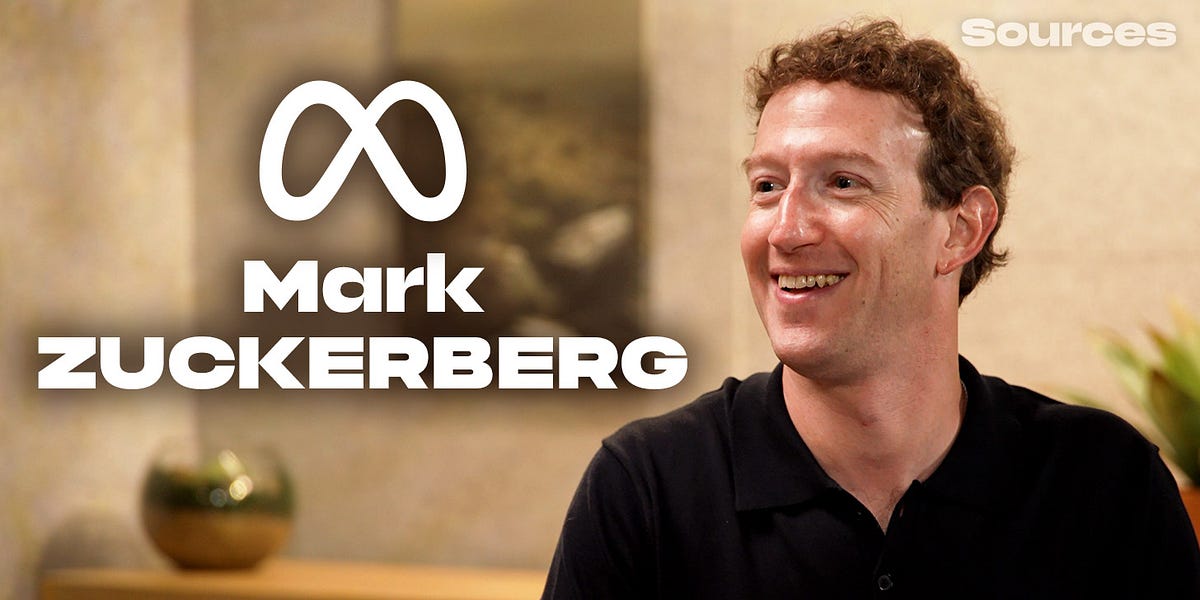
Meta hands Muse users 100 million free tokens a week
Gizmodo tried to exhaust Meta's new agentic platform on a free account and could not get close. The allowance tells you a lot about Meta's compute build and almost nothing about what agent work will cost.
The Product Desk · Product desk
What happened
- Meta's new agentic platform Muse currently gives free accounts 100 million tokens a week, a limit Mark Zuckerberg set out in a Threads post rather than on a pricing page.
- A Gizmodo writer spent a session on a free account deliberately trying to burn through the allowance and reported being nowhere near getting cut off.
- Reports in July that Meta wanted to sell cloud capacity to other companies drew criticism that the company had overbuilt its data centres.
Compiled by The Product DeskSomething wrong?How this is made
Why it matters
- constraint With no published per-token rate anywhere in the evidence, the giveaway gives buyers nothing to benchmark against. You cannot negotiate a contract, or model a budget, using zero.
- decision Anyone piloting Muse is choosing whether to build on terms that live in a social post, which makes the interesting question what the cap becomes rather than what it is now.
- contradiction Zuckerberg's earnings-call framing is that infrastructure spend chases demand, while the July criticism reported by Gizmodo reads the same build as surplus. A very generous free tier is consistent with either, and the material does not settle it.
- exposure The one documented user found nothing he trusted an agent with, so the constraint on adoption here is verification, not tokens, and verification time comes out of your team's week.
Meta's own copy for Muse asks users to "Take the busywork off your plate" [3]. What Gizmodo's writer handed it instead was an author photo redrawn line by line in Python, because the agent's Linux terminal had no MS Paint equivalent, a MIDI tune called "Portrait Theme", a side-scrolling game, an FPS variant with NPC versions of the writer, and a retro website called "Garden Signals" to hold all of it [4]. He was clear about why: he had no busywork he trusted an agent to do [5]. When he pushed for volume, asking for 50 genre variations of the tune, what came back was mostly the same melody with the synthesized instrument swapped, the "Dubstep" version barely separable from the "Sea Shanty" one [6].
That gap between what the page promises and what the session produced is the useful part. Teams tell themselves a free agent tier goes on ticket triage and release notes. The one documented user built things nobody had to check, because checking was never the point.
The ceiling is worth doing the arithmetic on. A hundred million tokens a week is about 14.3 million tokens a day [13], roughly 5.2 billion a year if the allowance holds [14]. One person typing prompts at an agent on a virtual machine [15] will not reach that, which is exactly what Gizmodo found while trying to [2]. Where a long-running agent loop sits against the same cap is not in the account, so nobody should treat this as a capacity test for production work.
The disposal reading has support, though not proof. Gizmodo reports that in July Meta was looking to go into business as a cloud provider for other companies, and that critics at the time called it a sign the company had overbuilt its data centres [7]. A projection in April put Meta's capital expenditure at $145 billion this year [8], and free cash flow fell 91 percent from the first quarter to the second [9]. Zuckerberg's framing on last month's earnings call was demand, not surplus: usage is ramping, so infrastructure investment continues [10]. Both readings fit a very wide free tier. What tilts it slightly is that Meta already spent a few months telling its own staff to consume as much AI compute as they could [11], which is a thing you do with capacity you have already paid for.
The part of this that does not survive contact with the evidence is price. No per-token rate for Muse or anything else appears in the account [16], so the giveaway cannot be used to argue that agentic inference should now cost less. You cannot plan a budget around zero. The number that decides whether a Muse workflow lives is the cap after the promotion ends, and the current one exists as a Threads post from Mark Zuckerberg [1].
There is also a question of who shows up. Alex Kantrowitz of Big Technology argued on CNBC in March that Meta's billion monthly AI users were bumping into AI inside existing apps rather than seeking it out, and that its intentional users were nothing close to ChatGPT's 900 million weekly [12]. Muse requires intent. Somebody has to decide to hand over real work.
Two questions decide whether that free tier is worth using on your own team: whether you can verify the output faster than you could have produced it, and whether it breaks anything downstream if it is wrong. Fast to verify and reversible is where a free agent tier earns its place: draft sites, throwaway tooling, one-off scripts. Slow to verify and irreversible is where the free tokens are the most expensive thing in the building, because the review time is yours and the allowance is not. The rewrite is the real cost here, not the tokens.
What to watch
- Whether Meta publishes paid Muse rates or a post-promotion cap, which is the only number a workflow can be planned against.
- Whether the cloud-provider plans reported in July turn into outside customers paying for the same capacity Muse is giving away.
- Meta's next capital expenditure and free cash flow disclosure, measured against the April projection of $145 billion for the year.