Build1 distinct publisher3 min readPublished
AWS now ships a first-party catalog for agents, tools, skills and MCP servers, moving the hard part off building them and onto whoever keeps the records current and clears the approval queue, a staffing question as much as a platform one.
The Engineer · Build desk

Compiled by The EngineerSomething wrong?How this is made
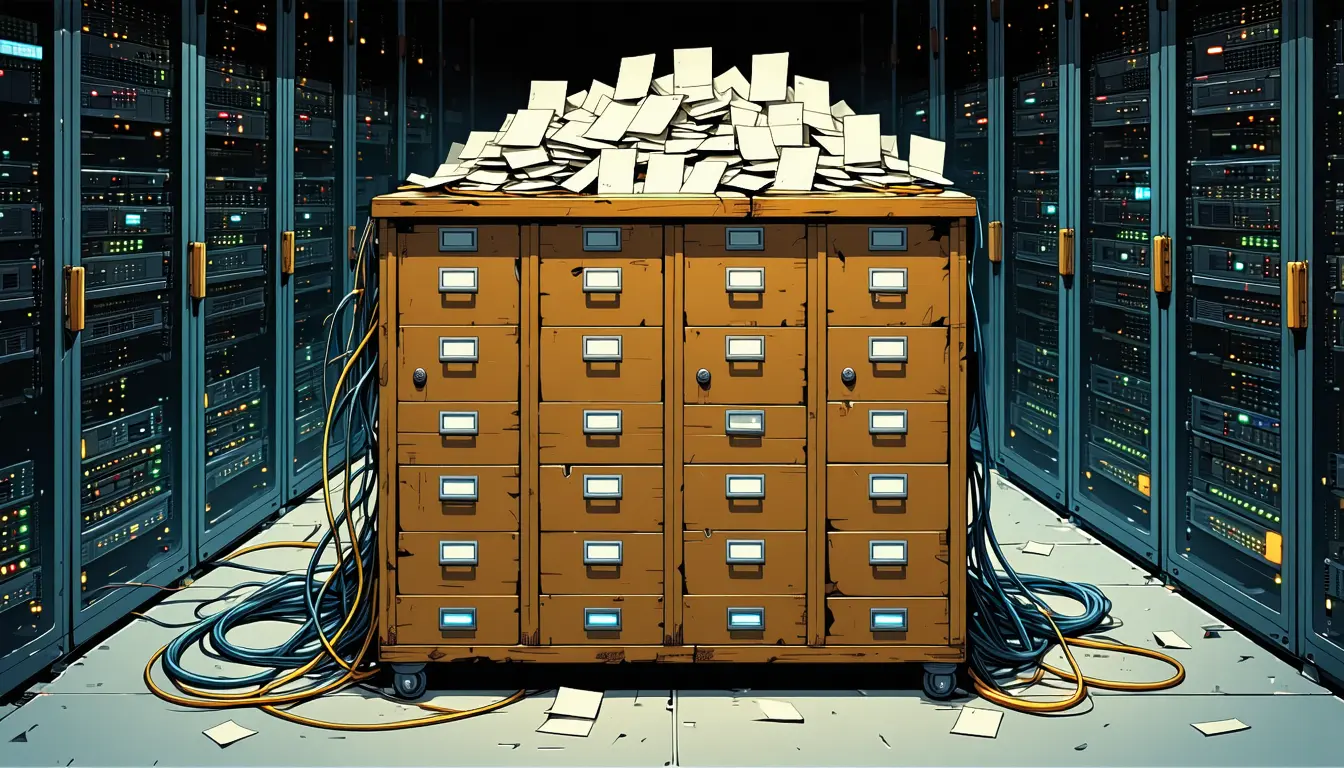
An approval queue is now on the runtime path. AWS's own framing is that the problem has moved from building agents and tools to discovering and governing them [3], and that without a searchable catalog the default is to rebuild what already exists [13]. A record that has been registered but not cleared produces that same outcome, because the governance side retains a resource whatever its lifecycle state [5] while the consumer side is curated rather than comprehensive [7]. The tool exists, it is registered, and the developer who went looking for it gets nothing back.
Coverage is the second thing I would check before committing a platform team to this. Automatic population is bounded: it detects agents on AgentCore runtime and AgentCore gateways [17], and everything else arrives through the paths that shipped in preview, manual entry or URL-based record creation [14]. AWS says teams get complete visibility into their AI landscape [22]. For that sentence to describe your estate, your agents have to be running on AgentCore. Anything else is hand-authored, and hand-authored records are exactly where version drift and untracked capabilities came from in AWS's own problem statement [4].
The consumer view is built on summarised signals rather than raw governance data, surfacing compliance and security indicators framed for the decision to use a resource [10], with search by intent, as in find me a tool for ticket routing, or by exact name [9]. Both depend on fields your teams maintain. Custom metadata schemas are where that maintenance lands, with cost centre, data classification and SLA tier given as the examples [6]. The plane is also specified for high-throughput programmatic queries without hitting rate limits [8]. That is the right design goal for agents that search on every turn, but AWS does not publish a quota or a rate-limit figure to size against it.
The plumbing is the part I would standardise on first. Registries can be provisioned and managed as code through CloudFormation, Terraform and the CDK, and both registries and records accept tags for organisation, cost allocation and access control [15]. Resource Access Manager shares registries across accounts and supports organisation-wide registries [16]. That combination is what makes a catalog reviewable in the same pipeline as the rest of your infrastructure, which matters more to me than the console search does.
The footprint is five regions: US West (Oregon), US East (N. Virginia), Asia Pacific (Tokyo), Asia Pacific (Sydney) and Europe (Ireland) [19]. Two of the five sit in the US, and Ireland is the only European option [20]. Neither AWS post lists a price for any of it [25]. Tags are documented for cost allocation [15], which implies there is a bill to allocate somewhere.
My read, and my context is a mixed estate across several runtimes: the two-plane separation is sound engineering, and the as-code path is the reason to adopt now rather than wait for the roadmap. The ceiling on the value is how much of your fleet AWS can enumerate without a human typing.
Ranked by verification strength, evidence, and original report placement.
AWS Agent Registry is now generally available and gives teams a single, searchable, governed catalog for agents, tools, skills and custom resources in their environment.
AWS Agent Registry is generally available as a private, governed catalog and discovery layer for agents, tools, skills, MCP servers and custom resources, accessible through the AWS Agent Registry console, the AWS CLI or the AWS SDK.
The Discovery Plane offers semantic and lexical search, letting consumers find resources by intent, given as 'find me a tool for ticket routing', or by exact name across the approved catalog.
AWS states that the problem has moved from building agents and tools to discovering and governing them.
AWS names three challenges that emerge as organisations scale agentic systems: no authoritative inventory (with duplicative effort, version drift and untracked capabilities), no cross-team discovery, and no governance or audit trail.
The Governance Plane is designed to be the authoritative store for resources within its defined scope, regardless of their lifecycle state, and is where admins configure compliance and security signals, discovery policies and custom metadata schemas.
Distinct publishers with included, body-backed reporting in this cluster.
2 articles · August 31, 2026
Follow any of these and your For You feed starts watching them — no settings page required.
build
AWS's one-minute test for agent access is really a test of where the answer lives1 distinct publisher
build
AWS's phone-ordering host is really an MCP wiring diagram with no retry button1 distinct publisher
build
ECS Express Mode bakes 5% of traffic for three minutes before it shifts the rest1 distinct publisher
build
Four agents, five stages, one manifest row: AWS's migration pipeline is a handoff problem1 distinct publisher
Evidence-backed comparisons of source perspectives and observed adoption signals. Read the methodology
Which Builder, Operator, and Investor concerns the observed source mix emphasized—not a truth score.
Evidence, demonstrated adoption, hype gap, incentives, and confidence are assessed independently, each on its own current evidence. How these are measured.
Precise, and all of it self-reported
The verifiable specifics are genuinely specific — five named regions, four record types, CloudFormation plus Terraform plus CDK, RAM sharing, CloudTrail from preview onward — and AWS is the right party to state them. What no one outside AWS has touched is the part being sold: that a curated catalog produces reuse and prevents sprawl. Two posts, one company, one afternoon.
Three logos, no numbers
GA in five regions is real distribution, but the customer evidence is thin in a specific way: Sony is described as reusing patterns, Southwest speaks for itself, and Mitsubishi Electric is still 'looking to'. Not one registered-agent count, seat count or query volume appears anywhere in this reporting.
The promise is broader than the mechanism
AWS says teams get complete visibility into their AI landscape; its own architecture section says consumers see only what a curator approved, and that some governance signals are still to come. Both sentences are true, and they describe different products. The overshoot is modest rather than egregious because the company documents the gate itself instead of hiding it — a reader who gets as far as the Discovery Plane bullets finds the caveat waiting there.
Launch-day copy, end to end
Every line of this story is AWS describing an AWS product on the day it shipped, including the framing that enterprises have no way to govern agents without a central registry — a problem statement whose resolution happens to be wired into AgentCore, Amazon Quick and Kiro. The customer quotes were solicited for the launch. There is no adversarial reader anywhere in the record.
Trust the mechanics, hold the outcomes
What the service does at GA is about as reliable as single-source reporting gets — the issuer knows its own regions, APIs and approval flow. What happens after a hundred teams start filing records, how long the queue runs, and what any of it costs are all unaddressed, so conclusions about operating burden stay provisional.