Security1 distinct publisher3 min readPublished
Oviedo police baited vandals with a camera an officer printed at home. The value that produced the charges came from the suspect's own guess, not from the plastic he broke.
The Watch · Security desk

Compiled by The WatchSomething wrong?How this is made
The charging theory does not run on what was destroyed but on what the man who destroyed it guessed it was worth. The arrest report offers Evan Meyer's own estimate of $1,000 to $5,000 as proof "that Meyer knew it was an expensive real piece of equipment and not a fake replica" [7], and the report implies that his belief is what supports attempted grand theft rather than a lesser count [9]. What he actually cut off the pole was a shell that Mayor Megan Sladek describes as free [14], and that 404 Media puts at several dollars of filament at most [22].
Then there is the arithmetic the report leaves alone. One count is criminal mischief of property damage worth more than $1,000 [5]. The department's own figure for replacing a real Flock camera is $800 plus installation fees [8], which is $200 short of the threshold before you account for the fact that the genuine article was not on the pole that night [18]. The installation fee is doing structural work in that charge.
The third count is the strange one. Property crimes against computer equipment supplies [5] was applied to a device the arrest report itself describes as one that "did not collect any data within the device" [4][21]. The clone was built to resemble a camera closely enough to draw a vandal [4]. It appears to have been treated as a computer for charging purposes on the same basis.
The records answer follows from how the thing was made. An officer printed it at home on a personally owned printer and donated it, and the department says it owns no 3D printer at all [10]. That arrangement leaves the design and planning outside the agency's custody, and the department's position is that no meeting minutes, text messages or emails about producing the decoy exist prior to the August 20, 2026 arrest [11]. It then took a second position: that any and all records are exempt because there is an active criminal investigation [12]. Both answers were given to the same publication [12], and records that do not exist do not need an exemption [20]. The mayor, who says she had no idea and was speechless, learned of the operation from News 6 Orlando's report [13][15].
The closest precedent went nowhere. Police departments that ran Amazon package stings, leaving empty boxes on porches while officers watched, produced zero known arrests [17]. This one produced three felony counts within 17 days of the last camera theft the report cites [19], off bait that cost the city nothing and can be reprinted indefinitely. Meyer told police he had been hearing about the misuses of Flock cameras online and knocked down the one nearest his house [16]. The department spent days watching a piece of plastic [2] and got a better return than a real camera would have provided, because the value in the file is the value in the suspect's head.
Ranked by verification strength, evidence, and original report placement.
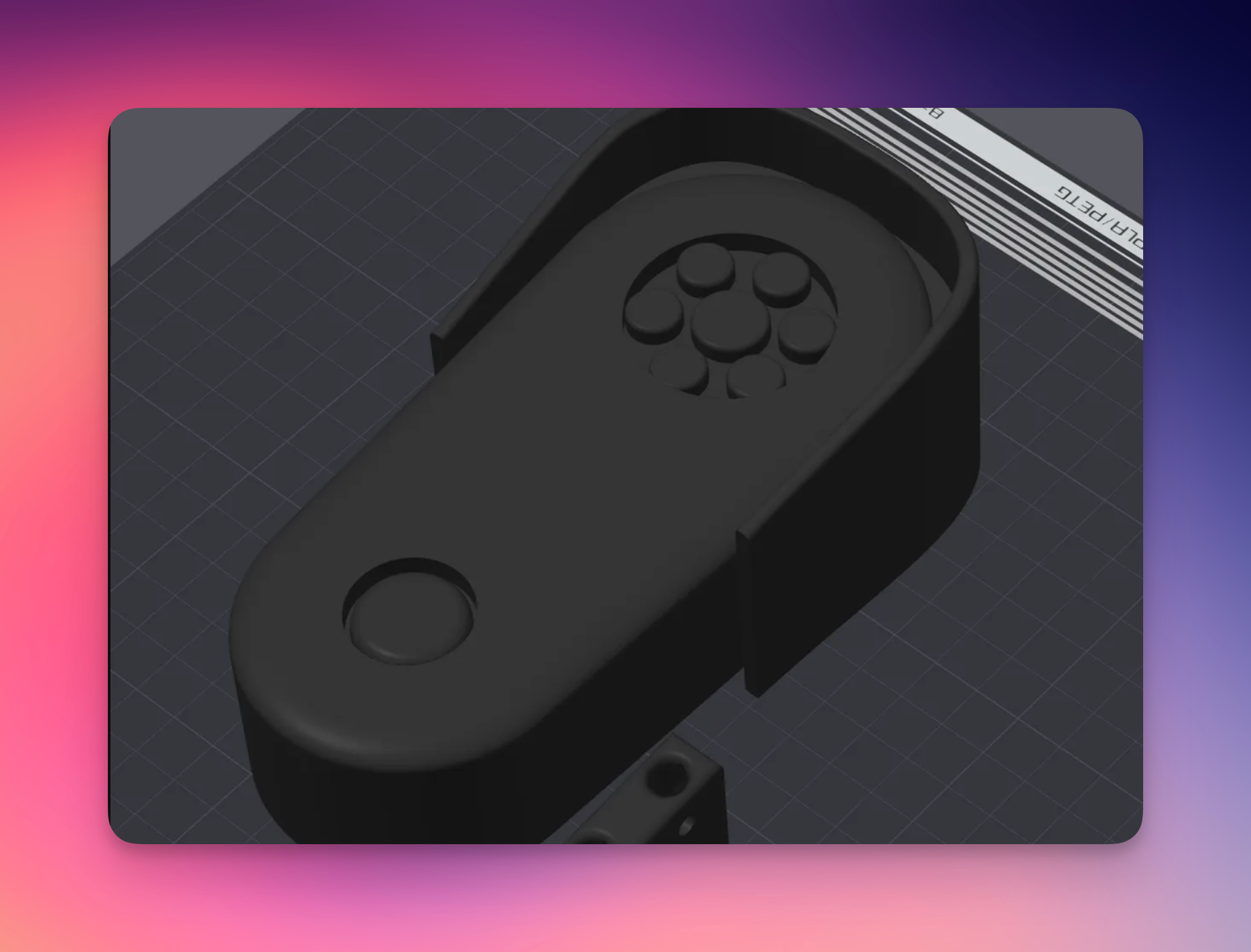
A police department in Oviedo, Florida used decoy Flock cameras that an officer 3D-printed at home to bait would-be vandals.
Police officers monitored the fake cameras for days, then charged a man with three felonies after he cut down and destroyed one of the plastic devices.
The arrest report states several Flock Safety cameras were stolen between 7/23/2026 and 8/3/2026 out of the Lockwood Blvd. corridor and were replaced with clone style Flock cameras.
The arrest report says the bait cameras were made to closely resemble real Flock cameras but "did not cost the same amount nor collect any data within the device."
Evan Meyer was charged with attempted larceny/grand theft, criminal mischief of property damage worth more than $1,000, and property crimes against computer equipment supplies.
Meyer was arrested shortly after midnight Thursday after knocking the 3D-printed fake camera off a pole with a pair of garden shears and destroying it; the report says he took his father's pruning shears from the garage, walked down the street and was tall enough to cut the mount off before smashing the camera on the ground.
Follow any of these and your For You feed starts watching them — no settings page required.
Evidence-backed comparisons of source perspectives and observed adoption signals. Read the methodology
Which Builder, Operator, and Investor concerns the observed source mix emphasized—not a truth score.
Evidence, demonstrated adoption, hype gap, incentives, and confidence are assessed independently, each on its own current evidence. How these are measured.
Primary documents, single outlet, withheld records
The core factual spine rests on a named arrest report obtained by the outlet, an on-the-record department statement, and the mayor's own quoted emails and Facebook post - unusually document-heavy for a local enforcement story. It is nonetheless one publisher's copy of one report, the department is withholding the planning records that would show how the operation was devised, and the background comparison to Amazon package stings is asserted without documentation.
One department, one documented deployment
Concrete deployment facts exist - clone cameras installed in a specific corridor, days of monitoring, one arrest, one municipal council moving to consider ending Flock - but they describe a single small department. The supplied material shows no other agency running decoy-camera stings and cites no counts beyond 'several' cameras, so the practice cannot be shown as diffused.
Framing largely tracks the documents, with one unsupported resourcing claim
The headline disproportion - three felonies over a few dollars of filament - is directly supported by the charge list, the $800 stated replacement value, and the mayor's confirmation that the decoy was free, so the central framing is not inflated. The mild overstatement is the article's assertion that departments have 'dedicated significant resources' to catching Flock vandals, which the same reporting undercuts by establishing a donated, home-printed, no-cost device; the Amazon-sting comparison is likewise offered without support.
Every named party has a stake in the framing
The department authored the valuation reasoning that determines the severity of the counts and simultaneously controls release of the planning records; the mayor is an elected official and practicing attorney distancing herself from an operation her council was moving to curtail; the outlet is a subscriber-funded publication with a sustained editorial line on ALPR surveillance; and the accused's stated motive is drawn from a police interview rather than his own voice. These incentives are visible in the text and materially shape which facts are supplied.
Solid on documented facts, thin on independence and outcome
Confidence is high that the report, charges, statements, and cost figures are as quoted, and the derived arithmetic on thresholds and dates follows from that record. It is materially lower on anything requiring corroboration: no second publisher is in the cluster, the planning records are withheld, no prosecutorial or defense position is on record, and whether these three counts survive charging review is unknown.
security
NPS Bought Flock. Internal Paper Says License Plate Reader; Public Statement Says Traffic Counts1 distinct publisher
security
A man in a Vader helmet turned Flock's San Diego contract into a procurement problem1 distinct publisher
invest
A Connecticut judge just priced prompt injection: no fine, no e-filing2 distinct publishers
build
Flock cut retention to seven days and published the number that made 30 indefensible1 distinct publisher
Distinct publishers with included, body-backed reporting in this cluster.
1 article · August 25, 2026