Build1 publisher3 min readPublished
Magentic's $18M bets that manufacturers will let agents clear their invoices
Felicis led the $18M, which follows a $5.5M seed in July 2025 and came with no valuation. Magentic says its agents draft supplier messages, route purchases and clear invoices, with humans brought in at key review points.
The Engineer · Build desk
What happened
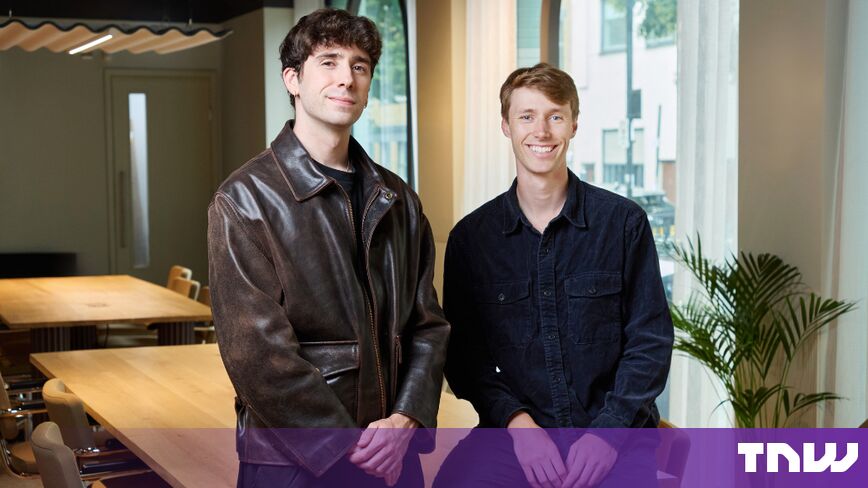
- Robin Van Aeken and Odhran O'Donoghue announced an $18M Series A for Magentic on September 17th, led by Felicis, with existing investors Sequoia Capital and The Westly Group participating.
- The round follows a $5.5M seed announced in July 2025 and takes publicly announced funding to at least $23.5M. No valuation was attached to the Series A.
- The product spans three stages of purchasing: spend analysis and demand consolidation before a purchase, requisition checks against approved suppliers and prices during, and invoice, contract and rebate review after.
- Magentic says one customer processes 1.2M orders a year through its digital workers and another has identified $4M in savings. The company has not published customer-level methodology, and no independent audit has checked the numbers.
Compiled by The EngineerSomething wrong?How this is made
Why it matters
- exposure Once an agent holds write access, the failure mode moves from a wrong answer to a stopped line: approving the wrong supplier, misreading a contract or delaying a critical material can interrupt a factory.
- decision A buyer has to settle in diligence which actions qualify as key review points, because that policy determines how much of the order flow a person ever approves.
- cost A fee charged on value recovered comes out of money the customer did not have, so approval does not need a software budget line or a seat count to defend.
- precedent Procurement keeps attracting vertical AI companies for the same two reasons Magentic can point to: the savings are denominated in dollars and the implementation bolts onto systems the customer already runs.
Write access is the question this round prices. Magentic says its agents can draft supplier messages, route purchases, negotiate contracts, run orders and clear invoices [6]. None of those are read operations. Clearing an invoice moves cash, and routing a purchase commits a plant to a supplier. The company's security documentation says humans are brought into key review points and receive evidence trails for important actions [7].
The size of the flow decides how much that sentence covers. One customer runs 1.2M orders a year through the digital workers, according to Magentic [9]. That is about 3,287 a day [1]. No procurement team signs off on 3,000 documents a day. I would expect most of those orders to be sampled after the fact. Then the evidence trail is what an auditor actually gets, and the list of review points is what a buyer negotiates before go-live.
At its July 2025 launch the agents were called "Mages" and the pricing was described as "pay-per-cure", charged on value recovered instead of software seats [20][12]. Magentic's examples were missed rebates found, overpayments recovered, contract terms enforced and purchases shifted to a less expensive supplier [13]. Recovered overpayments and claimed rebates end in a document someone can point at. Consolidating demand across sites, which sits in the pre-purchase product, produces a counterfactual [5]. The announcement did not include revenue, customer count or retention, and it did not say whether pay-per-cure applies across the expanded product line [11][14].
Magentic also claims typical savings of 2% to 5% and an average 60% improvement in data quality. The company has not published customer-level methodology for those figures, and no independent audit has checked them [10]. Read the $4M against that band and you get the size of the account it came from: at 5%, about $80M of addressable spend, and at 2%, about $200M [2]. Whether the percentage transfers depends on how much of a prospect's own spend sits in contracts, ERP records, emails, invoices and spreadsheets an agent can parse [21].
The two founders split the problem cleanly. Robin Van Aeken studied economics and management at Oxford and advised manufacturers and supply-chain leaders at McKinsey; Odhran O'Donoghue completed an Oxford DPhil on machine-learning methods for electronic health records and later worked on AI research at OpenAI [17]. They met at an AI and Climate Impact Challenge talent-matching session, according to Ana Bakshi of Oxford [18]. "The companies that build the best intelligence into every decision they make will be the ones that compound their competitive advantage," Van Aeken said in the Series A announcement [19].
Part of the new money goes to research on agents that plan and execute longer jobs across large volumes of mixed enterprise data [15]. Longer jobs mean more steps between the trigger and the review point, and each one is a place an error enters before a person sees the file. The company operates from London and New York and names Siemens as a customer reference on its website [16].
What to watch
- Whether Magentic publishes which agent actions sit behind human sign-off and which run unattended.
- Whether pay-per-cure pricing extends to the pre-purchase and during-purchase products or reverts to seats.
- Whether Magentic publishes customer-level methodology or third-party verification of the claimed 2% to 5% savings band.