Science1 distinct publisher3 min readPublished
A review of 27 papers found 68 grayanotoxin poisonings since 2009, most of them deliberate self-medication for blood pressure. The dose that tips a warm flush into a crashing heart rate varies with every batch, season and cliff.
The Scientist · Science desk

Compiled by The ScientistSomething wrong?How this is made
Twenty-seven papers and 68 patients works out to about two and a half patients per report [1], which tells you what kind of evidence this is: clinicians writing up the person in front of them, and this review is the first to pull those write-ups into one set [21]. Stack case reports and you get a case series, and a case series is a numerator. No one counted the spoonfuls eaten, so this review cannot say what share of people who try mad honey end up on a drip, or whether that share is moving as sales go online.
The dates carry the same caution. The search window opened in 1976, but the earliest case it turned up is from 2009 [2], leaving 33 years of the window empty [5], which is more plausibly a change in publishing habit than a toxin that appeared in 2009. Across the 18 calendar years that do contain cases, the published record runs to fewer than four patients a year [2].
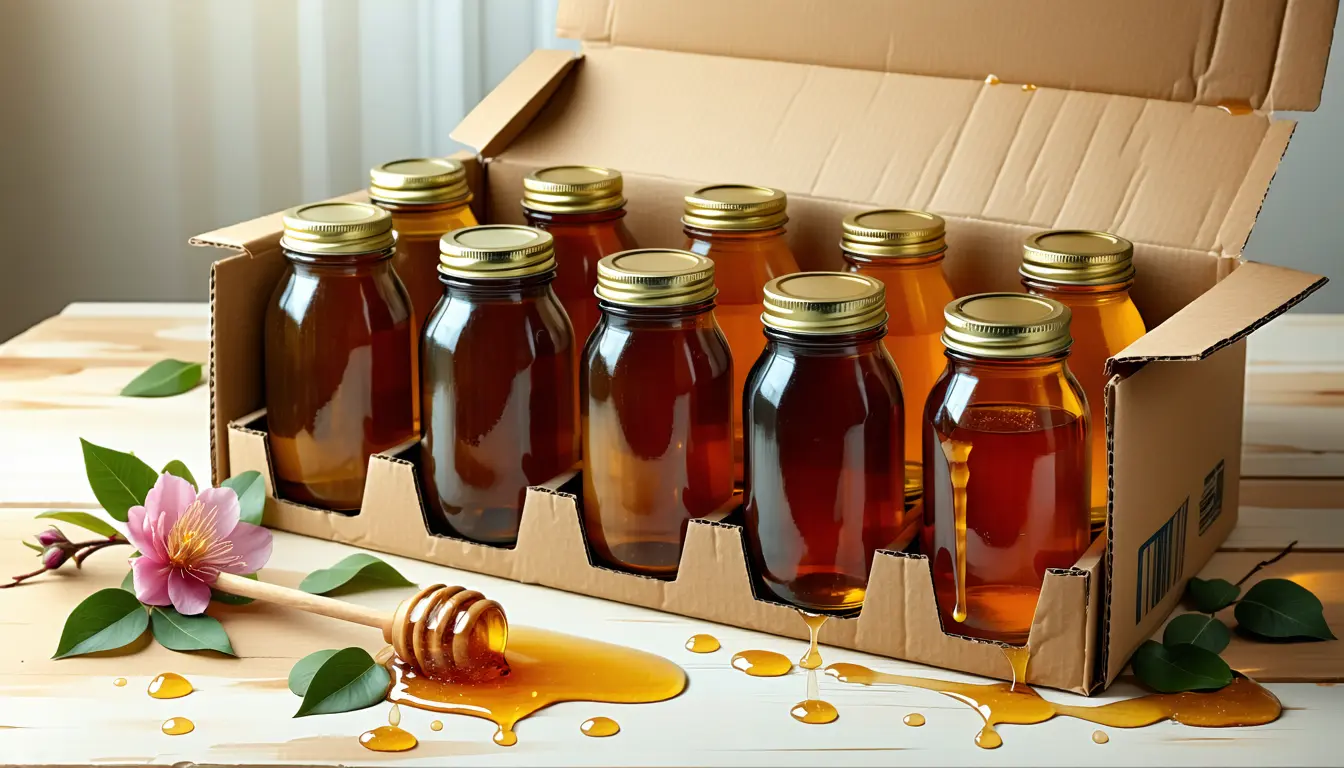
The dose figures are where the piece is usefully honest. One passage puts a teaspoonful at pleasantly warm and slightly lightheaded, and more than a few tablespoons at a life-threateningly slow heart rate [11]; a later passage puts the onset of interference with cardiac electrical signalling at more than about a teaspoon [12]. Read "a few" as three and the two thresholds sit roughly ninefold apart [4]. Since potency varies by batch, season and location [10], I take the inconsistency as the state of the evidence rather than carelessness: the same spoon is a different dose depending on which cliff and which spring filled it. The Gurung answer to that variance is to know the source [13], and provenance is exactly what a parcel drops [14].
The demand side is not recreational. About 49 of the 68 patients were middle-aged men [3], and the pharmacology they are relying on has some support: in rat models, small amounts do lower blood pressure [18]. The author's stated problem is the distance between a medicinal dose and a harmful one [19]. A man titrating his own blood pressure from an unassayed jar is guessing at where the low side of that distance actually is.
The reassuring end of the file has conditions attached. Nepal has reported no deaths from this honey [8], and patients there are treated with intravenous fluids and atropine, with most recovering in a day or two [9]. Symptoms arrive within 30 to 60 minutes [7], so the exposure is usually recent when the patient reaches care; the case that prompted the review was a man who reached hospital about half an hour after eating honey brought back from the hills, with his heart rate down and his blood pressure collapsed [20]. In a department that has never taken a honey history, the same presentation is unexplained bradycardia in a middle-aged man.
One loose thread worth following: the grayanotoxin is a plant's deterrent aimed at insects that rob nectar without pollinating [16], and the bee that concentrates it appears unbothered, with the mechanism still unexplained, even though tolerance in insects feeding on toxic plants rarely comes free [17].
Ranked by verification strength, evidence, and original report placement.
A chemical ecologist from Nepal, working with two medical doctors who had previously published a case report of poisoned patients, investigated poisonings from wild Himalayan grayanotoxin honey.
The team searched records from 1976 to 2026 and found and reviewed 27 published papers documenting the cases of 68 patients, all from 2009 onward.
Most of the patients ate the honey deliberately rather than accidentally, using it as a home remedy for high blood pressure or to improve sexual function, traditions that go back generations in Himalayan communities.
Bees foraging on rhododendron flowers take up the natural toxin grayanotoxin from the nectar and concentrate it in their honey, which is popularized worldwide as "mad honey".
The toxin interferes with how the heart muscle generates its electrical signals, causing the heart rate to slow to dangerously low levels and blood pressure to crash, which can become life-threatening without immediate treatment.
Distinct publishers with included, body-backed reporting in this cluster.
phys.org
1 article · August 27, 2026
Follow any of these and your For You feed starts watching them — no settings page required.
science
What you expect from your own old age shows up a decade later in who you still see1 distinct publisher
science
Researchers trace a third of Central Valley groundwater loss to 122 named producers1 distinct publisher
science
The sharp crystal seed was never there: 8,000 nuclei imaged atom by atom, all gradients1 distinct publisher
science
Eastern US extreme rain is pooling into fewer, wider storms, and station records hide it1 distinct publisher
Evidence-backed comparisons of source perspectives and observed adoption signals. Read the methodology
Which Builder, Operator, and Investor concerns the observed source mix emphasized—not a truth score.
Evidence, demonstrated adoption, hype gap, incentives, and confidence are assessed independently, each on its own current evidence. How these are measured.
Aggregated clinical literature, summarized second-hand and unlinked
The underlying material is peer-reviewed clinical literature - 27 papers, 68 patients, plus rat-model blood pressure work - which is stronger than anecdote. But everything reaches the reader through one first-person summary with no citation, journal name or link to the review, the per-year case volume is very small, and the article contradicts itself on the central dose threshold, which is the number a reader would act on.
Cross-border cases documented, market volume unknown
Real-world diffusion is directly attested rather than inferred: commercial listings on international platforms with several-hundred-dollar-per-kilogram pricing, buyers in the US, Europe and Asia, and clinical cases beyond Nepal in South Korea (15 cases by 2013), France and Qatar. It stays low because absolute case counts are small, no platform, listing, import or sales volumes are given, and the trend is asserted rather than quantified.
Headline lethality outruns the article's own outcome data
Modestly overstated. The headline says the honey 'can stop your heart' and is 'sold online worldwide', while the article's own findings are 68 patients over 18 years, no reported deaths in Nepal, and recovery within a day or two on fluids and atropine. The dose framing is also inflated in both directions at once by the unreconciled teaspoon-versus-tablespoons contradiction. The underlying hazard, seasonality and cross-border spread are genuine, so the gap is a matter of framing rather than fabrication.
Author promotes own review; sellers profit from the mystique
Two incentive layers are visible in the source itself. The piece is written in the first person by a researcher publicizing his own newly aggregated review, which rewards novelty and gap-framing ('no one had looked at the bigger picture'). On the commercial side, the article states sellers market the honey as a psychoactive superfood at several hundred dollars per kilogram and do not always include dose warnings, a direct incentive to preserve rather than dispel the mystique. No countervailing seller, platform or regulator voice appears.
One publisher, one first-person account, internally inconsistent
Single-source, single-publisher cluster with a truncated body, no link to the reviewed literature, and a self-contradiction on the key quantitative claim. Confidence is moderate rather than low because the mechanism, treatment protocol and case-series structure are conventional and internally coherent, and the author is a named domain specialist writing in the first person.