Leadership1 distinct publisher3 min readPublished
The record shows a review, not a withdrawal order, but the 80,000 troops and the roughly $100 billion a year now sit inside a process that outlasts any single officeholder, and European budgets have to price that.
The Board Room · Leadership desk
Compiled by The Board RoomSomething wrong?How this is made
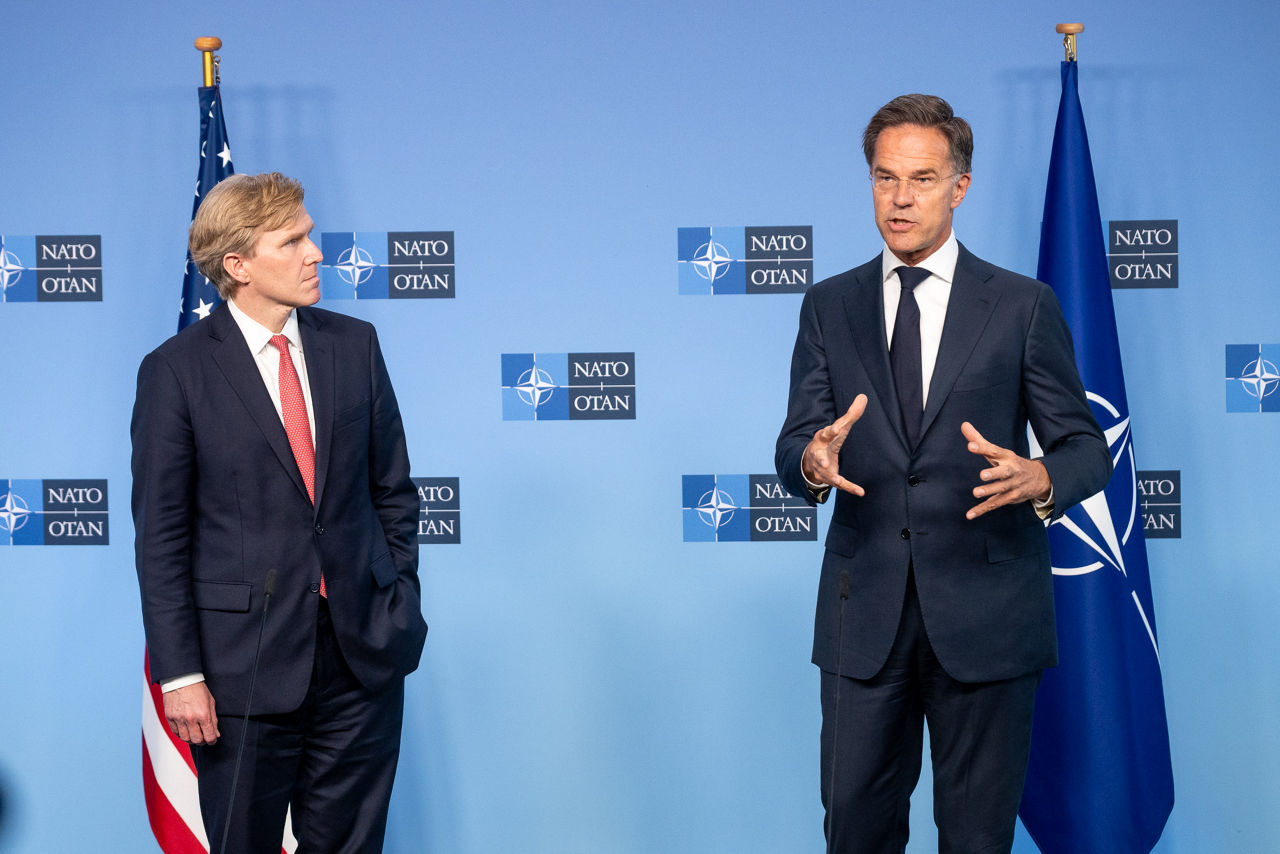
The operative difference between the first term and this one is procedural rather than rhetorical. In 2020 the administration mounted a late and unsuccessful attempt to move 12,000 troops out of Germany [3]. What exists now is an institutional object: a Europe Posture Review commissioned by the Pentagon as a critical assessment of American troop deployments and basing commitments, announced by Defense Secretary Pete Hegseth at the NATO defense ministerial [5]. A review generates a baseline and a written set of options, and a document of that kind survives the officeholder who commissioned it.
The fiscal framing in the Foreign Affairs essay is weaker than its priority framing, on its own numbers. The authors put annual American spending on Europe's defense at about $100 billion, set against $40 trillion of federal debt growing by roughly $2 trillion a year with no prospect of major fiscal reform [10][9]. That commitment is about 5 percent of what the government adds to the debt each year [1], so ending it would not repair the balance sheet. Divided across the 80,000 troops stationed on the continent and in the United Kingdom, the same figure works out near $1.25 million per service member [8][4], which tells you it buys more than pay and basing; the essay does not break it down, and the record does not tell us what else is inside it. The lever here is prioritization rather than savings, which is what Hegseth told counterparts in Brussels when he said American priorities lay elsewhere and Europe had to take ownership of conventional security [4].
The plausible size of a drawdown is bounded by the history the essay itself supplies. American forces in Europe exceeded 400,000 at the height of the Cold War and have never dropped below 60,000 since [16][17], so today's 80,000 is under a fifth of that peak [3]. Returning to the post-Cold War floor would remove 20,000 people, a quarter of the current presence [2]. The essay urges a substantial reduction within two years [11] without naming a figure, so the range that matters for planning runs from a symbolic trim up to roughly that quarter.
The skeptic's case is that this is familiar noise: the first-term threat to leave NATO was never executed [2], and administrations since Eisenhower have asked Europe to do more without result [15]. That is a fair prior, and the essay concedes the pattern. The answer is that the present instrument is built to produce a recommendation rather than a speech, and the language attached to it is plain. Europe "can and must take primary responsibility for its conventional defense", Hegseth said in announcing the review [6]. The essay's own argument is that only an actual withdrawal of forces will convince allies to plan differently [12], which means any partial measure will be read across Europe as evidence that nothing has changed.
For anyone carrying European exposure, the useful distinction is between this quarter and this decade. Nothing in the record obliges a repricing now, because the review has been launched and not concluded [5]. The decade-scale question is who funds conventional defense on a continent where the United States has supplied about 60 percent of allied military expenditure and where decades of American dominance left European states reliant on US leadership, technology and spending [7][18]. That dependence was already visible in 2014, when Russia annexed Crimea [19]. A plan written this quarter can hold that exposure as a named assumption rather than an inherited one.
Ranked by verification strength, evidence, and original report placement.
The first-term administration's only concrete move was a late, failed effort in the summer of 2020 to remove 12,000 troops from Germany.
The United States stations some 80,000 troops on the European continent and in the United Kingdom.
In a 1987 New York Times advertisement, Donald Trump said "America should stop paying to defend countries that can afford to defend themselves."
During his first term, Trump threatened to withdraw the United States from NATO on the grounds that members were not spending enough and were free-riding on American taxpayers, but ultimately did not make good on the threat.
Almost immediately after taking office, Secretary of Defense Pete Hegseth traveled to Brussels to tell his counterparts that the United States would have to focus on priorities other than Europe's defense, and that Europe needed to "take ownership of conventional security on the continent."
The Pentagon launched its Europe Posture Review in the month before the essay's publication, intended as a critical assessment of US troop deployments and basing commitments on the continent, announced by Hegseth at the NATO defense ministerial.
Distinct publishers with included, body-backed reporting in this cluster.
1 article · August 27, 2026
Follow any of these and your For You feed starts watching them — no settings page required.
leadership
Six months of on-off war has turned Gulf interruption into a line item, not a scenario1 distinct publisher
product
Court reversal turns the Pentagon's Anthropic ban into a migration teams may have to run twice1 distinct publisher
leadership
India's "America plus" keeps the diversification thesis alive on Modi's restraint alone1 distinct publisher
leadership
Hormuz Was Shut For Four Months And Nothing Broke. The Buffer That Did That Is Spent.1 distinct publisher
Evidence-backed comparisons of source perspectives and observed adoption signals. Read the methodology
Which Builder, Operator, and Investor concerns the observed source mix emphasized—not a truth score.
Evidence, demonstrated adoption, hype gap, incentives, and confidence are assessed independently, each on its own current evidence. How these are measured.
Quotes hold, numbers unaudited
The spoken record is the strong half: Hegseth on the record in Brussels and at the ministerial, and a Pentagon review with a name and a remit. The numbers are the soft half. Every figure a reader might act on — 80,000 troops, 60 percent of allied spending, $100 billion a year, $40 trillion of debt — reaches them through one essay and is checked against no Defense Department or NATO accounting. The cost figure is the weakest link: at about $1.25 million per stationed service member it obviously covers more than pay and bases, and Foreign Affairs never says what.
A review, two speeches, one failure
Tally what has actually happened rather than what has been said: a review opened last month, two ministerial statements, and one earlier attempt — 12,000 troops out of Germany in the summer of 2020 — that collapsed and was formally reversed. Force levels have moved the other way in the meantime, up toward 100,000 after Russia's full-scale invasion before settling at the current 80,000. Institutional motion, yes; implementation, not yet.
Process read as decision
'Seems poised to act' is the essay's own phrase, and what sits underneath it is a critical assessment of deployments and basing — not an order to leave. The stretch is real but modest, because Foreign Affairs is candid about what it is doing: arguing that the drawdown should happen, and conceding in the same breath that European capitals and Congress will resist. The overstatement is in the momentum, not in the facts.
Prescription in journal clothing
This is advocacy wearing a policy journal's sober register, and the selection gives it away: debt totals and gross annual cost in; the price of European replacement, the transition risk, and any allied rebuttal out. Europeans are said to have shirked since Eisenhower with not one European official quoted. Who wrote it and what institution stands behind them is not in front of us, so read this as the shape of the argument rather than a finding about its sponsorship.
Verifiable spine, one voice
Two things pull against each other here. One publisher and no corroboration argue for caution, and the interpretive claims — that only withdrawal will move Europe, that allies are simply waiting the term out — rest entirely on assertion. But the spine is a named Pentagon review, dated speeches and quoted lines, the sort of thing anyone can confirm in the public record even though it has not been confirmed here. What cannot be judged from this vantage is whether the review's recommendations will look anything like the prescription written around it.