Science1 publisher3 min readPublished
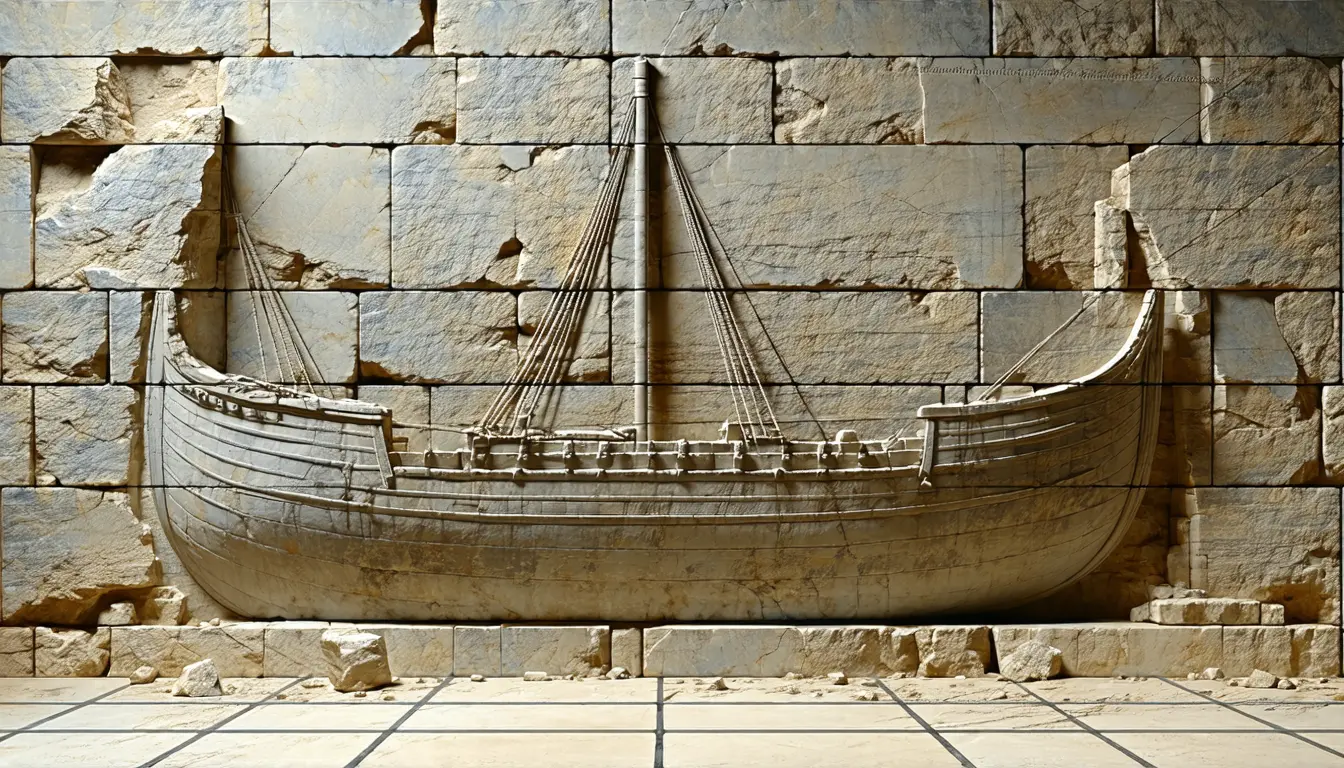
Laser scans of a Cyprus temple wall found 23 ship carvings a 1982 survey missed
Forty years after a visual survey recorded the ship carvings on a temple wall at Kition Kathari, a scan aimed at the masonry found 23 more, faint enough to be invisible at the wall and spread over as much as three centuries.
The Scientist · Science desk
What happened
- A 2024 laser-scanning campaign at Kition Kathari in Cyprus recorded 23 possible ship carvings on the temple walls, faint enough that they are nearly invisible to the naked eye.
- A survey in 1982 recorded 19 ships on the southern wall of Temple 1, with two more found later on an altar in Temple 4.
- The scanning was set up to feed a study of ashlar masonry and Late Bronze Age building practice, and Barnes says the team did not go in looking for ships.
- One of the ships sits on a small repair block added to the temple about 150 years after the rest of the wall, so the carvings cannot all belong to a single episode.
- The carvings were already worn when they were first recorded, and excavation exposed both carvings and blocks to further erosion.
Compiled by The ScientistSomething wrong?How this is made
Why it matters
- capability A 3D reconstruction can recover incisions from a surface that is now in worse condition than the drawings published from it. Stone that came out of the ground decades ago can still be read as evidence.
- precedent When one pass of a scanner supplies more than half the ship carvings known at a wall this well studied, the same treatment becomes easy to justify anywhere shallow incised carving was recorded by eye.
- constraint Each identification is a candidate read from a few lines of geometry, so the count will move as other specialists work through the same scans. Better instruments leave that call to them.
- contradiction The older reading had the carvings as one act at the end of the Bronze Age. The scan-based chronology has carvers working before and after the collapse, so the site now supports an argument about continuity.
Most of the 23 amount to a few carved lines each, read off blocks the team reconstructed in three dimensions. The study calls them potential ships, and the qualifier is earned: every one is an interpretation of surface geometry on stone that was already worn when it was first recorded in 1982. The published account does not say how many blocks the team scanned. Without that number, 23 stays a raw count.
Before the scan, the published corpus at the site stood at 21 ships. If all 23 candidates hold, it goes to 44, and just over half the ships known at Kition Kathari come from a single pass of a scanner.
The find was incidental. "When we noticed all the ships, I felt tremendously excited," said Caroline Barnes of the University of British Columbia, who added that the team "had not expected to find them".
The chronology rests on two different kinds of evidence. One is the sequence of the wall itself: the repair block that carries a ship went in long after the original construction. The other is style. Typology dates a carving by resemblance, so the range belongs to the assemblage as a whole. The team sorted the carvings into six groups and matched them against the wider eastern Mediterranean record, finding Levantine merchantmen, Minoan sailing ships, hybrid galleys possibly from the Carmel Coast and one distinctly Cypriot hybrid.
That gives a sequence of carvers working on either side of the Bronze Age collapse. "The term collapse often implies everything was erased and started anew much later," Graham Braun of the University of Cincinnati, who led the scanning, and Barnes said. On Cyprus, according to the study, people went on carving ships while cities elsewhere were being abandoned. The researchers' explanation is a domestic one: "We can imagine that ships and seafaring were a common part of everyday life in the community," they said, noting that the practice "is attested on Cyprus even in the medieval period".
Placement supports that reading. The Temple 1 carvings sit at eye level, where they resemble the silhouettes of vessels moored nearby, while the graffiti on the Temple 4 altar are near the floor, low enough that the authors suggest the altar fire's glow would have made them appear to flicker.
The argument for going back to other long-published sites is in one sentence from the authors. "It is very likely that ships were carved into these now-missing areas," Braun and Barnes said. The wall has been losing surface since excavation exposed it, so the same scan run later returns less.
Specialists had worked on this surface for four decades, and a survey done by eye missed carvings on it. One wall is thin evidence for how often that happens elsewhere. The team is now building a virtual reconstruction of the temple walls. Barnes framed it in terms of access: "I see it as an opportunity to bring the past to life."
What to watch
- Whether independent specialists accept all 23 candidates once the scan data circulates, and where the count settles.
- Whether the virtual reconstruction ships with the underlying block models, so the identifications can be checked.
- Whether other Cypriot or Levantine sites with ship graffiti recorded by eye get the same scanning treatment, and what they return.