Invest1 publisher3 min readPublished
Kamino recruits a Yieldstreet founder to turn Solana's $4bn of tokenized assets into collateral
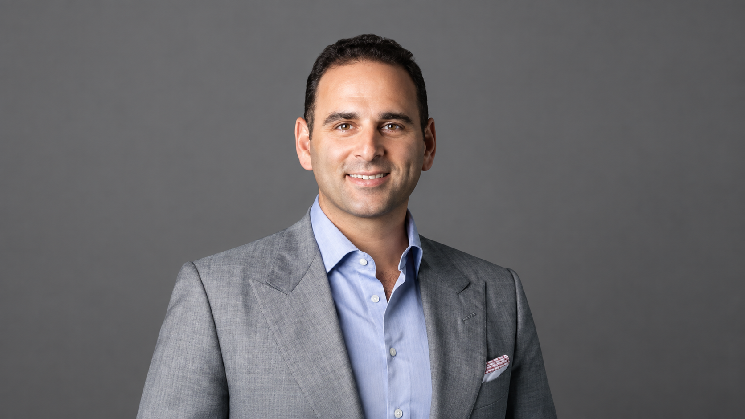
Solana holds 12% of tokenized-asset market value but handled 32% of the dollars traded in the year to August 18, at a median trade size of $29. Michael Weisz's job in New York is to turn that into loan demand.
The Investor · Invest desk
What happened
- Kamino appointed Michael Weisz chief executive on Tuesday and said it is standing up an institutional team in New York City to take tokenized real-world assets toward institutional credit markets.
- The median RWA trade on Solana came to $29 against $70 on other networks, and BlackRock's $741 million BUIDL fund did not execute a single trade there.
- Figure, which made Kamino its exclusive on-chain credit partner in a Solana consortium formed in December 2025, says it has issued more than $19 billion of on-chain loans and controls 70% of RWA private credit.
Compiled by The InvestorSomething wrong?How this is made
Why it matters
- constraint A lender that may have to liquidate collateral needs a market that clears size, and a median ticket of $29 tells it nothing about what a large block would fetch.
- contradiction Galaxy Research describes tokenized value on Solana as largely unused while Figure claims a $19 billion on-chain loan book, so the same market looks either idle or the busiest venue in private credit depending on whose count you take.
- decision An asset manager weighing whether to pledge tokenized holdings now has a US-based counterparty with a compliance and asset-manager operations function to test before it signs.
Lending against a token means being able to sell it. Over the year to August 18 the median RWA trade on the network was $29, against $70 elsewhere [7]. The trading is there. Solana carried 32% of on-chain RWA spot trading and 47% of all RWA transactions in that period while holding 12% of RWA market capitalisation [5], roughly 2.7 times as much trading share as asset share [1]. The $14.7 billion transacted out of $46 billion works out at the same 32% [6][6]. BlackRock's $741 million BUIDL fund did not execute a single trade on Solana [8]. That fund is a sum equal to about 19% of the $4 billion on the network [3].
The $4 billion sits in more than 350,000 wallets [3], an average of about $11,400 each [2]. Kamino, the largest lending protocol on Solana, has decided the next stage is converting that tokenized value into continuous lending demand [4]. The report does not say how much of the $4 billion is currently pledged against loans.
Weisz co-founded Yieldstreet, also known as Willow Wealth, where he grew distribution for private-market investments [9]. On LinkedIn he said tokenization was only the beginning, and that a working market also needs liquidity, credit, distribution and infrastructure [10]. The New York build follows that list: distribution, legal and compliance, asset-manager operations, and credit and liquidity, staffed with people drawn from finance, law, product, compliance and business development [11], four workstreams that all stop short of issuing an asset.
Galaxy Research wrote that "Capability now runs ahead of adoption, and H2 2026 will test whether that gap closes" [12], and says much of Solana's tokenized value is still not in use, with lending markets failing to turn the pool into sustainable loan demand [13].
The strongest argument against the depth objection is Figure. It set up an RWA consortium on Solana in December 2025 with Kamino as its exclusive partner for on-chain credit and lending [14]. Figure says it has issued more than $19 billion of on-chain loans and controls 70% of the RWA private-credit market [15]. That claimed book is about 4.75 times the entire $4 billion of RWA value on Solana [5]. PRIME, the liquid staking product wired into Figure's lending framework, pays yield out of pools that include Figure's home-equity loans [16]. If borrowing demand shows up, the likelier route is originators funding loan books on chain, rather than holders of tokenized funds levering positions they never trade.
In my view secondary depth is the binding constraint on this business, and two readings would beat that. Institutional lenders may not need a screen price at all if the collateral redeems at net asset value with the issuer, in which case a $29 median ticket is beside the point. Or Figure's pipeline supplies its own borrowing demand whatever trades on the secondary. The July FinTech journal research finding that tokenization supplies no liquidity by itself covers Ethereum, so it points a direction and no more [17]. Kamino's pledged collateral will settle it. If borrow balances climb while the median trade stays near $29, depth was not the constraint I took it for.
What to watch
- A first BUIDL trade on Solana would give lenders a secondary price to liquidate against, and there has not been one.