Build2 publishers2 min readPublished
Joby flew its autonomy kit 3,199 miles while supervising it from 2,323 miles away
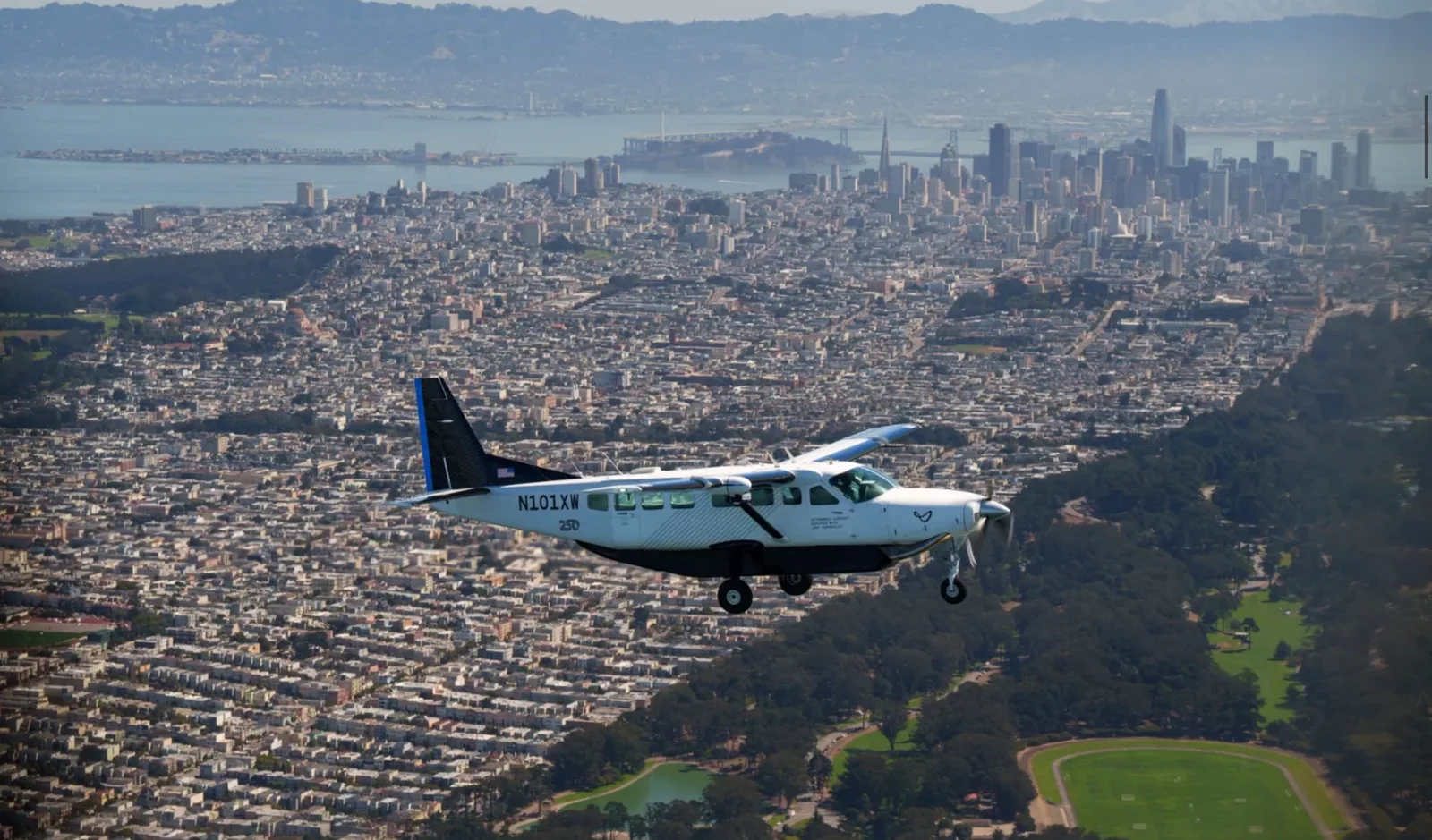
The Xwing-derived system flew a converted Cessna Caravan across the United States without pilot input, and Joby means to sell it as a kit on conventional airframes while its electric air taxi waits on FAA certification.
The Engineer · Build desk
What happened
- Joby Aviation said a converted Cessna Caravan running its autonomy system flew 3,199 miles from Concord, California, to Dare County Regional Airport in North Carolina without the onboard safety pilot touching the controls.
- Joby said the aircraft handled high-density airport traffic and weather-driven route changes on its own, with the safety pilot never taking over.
- Remote supervisors watched from Joby's California headquarters and from Shaw Air Force Base in South Carolina, at times sitting 2,323 miles from the aircraft.
- TechCrunch reported that Joby plans to market the system for conventional regional aircraft, with freight and defense among the first prospective uses.
Compiled by The EngineerSomething wrong?How this is made
Why it matters
- constraint The kit did not take the pilot out of the aircraft: one stayed aboard for regulatory compliance, so the crew cost that makes autonomous freight worth buying was not removed on this route.
- capability A cargo or defense operator can evaluate the stack on airframes already in service and already certified, without queueing behind Joby's air-taxi program.
- cost The U.S. Air Force has put $17 million into the work through AFWERX, according to TechCrunch, so the likeliest first customer has part-funded the product it would buy.
- contradiction runtimewire.com treats the Resonant Sciences acquisition as pending while mezha.net reports it closed in August for $500 million, so a counterparty contracting for the autonomy stack has to establish which entity would own it.
Joby says the autonomy program has completed more than 400 flights and logged 800 automated flight hours in controlled and uncontrolled airspace, and the figures are company-reported [6]. Divide the hours by the flights and the average is about two hours [1]. Some 250 of those flights, plus more than 500 automated landings, were already on the books when Joby bought Xwing's autonomy division with stock in 2024 [7]. That leaves roughly 150 flights added since, so on the 400 figure about 62% of the flight count arrived with the assets [2].
Xwing built Superpilot around the Cessna 208B Grand Caravan [7]. The aircraft that crossed the country was a Cessna Caravan [2]. The demonstration ran on the type the system was designed around. Joby describes the product as a kit installable on a wide range of conventional aircraft, with a regional aircraft as the first commercial version, according to mezha.net [12]. For the 3,199-mile result to mean anything on a second type, the perception mounting, the actuation interface and the automated landing model have to port for less than the crew they replace.
Joby called the crossing the first autonomous flight across the United States to include autonomous taxi, takeoff, navigation and landing, according to mezha.net's account of the company statement [14]. Neither published account says what the aircraft does when the link to its ground supervisors drops [3]. The company was also specific about the scope: this was not autonomous passenger service, it did not demonstrate the electric aircraft's battery range, it does not make Joby ready for pilotless urban operations, and no paying passengers were aboard [9].
Both accounts put the autonomy stack in the same place. runtimewire.com reports that if the Resonant Sciences acquisition closes, Resonant becomes Joby's dedicated defense business and absorbs the existing defense initiatives, including the autonomy stack and the turbine-electric and hydrogen-electric aircraft programs [10]. mezha.net reports the purchase as done in August, $500 million in cash and shares for the Ohio radio-frequency and sensor company, already part of a separate defense unit [11]. Joby also signed an agreement last year with L3Harris Technologies to study a class of autonomous VTOL aircraft with a gas-turbine hybrid powerplant [17].
The electric vertical-takeoff aircraft remains the company's main project, and Joby is still seeking an FAA type certificate to fly short urban passenger routes with it [13].
What to watch
- Whether the westbound Electric Skies legs through Raleigh, Louisville, Wichita, Oklahoma City, Salt Lake City and Portland fly with the same hands-off record.
- Confirmation of the Resonant Sciences closing, and which legal entity ends up holding the autonomy stack and its AFWERX work.
- The first installation on an airframe other than a Cessna Caravan; that installation would price the porting cost.