Science1 distinct publisher3 min readPublished
The finding is still a preprint, and it arrives with a burden estimate so loose that annual infections could plausibly be 400,000 or 2.7 million. That is a weak footing for anyone sizing a vaccine stockpile.
The Scientist · Science desk

Compiled by The ScientistSomething wrong?How this is made
Start with the denominator, because vaccine planning runs on it. About 15% of yellow fever infections become severe [2], and severe cases kill an estimated 20% to 50% of patients [3]. Multiply those and the overall case fatality sits somewhere between 3% and 7.5% [17]. Push the annual death estimate of 31,000 to 82,000 [4] back through that band and you get roughly 410,000 infections a year at the lethal end of the range and about 2.7 million at the mild end [18]. That is close to a sevenfold spread around the quantity a stockpile is meant to cover, and the death figure alone already spans a factor of about 2.6 [19].
The temperature mechanism is the tidy part. Heat raises mosquito metabolism, so they bite more, and warming also shortens the extrinsic incubation period, the interval before a newly infected mosquito can transmit to a person, according to UCLA's Seth Judson [8][9]. Those two effects push in the same direction and compound, which is why warming shows up in transmission models rather than in case counts alone. Judson's account stops short of a coefficient, though, so nobody here can turn a degree of warming into a number of cases.
The Brazilian episode is the messier and more interesting evidence. Drought is thought to have pushed forest mosquitoes, along with marmosets and howler monkeys, toward cities in search of water, and dehydrated mosquitoes bite more, disease ecologist Jamie Caldwell of Princeton told Live Science [11]. That is a specific mechanism attached to a single outbreak in two cities [10], which is better than a bare correlation and still not a controlled comparison. Stanford's Joelle Ivy Rosser puts the general version more carefully: extremes in either direction, very wet or very dry, can worsen mosquito-borne transmission [12].
The 1940 date deserves the same scepticism. Judson's preprint reports reemergence where yellow fever had not been reported since then [14], and reporting is not presence. The vaccine arrived in 1937 [5], three years earlier [20], and the historical record thins out exactly where vaccination and attention arrived. Whether the virus actually vanished from those valleys for eighty years, or simply went unobserved in them, is a question this leaves open.
Where the ecology becomes operational is at the forest edge. Most human infections are spillovers from nonhuman primates via mosquitoes [7], and agricultural expansion into forest puts more people within biting range, WHO biologist Gabriel Parra-Henao told Live Science [15]. If the earliest signal of a shifting range is in monkeys and mosquitoes at city margins [23], then surveillance spending and vaccine positioning are different problems with different lead times, and only one of them needs a precise caseload forecast.
My read: the map revision is solid enough to act on for surveillance, since previously low-risk parts of Africa and South America have already forced updates [13]. The procurement arithmetic is not, because a sevenfold uncertainty in infections cannot be narrowed by adding another map. Live Science's own framing of a future United States threat rests on the phrase "in the realm of possibility" [22], which states that a probability is above zero and nothing more. The 2017 target of ending yellow fever epidemics by 2026 [6] was set against a geography that has since been redrawn, and the useful next number is a better denominator, not a wider outline.
Ranked by verification strength, evidence, and original report placement.
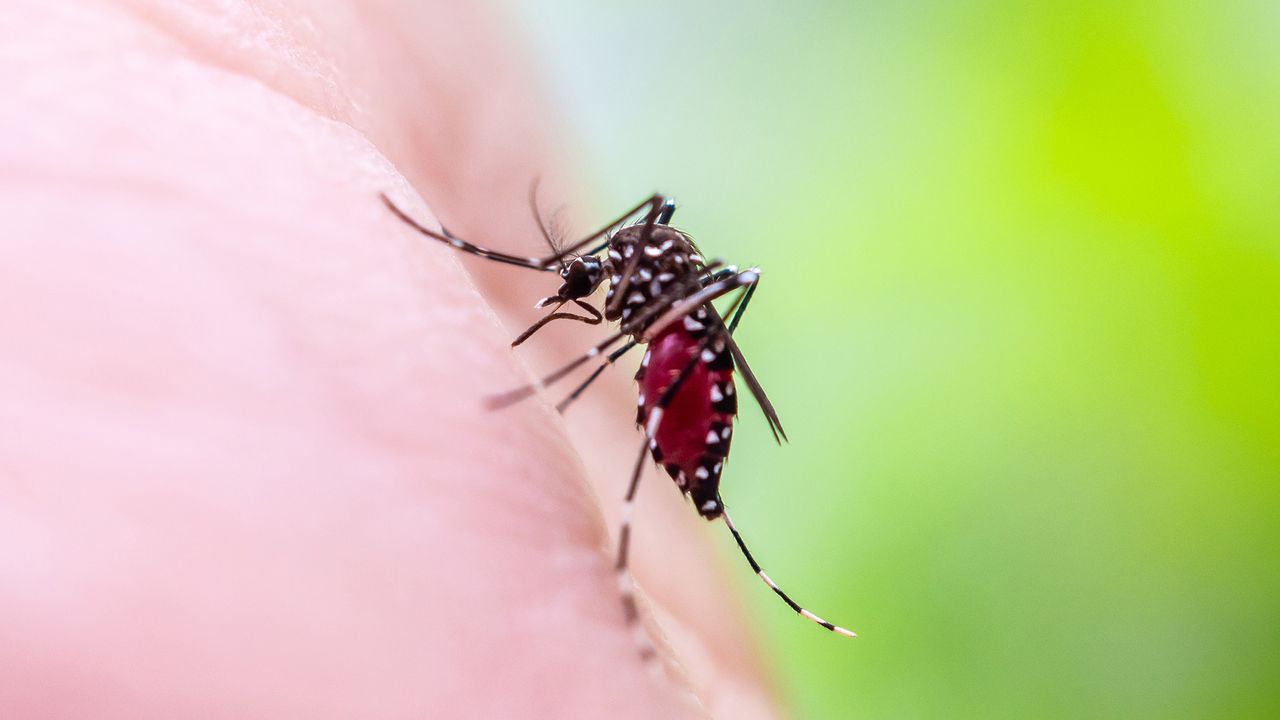
Yellow fever is a mosquito-borne disease caused by Orthoflavivirus flavi, known as yellow fever virus (YFV); symptoms include fever, muscle aches, headaches and vomiting.
About 15% of yellow fever cases become severe, with jaundice, bleeding from the mouth, eyes, nose and stomach, or organ failure.
Severe yellow fever cases have an estimated fatality rate of 20% to 50%.
An estimated 31,000 to 82,000 yellow fever deaths occur each year.
A yellow fever vaccine was introduced in 1937, after which the virus's range shrank significantly.
Yellow fever cases have been rising over the past three decades, which led the World Health Organization to set out a strategy in 2017 for eliminating yellow fever epidemics by 2026 through outbreak prevention and containment.
Distinct publishers with included, body-backed reporting in this cluster.
Follow any of these and your For You feed starts watching them — no settings page required.
science
A drug-insensitive enzyme in the mouse gut strips 80% of metformin's glucose-lowering effect1 distinct publisher
science
Feeds are triaging patients by engagement, and the proposed defence is literacy, not moderation1 distinct publisher
product
A blood-draw robot clears the FDA at 1m49s a stick. The missing number is per supervisor1 distinct publisher
science
Ancient DNA keeps changing the sex of the richest graves. The backlog is the story1 distinct publisher
Evidence-backed comparisons of source perspectives and observed adoption signals. Read the methodology
Which Builder, Operator, and Investor concerns the observed source mix emphasized—not a truth score.
Evidence, demonstrated adoption, hype gap, incentives, and confidence are assessed independently, each on its own current evidence. How these are measured.
Four named researchers, one outlet, no paper you can open
The mechanisms are attributed on the record to Judson at UCLA, Caldwell at Princeton, Rosser at Stanford and Parra-Henao at the WHO, which is real sourcing. But the finding in our headline lives in a preprint Live Science neither links nor dates, and the burden figures arrive unattributed to any body. Attribution to people is strong here; attribution to documents is almost absent.
Nothing countable was reported
This dimension asks who is actually doing something, and the reporting answers nowhere. No vaccination coverage, no doses, no case tallies for the Colombian Andes, no surveillance or vector-control programmes beyond the existence of the WHO's 2026 target. We will not manufacture uptake numbers from a story that contains none.
The headline travels farther than the preprint
'The US could face future threats' is doing work that the underlying evidence does not support. The US material concerns where Aedes aegypti might live, not where the virus is, and Live Science itself notes the virus is absent from local mosquito populations. Meanwhile the actual news, a reappearance in the Colombian Andes, is one unreviewed preprint. The mechanisms are plausible and well-explained; the reach of the framing is what overshoots.
Researchers introducing their own findings
Three of the four experts are describing work they produced: Judson both supplies the climate mechanisms and is the author of the unreviewed Colombian result, Caldwell co-wrote the Brazilian drought study she explains, and Parra-Henao speaks for the organisation whose 2026 elimination target frames the urgency. None of that makes them wrong, and the affiliations are disclosed. It does mean no voice in the story has an interest in the finding being smaller than claimed.
Enough to watch, not enough to plan on
We are reasonably sure the direction is real: warming and forest-edge encroachment raising spillover risk is a coherent story told consistently by four researchers, and Brazil 2017-2018 happened. We are not at all sure of the magnitudes or the specific Colombian claim, and with one outlet and no reviewed paper there is no way to firm that up from what we hold.