Product1 publisher3 min readPublished
T-Mobile charges $5 a month to keep one number on two iPhones in iOS 27
Apple's iPhone Handoff moves calls and messages between two iPhones sharing one number. Availability, price and cancellation all run through the carrier, and on T-Mobile that is $5 a month per number.
The Product Desk · Product desk
What happened
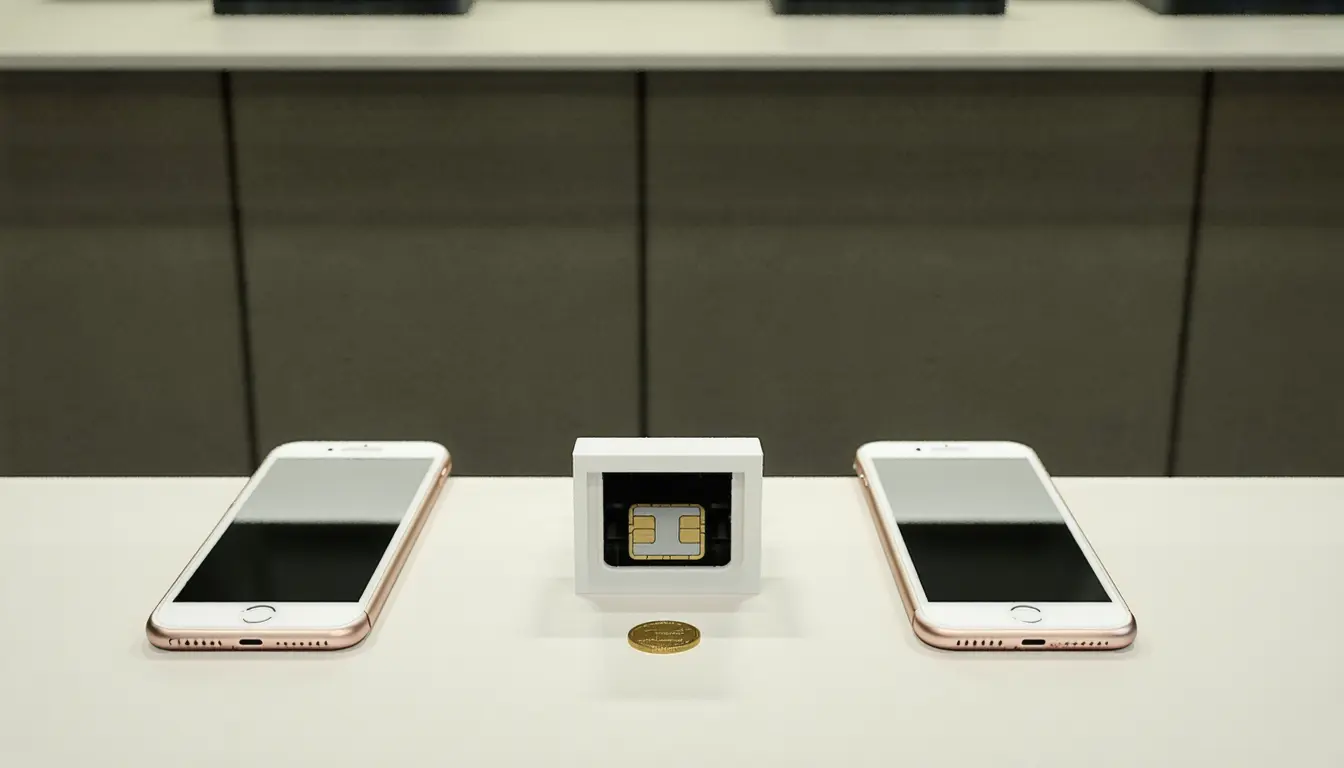
- Apple's iOS 27 adds iPhone Handoff, an eSIM feature that puts one number on two iPhones, active on only one of them at a time, with unlocking either phone making it the active one.
- T-Mobile is charging customers $5 per month in the United States to use it.
- Support today is T-Mobile and Telekom, with Verizon in the US and EE in the UK saying they will add iPhone Handoff later this year.
Compiled by The Product DeskSomething wrong?How this is made
Why it matters
- cost The bill lands on the carrier invoice: fifty numbers enrolled on T-Mobile comes to $3,000 a year for a convenience nobody will file an expense report for.
- decision Whoever approves the second device also owns a recurring charge that only the carrier can stop, so the cancellation path has to be written down before anyone enrols.
- exposure A user who relies on a Wallet transit pass or an ID, or on call forwarding, finds the second phone takes calls without being a working substitute for the first.
Unlock the second iPhone and a banner says "Switched to this iPhone" [2]. Calls, voicemail, iMessage, RCS, SMS and MMS arrive there, and Find My reports that handset as your location [2]. The Apple Watch stays where it was, because its pairing does not follow the number [10].
Other things stay behind on the phone you nominated as the main one. Call Forwarding and Caller ID are tied to it, as is carrier account management [12]. Some Wallet items, including certain transit passes and IDs, work on only one device at a time [11]. Banking apps may ask you to approve access on the other device, and some third-party apps want a separate sign-in [14].
Whether the feature exists for you at all is a carrier decision. T-Mobile in the United States and Telekom in Germany support it now; Verizon and EE are down for later this year [4]. AT&T has not committed, and a company spokesperson pointed to the carrier's existing eSIM activation and transfer options instead, according to MacRumors [5]. Dual SIM works only when both eSIMs come from carriers that support Handoff, each enrolled separately, after which both switch together when the phone is unlocked [15].
T-Mobile's price is $5 a month [6]. Fifty handsets on that plan is $3,000 a year [3]. Deutsche Telekom charges EUR 6.95 a month, which comes to EUR 83.40 a year [7][2], and the charge applies only to plans that do not already bundle multi-SIM: MagentaMobil L includes one and XL includes two [7]. No other carrier has published a price [8].
Turning it off runs through the carrier. Deleting the eSIM from the phone may not stop the charge [9]. Replacing a handset means transferring the eSIM to the new device, and where the carrier does not support transfer from a companion iPhone, you enroll in Handoff again [13].
Both iPhones share one Apple Account, use Messages in iCloud, and sign into FaceTime and iMessage with that account [3]. That settles who the feature is for: one person carrying two handsets. A pool of loaner phones handed to whoever is on call does not fit, because the second phone has to be signed in as the same person.
Both handsets have to sit on the same Apple Account, and separate accounts need a carrier multi-SIM instead [3]. The other thing to settle before anyone enables it is whether the person's day depends on something pinned to the main iPhone, such as the Watch pairing or a Wallet transit pass. If it does, the second phone will take the calls and leave those behind [10][11], and on T-Mobile that partial duplicate bills at $60 a year per number [1].
What to watch
- Pricing from Verizon and EE when they turn on support later this year, and whether either bundles it instead of charging separately.
- Whether AT&T commits to iPhone Handoff or keeps pointing customers at its existing eSIM transfer flow.
- Whether carriers outside Germany follow Telekom in treating Handoff as an existing multi-SIM entitlement on higher-tier plans.