Science1 publisher3 min readPublished
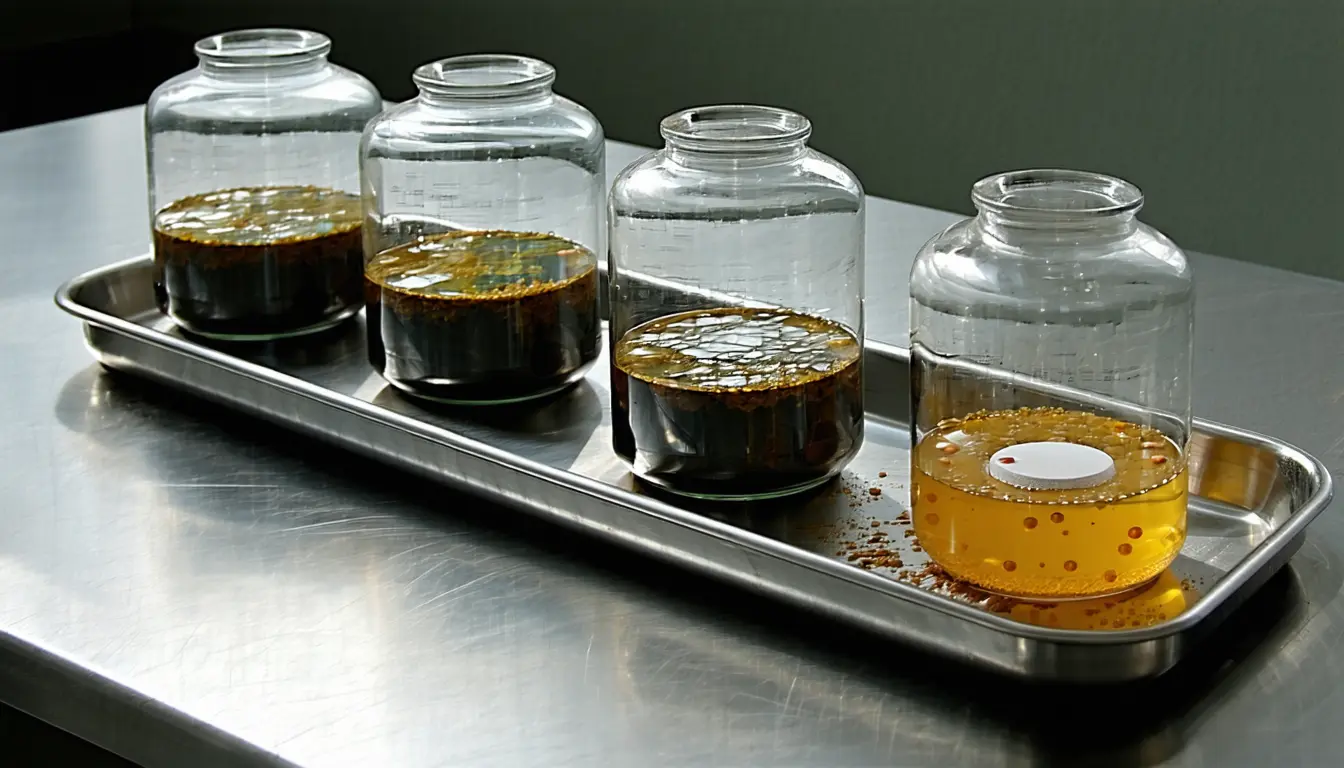
Dried-out soil dishes at Caltech selected for more antibiotic-resistant microbes
A March study adds aridification to the list of pressures that can select for antibiotic resistance, and it arrives with far less reportable detail than the tick-range numbers sitting beside it in the same account.
The Scientist · Science desk
What happened
- Xiaoyu Shan's Caltech bench held dishes of waterlogged and bone-dry soil containing soil microbes, and in the dried-out dishes those microbes were evolving to become more antibiotic resistant.
- The study, published in March, systematically showed that drought conditions could fuel the evolution of antibiotic-resistant bacteria, with drying itself acting as the selective pressure.
- The CDC reported in April that emergency department visits for tick bites were at their highest for that month since 2017.
- Positive tests for antibodies to alpha-gal, the red meat allergy trigger carried by the Lone Star tick, rose 100-fold between 2013 and 2024.
Compiled by The ScientistSomething wrong?How this is made
Why it matters
- constraint Prescribing stewardship works on the driver responsible for most resistance, but it does nothing to address a field drying out. A drought pathway would sit outside that main control measure.
- contradiction The vector-range story comes with counted cases but a quantified Lyme projection that needs warming now judged implausible, while the soil result comes with a clean comparison and no magnitude anyone can check.
- decision Monitoring money has to be split between tick surveillance that is known to undercount what it already tracks and an environmental mechanism that has not yet produced a number to budget against.
- exposure If Newman's expectation holds, the places carrying the extra selection pressure are defined by rainfall rather than by drug consumption. Resistance hotspots are usually mapped by drug consumption instead.
The apparatus was two sets of soil dishes, some waterlogged and some bone-dry, all of them holding soil microbes and no plants [1]. That is a readable comparison: the wet dishes are the control, and the variable being moved is water. What came back from the dry side was microbes evolving greater antibiotic resistance [2], with drying itself doing the selecting [3]. That is a different pathway from the one that accounts for most resistance, which is human misuse of antibiotics pushing bacteria to evolve genes that ward off the drugs [4].
The thing this account does not tell you is how big the effect was, which organisms did it, or which resistance genes they picked up [18]. Nor does a soil bacterium shrugging off a drug in a dish mean a patient's infection stops responding to one; the step from selection in soil to a clinical failure runs through gene transfer and human exposure, and none of that is measured here [18]. Dianne Newman, the Caltech microbiologist who co-authored the work, put the expectation in geographic rather than numerical terms, saying more resistant bacteria can be expected to be selected for in certain places around the globe [5].
The tick figures in the same account are better counted and worse behaved. The 100-fold rise in positive alpha-gal antibody tests between 2013 and 2024 works out to roughly 52 percent a year compounding [16], which is steep, though the number is positive tests rather than a rate per test ordered, so testing volume is inside it [9]. Nearly half a million people are treated for Lyme disease annually, against more than 8,000 recorded cases of other tick-borne diseases [11] - about a 60-fold gap [17], and one that mixes a treatment estimate with a case count, so it is not a like-for-like ratio. Tick-borne illness is likely underreported anyway, which means today's true total is unknown [14]. The best-quantified projection is the least reassuring for the warming story: a 2022 study found major increases in Lyme only at 3.5 to 5.5 degrees Celsius of warming by 2100, a scenario now considered implausible [12], and its authors reported wide uncertainty driven by behavioural variables such as how often people go outdoors and what precautions they take [13].
The ranking runs the opposite way from what the framing implies. Ticks carry 90 percent of US vector-borne disease [15] and their expansion northward and later into the year is the CDC's stated mechanism [8], but the disease burden that follows is loosely pinned. The soil result has a clean comparison and an unreported magnitude. Both remain unquantified as human risks, and this account reports no surveillance system that watches drying soil as a resistance driver [18]. Marina Romanello of University College London's Institute of Global Health made the general version of the point, that no individual metric does justice to multiple stressors compounding at once [6].
The number worth waiting for is narrow: how often a resistance trait selected in drying soil ends up in an organism that infects people. Until someone measures that, drought belongs on the list of candidate drivers to sample for, not on the list of quantified ones.
What to watch
- Publication of the drought study's effect size, organisms and resistance genes, which would turn a mechanism into something quantifiable.
- Field sampling of soil from actually aridifying regions, rather than dishes, to test whether the dish result reproduces outdoors.
- Whether the CDC's tick-bite emergency department metric stays at a post-2017 high next April or reverts.