Product1 publisher3 min readPublished
India prices UPI at 0.4% for merchant payments above ₹2,000 from October 15
NPCI capped the merchant fee at ₹300, exempted anyone taking under ₹100,000 a month, and kept consumer payments free. The band that pricing owners have to model runs from ₹2,001 to ₹75,000, where the full 0.4% applies.
The Product Desk · Product desk
What happened
- NPCI said on Tuesday that UPI will charge merchants 0.4% on certain payments above ₹2,000 from October 15, while consumers keep using the network at no charge.
- The fee is capped at ₹300 on transactions of ₹75,000 or more, payments of ₹2,000 or less stay free for merchants, and anyone taking up to ₹100,000 a month through UPI is exempt.
- India scrapped UPI merchant fees in January 2020 to drive adoption, and New Delhi amended the payments law in August before Monday's notification barred charges up to ₹2,000.
Compiled by The Product DeskSomething wrong?How this is made
Why it matters
- cost Merchants in the ₹2,001 to ₹75,000 band absorb the whole rate, because they cannot pass it to the payer while consumer fees stay barred. That cost comes out of margin or out of the list price.
- decision Any Indian checkout with tickets above ₹2,000 has to choose before October 15 whether to eat 0.4%, reprice under the threshold where the catalogue allows it, or push large baskets onto a rail that already costs more.
- constraint The cap only starts at ₹75,000 a transaction, so most consumer sellers never reach it, and mid-size baskets carry the heaviest effective rate.
- exposure The ₹100,000 exemption is a monthly test, so a small merchant that crosses ₹100,000 in a strong month starts paying the fee that month.
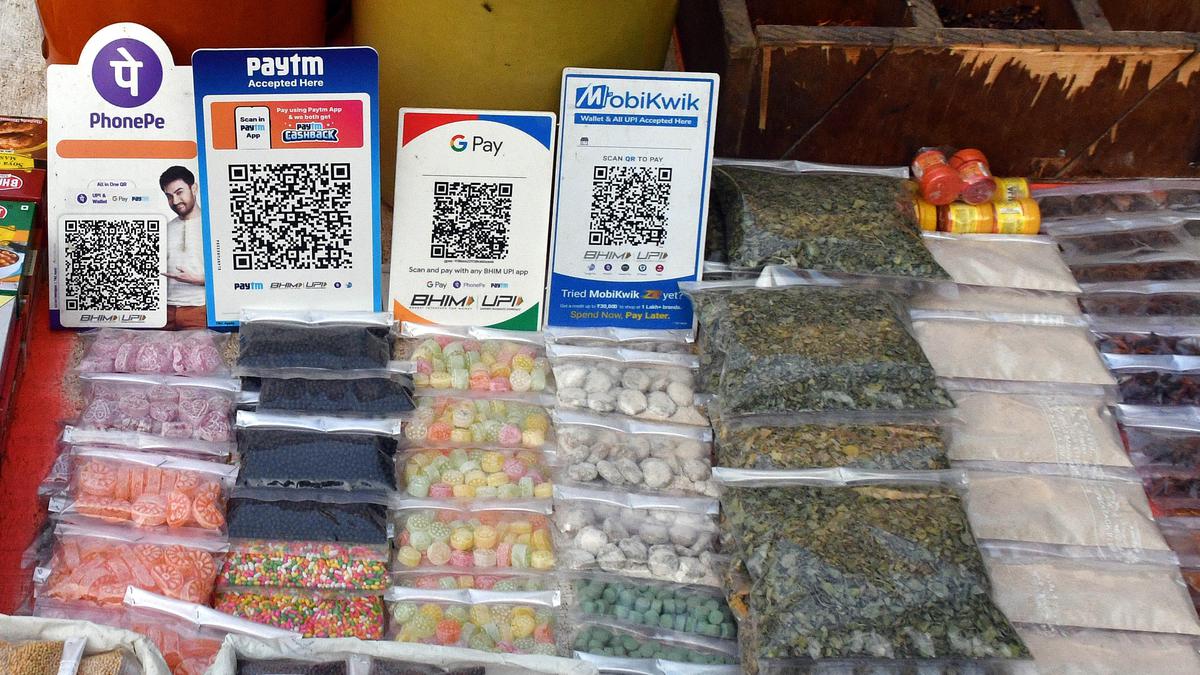
The customer scanning a QR code for a purchase above ₹2,000 on October 15 [1] will not see anything change, because consumers keep paying nothing [2]. Scanning a code is already one of the most common ways to pay in India [18]. The 0.4% lands on the other side of the counter.
The band that costs money runs from ₹2,001 to ₹75,000. Inside it a merchant pays the full rate on the full amount, so a ₹5,000 order costs ₹20 [3]. At ₹75,000 the percentage comes to exactly ₹300, which is where NPCI set the cap [1]. Above that the effective rate drops: a ₹200,000 payment also costs ₹300, or 0.15% [2]. The merchant this actually reaches takes more than ₹100,000 a month through UPI [4], sells outside the carve-out sectors, and has a median ticket above ₹2,000.
NPCI's reassurance is that payments of ₹2,000 or less are more than 95% of UPI merchant transactions by volume [13]. That is a count of transactions. A cost line is a share of rupees, and the two numbers answer different questions. Run it from NPCI's own cost figure instead: covering about ₹200 billion a year [11] at 0.4% needs roughly ₹50 trillion of chargeable value [5]. August's ₹29.9 trillion of UPI value [10] annualizes to about ₹358.8 trillion, which puts the required chargeable pool near 14% of everything the network carries [6], before the ₹300 cap, the monthly exemption and the flat-fee sectors pull realized yield under 0.4%. NPCI did not respond to questions about how much revenue it expects the fees to generate [12].
The step at the threshold is small in rupees and awkward in a catalogue. A ₹2,000 order is free; ₹2,001 costs ₹8 [4]. In my view, price points that can sit at ₹1,999 will, and that move caps the basket.
Railways, telecom, insurance and fuel pay a flat ₹5 above ₹2,000 [5]. On a ₹10,000 payment that works out to 0.05%, an eighth of what a general retailer pays on the same amount [7]. Capital-market transactions pay 0.02% with the same ₹300 cap [6].
Against cards the new rate is still cheap. NPCI's FAQ puts credit card fees at 1.5% to 2.5% and the debit cap at 0.9% [7], so a charged UPI transaction costs less than half a debit swipe [8]. Krishnamurthy Subramanian, a former chief economic adviser to the Indian government, wrote on X: "The right question is: what is the opportunity cost of charging UPI transactions and what are its social benefits?" [14]
For the person modelling this before October 15, the useful exercise is 90 days of UPI settlement bucketed by rupee value rather than by transaction count. The first bucket, at or below ₹2,000, stays free [3]. The second, ₹2,001 to ₹75,000, gets multiplied by 0.004 [1]. For anything above ₹75,000, count the transactions and charge ₹300 each [3]. A seller with ₹40 lakh a month sitting in that middle bucket picks up ₹16,000 a month, or ₹192,000 a year [9].
What to watch
- Whether NPCI publishes expected fee revenue and the split across banks, apps and the network.
- The details of the rural and small-city adoption fund NPCI said it would create from part of the fees.
- Whether NPCI addresses payment splitting, and whether October data shows list prices clustering just below ₹2,000.