Invest1 publisher3 min readPublished
10,037 illegal-lending complaints: Korea's credit stress has moved off the loan book
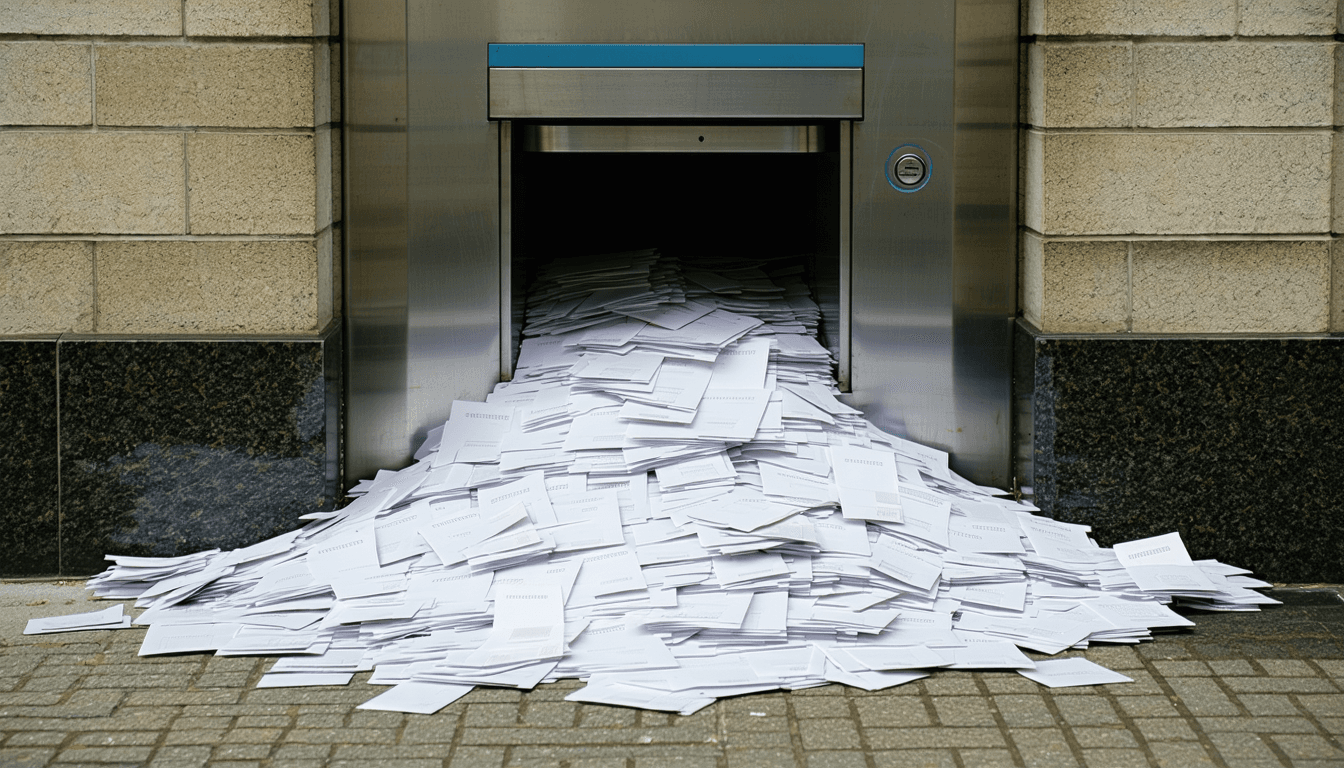
Korea's financial watchdog logged more than 10,000 illegal-lending complaints in six months, with effective rates past 2,000%. No regulated lender's delinquency table will show you that cohort.
The Investor · Invest desk
Drafted by a language model from the sources cited here and checked against its claim ledger before publication. How we use AISend a correction
What happened
- The Financial Supervisory Service received 10,037 complaints of illegal lending in the first half of this year, or 57.2% of the 17,538 recorded for all of last year, according to FSS data obtained on the 18th by Sedaily through the office of Rep. Chae Hyun-il of the Democratic Party.
- If the current pace continues, this year's total could exceed 20,000 complaints, potentially the highest since the illegal lending complaint center was established in 2012, when 18,237 complaints were filed.
- Complaints rose from 9,918 in 2021 to 10,913 in 2022, then 13,751 in 2023, 15,397 in 2024 and 17,538 last year.
- Complaints grew about 76.8% between 2021 (9,918) and last year (17,538).
- Analysts attribute the increase to high interest rates and weak domestic demand since the COVID-19 pandemic, which worsened the finances of low- and middle-income and vulnerable households, plus recent tighter household lending controls that raised the bar for bank loans; as the formal system fails to supply enough credit to low- and middle-credit borrowers, they are pushed into the illegal lending market, a balloon effect.
Compiled by The InvestorSomething wrong?How this is made
Why it matters
The Financial Supervisory Service received 10,037 complaints about illegal lending in the first half of this year, equal to 57.2% of the 17,538 logged for all of last year, according to FSS data obtained on the 18th by Sedaily through the office of Rep. Chae Hyun-il of the Democratic Party [1]. For anyone underwriting Korean consumer credit, the number matters less as a crime statistic than as a read on a borrower cohort whose deterioration will not appear in any supervised loan book [6].
The trend is not a spike. Complaints ran 9,918 in 2021, 10,913 in 2022, 13,751 in 2023, 15,397 in 2024 and 17,538 last year [4], a rise of about 77% over four years [5]. On the current pace, Sedaily reports, this year could clear 20,000, which would be the highest since the illegal lending complaint center opened in 2012 with 18,237 filings [3]. Analysts quoted in the report attribute the climb to high interest rates and weak domestic demand since the pandemic, plus tighter household lending controls that have raised the bar for bank loans, producing what they call a balloon effect as low- and mid-credit borrowers are squeezed out of the formal system [6].
The severity is moving faster than the volume. Complaints specifically about excessive interest reached 3,199 in the first half, about 68% above the 1,904 recorded for all of last year, already past the full-year 2024 level and near the 3,472 of 2023 [7]. That is roughly 32% of all first-half complaints [8].
The unit economics explain why enforcement is not deterring supply. Sedaily describes a Suwon franchise pizza shop owner, identified as Lee, who borrowed 2.5 million won, received 1.75 million after 750,000 was deducted as advance interest, and was told a month later that he owed 5 million, an annualized rate above 2,200% [9]. The advance deduction alone is 30% of face, and the demand equals 2.9 times the cash he actually received, in one month [10]. A revised lending law in force since last July voids principal and interest on illegal contracts above 60% a year or involving intimidation [11], yet in March the Wonju branch of the Chuncheon District Court handed three lenders who charged up to 21,783% suspended 18-month terms after they lent 500 million won across 651 loans and collected close to 1 billion won over about 16 months [12]. That is an average ticket near 768,000 won and roughly double the principal recovered [13]. Police data submitted to Rep. Chae's office show arrest rates falling, with the preliminary first-half figure at 51.2% [16].
The tactics are also pushing losses onto counterparties that are not lending at all. In phone-cashing, the borrower opens a high-end handset on long-term installments, the operator resells the device and returns part of the value in cash, and the borrower keeps the installment and airtime bills while the activated line can be reused as an untraceable phone [14]. Gift-card repayment schemes are widespread, and game-item cashing has begun reaching teenagers [15].
Watch two things. First, whether formal-sector delinquency at card issuers and savings banks stays flat while these complaint counts rise, which would mean the stress is migrating rather than clearing [6]. Second, telecom and handset installment receivables, the quiet balance sheet where phone-cashing losses land [14].