Product1 publisher2 min readPublished
Snap drops the Spectacles name for 132-gram AR glasses aimed at consumers this fall
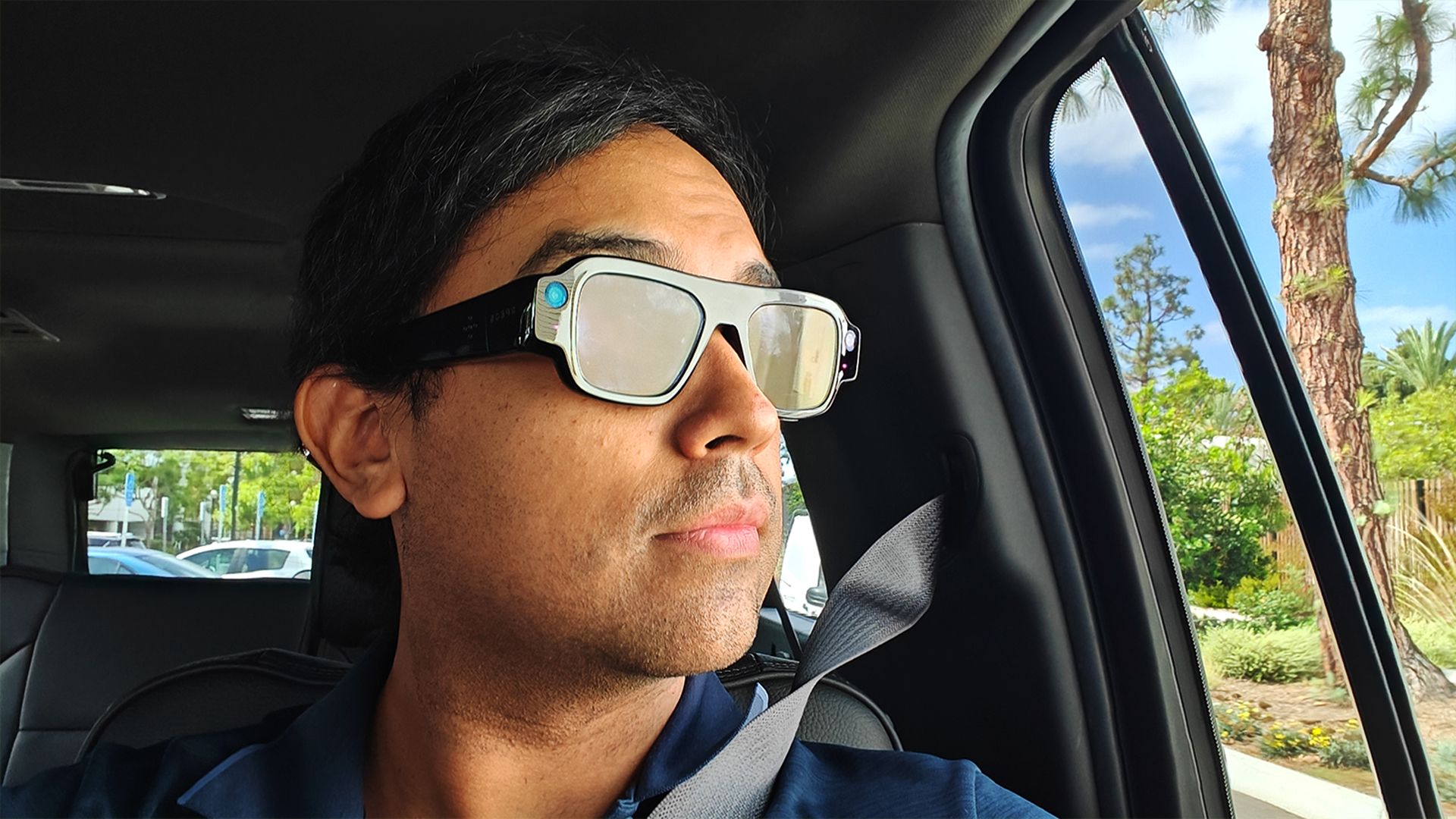
Snap's sixth-generation glasses arrive in Fall 2026 with a 51-degree display the company compares to a 24-inch monitor, and they weigh about 2.6 times what a pair of Meta Ray-Bans weighs. The demo software was Spotify and Google Docs.
The Product Desk · Product desk
What happened
- Snap will launch the sixth generation of its AR glasses in Fall 2026 under the name Snap Specs, retiring the Spectacles branding the line has carried since the first pair shipped in 2016.
- The glasses were unveiled at Augmented World Expo 2026 in June, where Snap said it was placing greater emphasis on regular consumers than on a strictly enterprise audience.
- Snap offers two sizes, a 47mm frame at 132 grams and a 52mm frame at 136 grams, against 50 grams for a pair of Meta Ray-Ban smart glasses.
- The projected display covers a 51-degree field of view through liquid crystal on silicon lenses, which Snap equates to looking at a 24-inch desktop monitor.
- Third-party software available in the demo came down to two apps, Spotify and Google Docs, with Google Docs accepting a wireless keyboard paired over Bluetooth.
Compiled by The Product DeskSomething wrong?How this is made
Why it matters
- decision The buyer moves from a deployment team to a person who bought a pair of glasses. Onboarding, support and pricing assumptions built for the enterprise generation have to be rebuilt before the fall date.
- constraint Weight sets the session length, and session length sets what a feature can be. Anything whose value only appears after an hour on the head cannot be validated on this hardware.
- cost Two frames that fit differently push fit onto support and returns, and the smaller size is the one that hurt in a controlled demo with a trained guide present.
- capability Voice is the input path that held up, so the features worth shipping first are the ones a wearer can trigger by talking while moving.
The 47mm frame pinched TechRadar's reviewer at the temples, and the 52mm sat comfortably [9]. The reviewer credited Snap with distributing the weight well [11]. Frames are Swiss TR90 polymer, slimmer than the previous generation and still chunky [10]. The smaller model is about 2.6 times the weight of the Meta pair used as the comparison [8].
Hand tracking is the weak part of the demo. Objects reposition with a pinch [12]. Dragging and dropping windows worked most of the time, but the glasses sometimes did not register the movement and the gesture had to be repeated several times [13]. There is a shortcut: holding the left hand up toward the camera opens a quick menu with the Home screen and other parts of the system [14].
Voice went better. Specs Intelligence answers voice commands with contextually relevant information and keeps listening until it is told otherwise [15], and it builds an understanding of the wearer's routines so it can surface information [16]. The reviewer called it one of the best parts of the glasses and reported accurate results and suggestions in almost no time [18]. The microphones needed volume, and the reviewer had to speak up to be picked up [17].
Speakers sit at the ends of the stems and point at the ears; Spotify came through clearly with punchy bass, and the reviewer could barely hear the music while holding the glasses close to the face [20][21]. Google Docs paired with a wireless keyboard over Bluetooth, with noticeable latency between the keystroke and the character on the page [22]. TechRadar's hands-on does not include a price [26].
TechRadar wrote that the glasses "are meant to be the entry point to a vast AR ecosystem" [27]. For a team deciding whether to build for that ecosystem, two questions settle it. The first is how long a session has to run, because the weight on the nose caps it. The second is whether the feature needs accurate hand placement or can work on voice. Short sessions driven by voice is the quadrant this hardware handled in the demo at Snap's Santa Monica headquarters [25]. Long sessions needing precise input is where Google Docs with a keyboard sits today, behind the latency and the missed gestures the reviewer described.
What to watch
- Whether Snap publishes developer terms and Lens distribution rules for consumer Specs before the Fall 2026 launch.
- Whether Snap adds frame sizes or fit options after the 47mm model pinched TechRadar's reviewer.
- Whether keyboard latency in Google Docs improves in shipping firmware, since it gates any text-heavy app.