Product1 publisher3 min readPublished
Snap answers the who-is-Specs-for question with an IT technician fixing hardware
At a Los Angeles event Snap wired its $2,200 glasses to HBO Max, Spotify, an NBA shooting drill and enterprise partners including Amazon, Salesforce and Nvidia. The demo that explained the pitch featured a repair job.
The Product Desk · Product desk
What happened
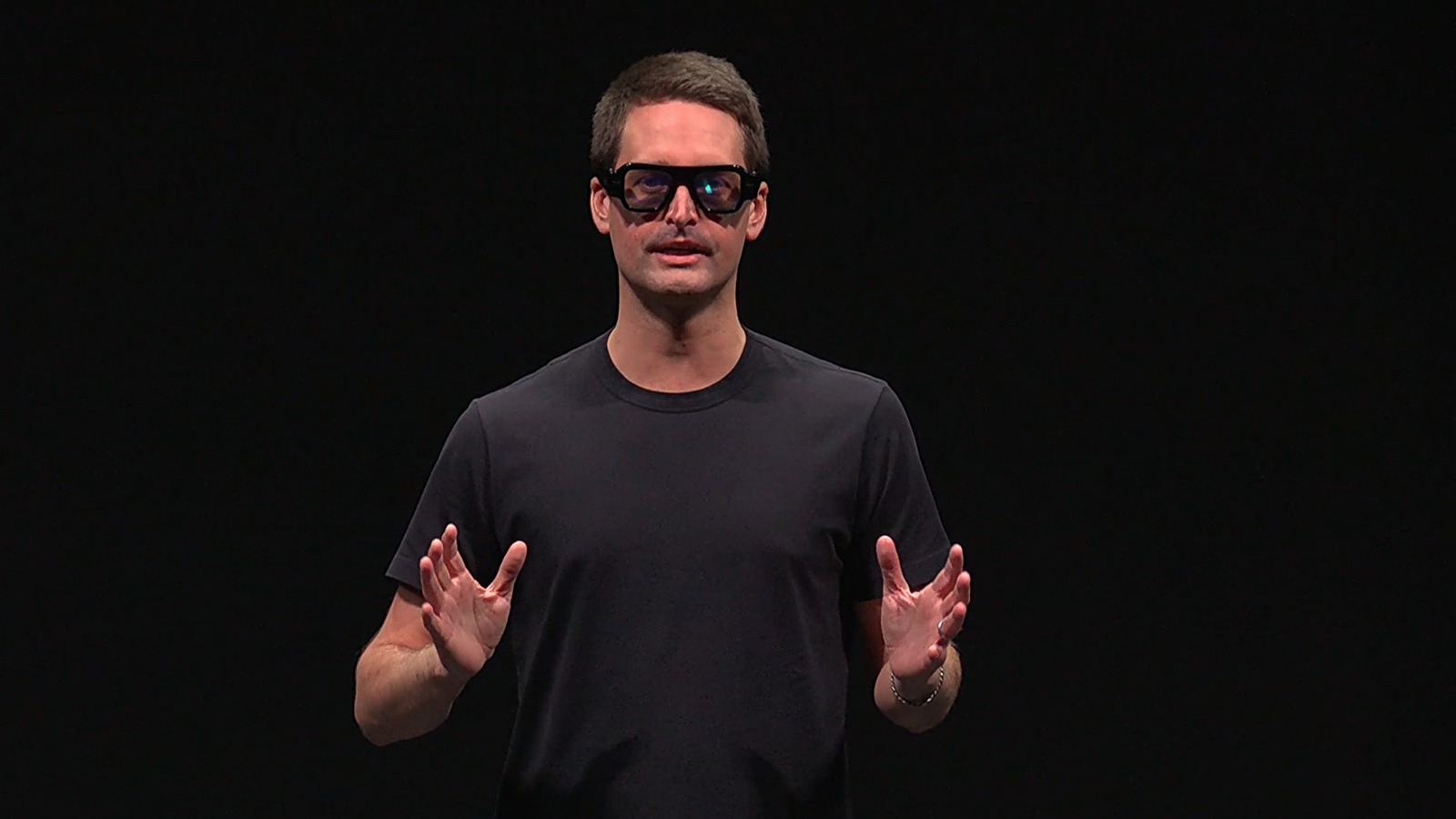
- Spiegel and other Snap executives took the stage at a Los Angeles event on Wednesday to unveil new features and services attached to Specs, the company's $2,200 smart glasses.
- Snap launched Specs for Enterprise alongside partnerships with Amazon, Salesforce, Nvidia and other firms aimed at getting the device into corporate workflows.
- The company also announced Specs Intelligence, an "anticipatory AI" system built to pair with user devices including iPhones and Macs as well as with the glasses.
Compiled by The Product DeskSomething wrong?How this is made
Why it matters
- cost Anyone who wants Specs to work away from Wi-Fi is signing up for a recurring line item on hardware they already own outright: $2,440 in the first year for a non-Verizon buyer, and $240 every year after.
- constraint Spiegel described the mobile device management and security controls as things Snap is building out, which leaves an IT buyer costing a pilot against tooling that does not exist yet to test.
- capability Because Specs Intelligence runs on iPhones and Macs, Snap can sell its AI product to people who will never buy the glasses, and the glasses lose their claim to be the only way to get it.
- decision The buyer Snap is courting has moved from the shopper choosing a gadget to the department that has to deploy, secure and justify a fleet of them for a named job.
Specs Intelligence, the system Snap calls "anticipatory AI", pairs with iPhones and Macs as well as with the glasses [5]. TechCrunch, which watched the live demos, wrote that in practice it seems to function more like an AI productivity app that can be used with Snap's glasses but doesn't require them [8]. Evan Spiegel called it an "AI native operating system with intelligence designed around your projects" [7].
The program Snap calls Specs for Enterprise arrived with partner names attached: Amazon, Salesforce, Nvidia and other firms [9]. TechCrunch asked who the service is really for and concluded the answer is IT technicians [22]; the demo video showed a technician repairing hardware with the glasses on [10]. "We're building out mobile device management, security controls, and ways to deploy and manage stacks across teams with the world's most trusted providers, bringing peace of mind to IT departments," Spiegel said [11]. Anyone scoping a pilot is scoping it against management tooling Snap describes as under construction.
The glasses cost $2,200 [1]. Using them away from Wi-Fi means buying the separately sold charging case with cellular built in, which Snap prices through a Verizon partnership at $10 a month for Verizon customers and $20 a month for everyone else [14]. Twelve months is $120 or $240, so first-year outlay is $2,320 or $2,440 depending on the buyer's carrier [17][18]. The same connection costs a non-Verizon customer twice as much per month [19].
On the consumer side, Specs now connects to HBO Max and Spotify [4], and an app built with the NBA and WNBA lets wearers practise their shot through the glasses' AR [12]. TechCrunch, which described the hardware as heavy and vaguely reminiscent of scuba gear, questioned who would actually play basketball with goggles on their head [13][21].
Two questions sort the announced experiences for anyone weighing a purchase. Does the task need both hands free and the eyes on a physical object? Will a person keep heavy glasses on for the full length of that task? HBO Max and Spotify fail the first test, because a phone already does that job. The basketball drill passes the first and runs into the second. The repair demo is the only announced use that clears both, and it is also the one that comes with the monthly connectivity line and the tooling Spiegel said Snap is still building [11][14].
TechCrunch did not report Specs sales figures or a count of developers building for the device [20]. Snap has repeatedly justified the price by calling Specs a computer [16]. "I will say it's an interesting time to be launching a new computer because things in tech are pretty weird right now," Spiegel said [15].
What to watch
- Whether Amazon, Salesforce or Nvidia disclose actual Specs deployments and headcounts.
- Whether Snap ships Specs Intelligence to iPhone and Mac users who never buy the glasses, and what it charges them.
- Whether the mobile device management and security controls Spiegel described get a ship date.