Product2 publishers3 min readPublished
Apple's Ultra 4 claims eight more hours of runtime from a 5 percent bigger battery plus efficiency gains
The screen, case and $799 price are unchanged, so the upgrade case rests on a redesigned rear sensor and a runtime figure that Tom's Guide prints as both 48 and 50 hours. A week of wear has matched the Ultra 3.
The Product Desk · Product desk
What happened
- Apple opened Ultra 4 preorders on September 9, 2026 ahead of a September 18 retail date, holding the price at $799 and AU$1,349, the same as the Ultra 3 and prior models.
- The Ultra 4 adds a Readiness score and a Health Age metric, and Apple says Readiness generally needs seven nights of wear before it produces a score.
- Sound Recognition and a faster Shazam ship now, while Live Rewind and Siri Recap are dated to later this year, initially in beta and in the United States.
Compiled by The Product DeskSomething wrong?How this is made
Why it matters
- contradiction Anyone comparing spec sheets gets a range instead of a figure: Tom's Guide prints 48 hours in its verdict and 50 in its quick facts, and TechRadar's first week matched the Ultra 3.
- decision The upgrade decision now turns on measurement quality a buyer has to wear the watch to judge, because the headline metric will not produce a number until the seventh night of wear.
- constraint Half the new AI features are dated to later this year and start in US beta, so buyers outside the US pay the September price with no date for when the software reaches them.
- capability According to TechRadar, the Readiness score puts Apple in direct competition with Oura and Whoop, so an $799 watch is now sold against subscription recovery trackers.
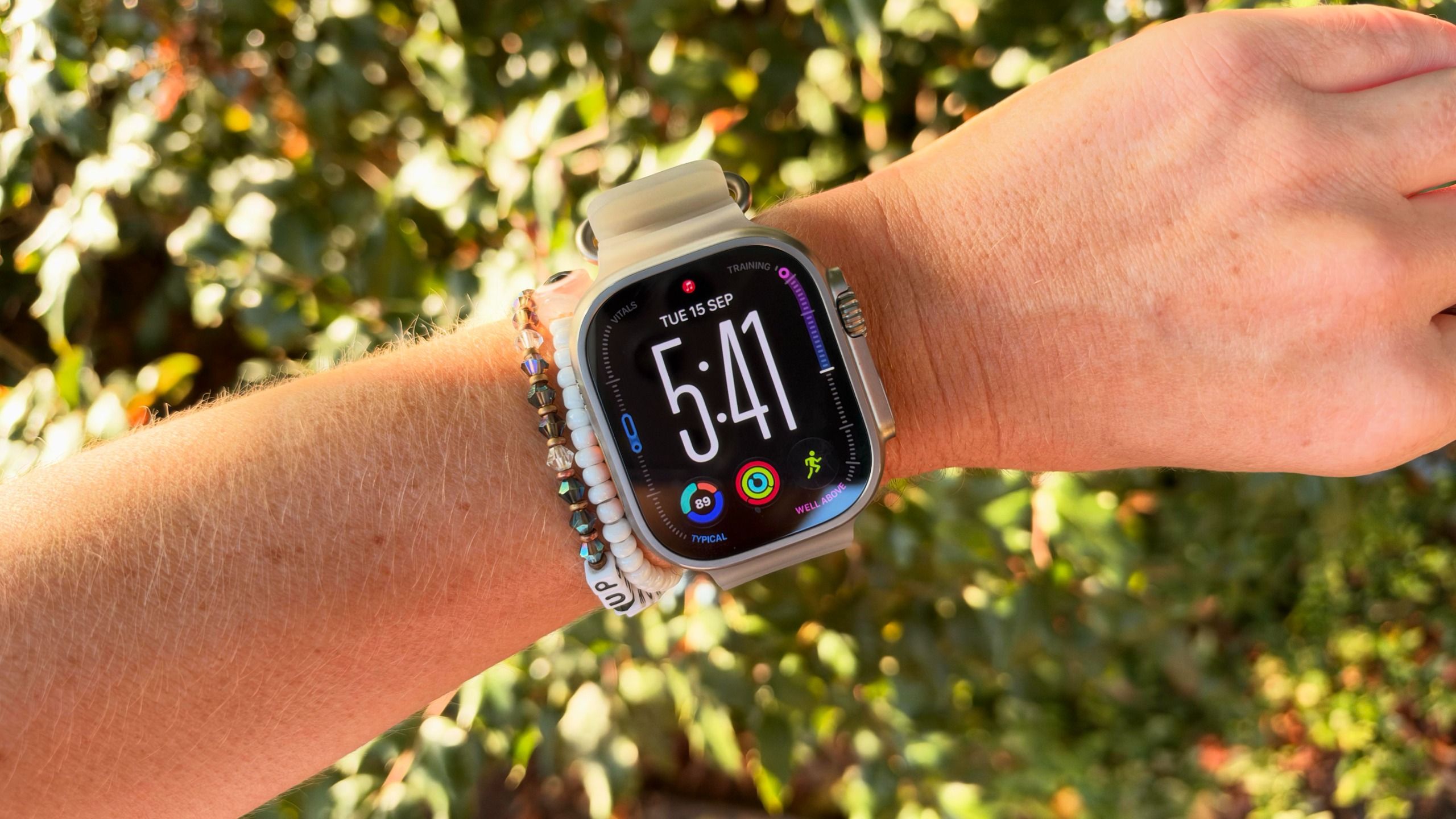
Tom's Guide described the buyer this way: "Apple designed the Ultra for summiting mountains and diving reefs. In reality? Most of us wearing one are weekend warriors chained to a 9-to-5, using an $800 rugged watch to track our steps on our commutes." For that buyer, Apple changed nothing visible. The dimensions, the 3,000-nit display, the all-titanium case and the 100 meters of water resistance all carry over from the Ultra 3 [4].
The runtime claim carries most of the upgrade case. TechRadar's Jacob Krol reports the cell is 5 percent larger than the Ultra 3's, with efficiency gains on top, and Apple quotes up to 50 hours in normal use, up to 84 hours in Low Power Mode and up to 45 hours in Max Extended Workout Mode [13][14]. Moving from 42 hours to 50 is about 19 percent more claimed runtime out of 5 percent more cell. If hours scaled with capacity alone, the bigger battery accounts for roughly two of the eight extra hours, leaving about six to the S11 and the software [25].
Tom's Guide prints the figure twice and the two do not agree. The verdict lists "48 hours of battery, up from 42 hours" among its pros, while the quick-facts section of the same review says up to 50 hours per charge against 42 for the Ultra 3 [11][12]. Krol, a week in, writes that it has "lasted in lockstep with the Ultra 3," offering more than a day of use and getting close to two [15]. Neither review as published includes a timed drain test.
On the back, the change is concrete. The electrode now uses what Tom's Guide calls a "32-petal design," where older watches had two petals, and the green LEDs are bigger and more powerful [7][8]. Apple says this is the most accurate heart rate sensor on a wearable, that heart rate and HRV are sampled more frequently than before, and that the monitor is more accurate on certain skin tones [9][8]. Tom's Guide wore the watch for a week and ran 22 miles with it against a chest strap, and its pros list credits improved continuous heart rate monitoring [10][11].
Readiness needs more nights than a review week allows. Apple says a score generally takes seven nights to calculate [17]. TechRadar is holding its verdict until it has enough data to draw conclusions [23], and Krol's interim line is that "the Apple Watch Ultra 4 is very much an evolution of the Ultra 3 rather than a reinvention, but the bigger battery is a really nice surprise" [22].
For anyone who already has an Ultra 3 on the wrist, sort the changes into what week one can verify and what it cannot. Verifiable: whether 15 minutes on the new charger delivers anything like the promised 18 hours [16], whether real-time heart rate tracks the strap you already own during your hardest session, and whether HRV turns up in the Health app where you would go looking for it [9]. Not verifiable in week one: a Readiness trend, since seven nights buys one score and no baseline [17], and Live Rewind and Siri Recap, which are dated to later this year in US beta [21]. The first list is the one to buy on. If it is empty for you, the watch already on your wrist collects the data you use.
What to watch
- A timed drain test from either publication measured against Apple's up-to-50-hour normal-use claim.
- TechRadar's full verdict, held back until it has enough nights of Readiness data to judge the score.
- Whether Live Rewind and Siri Recap leave US beta this year, and what they cost in battery hours.