Invest1 publisher3 min readPublished
Compute took four of every five dollars in Higgsfield's $500,000 AI feature film
Higgsfield AI spent $400,000 of Hell Grind's $500,000 budget on compute and $100,000 on the 15 people who made the 95-minute film. Its reported $5.4 billion valuation turns on how much of that compute spend it keeps from the model makers behind its platform.
The Investor · Invest desk
Drafted by a language model from the sources cited here and checked against its claim ledger before publication. How we use AISend a correction
What happened
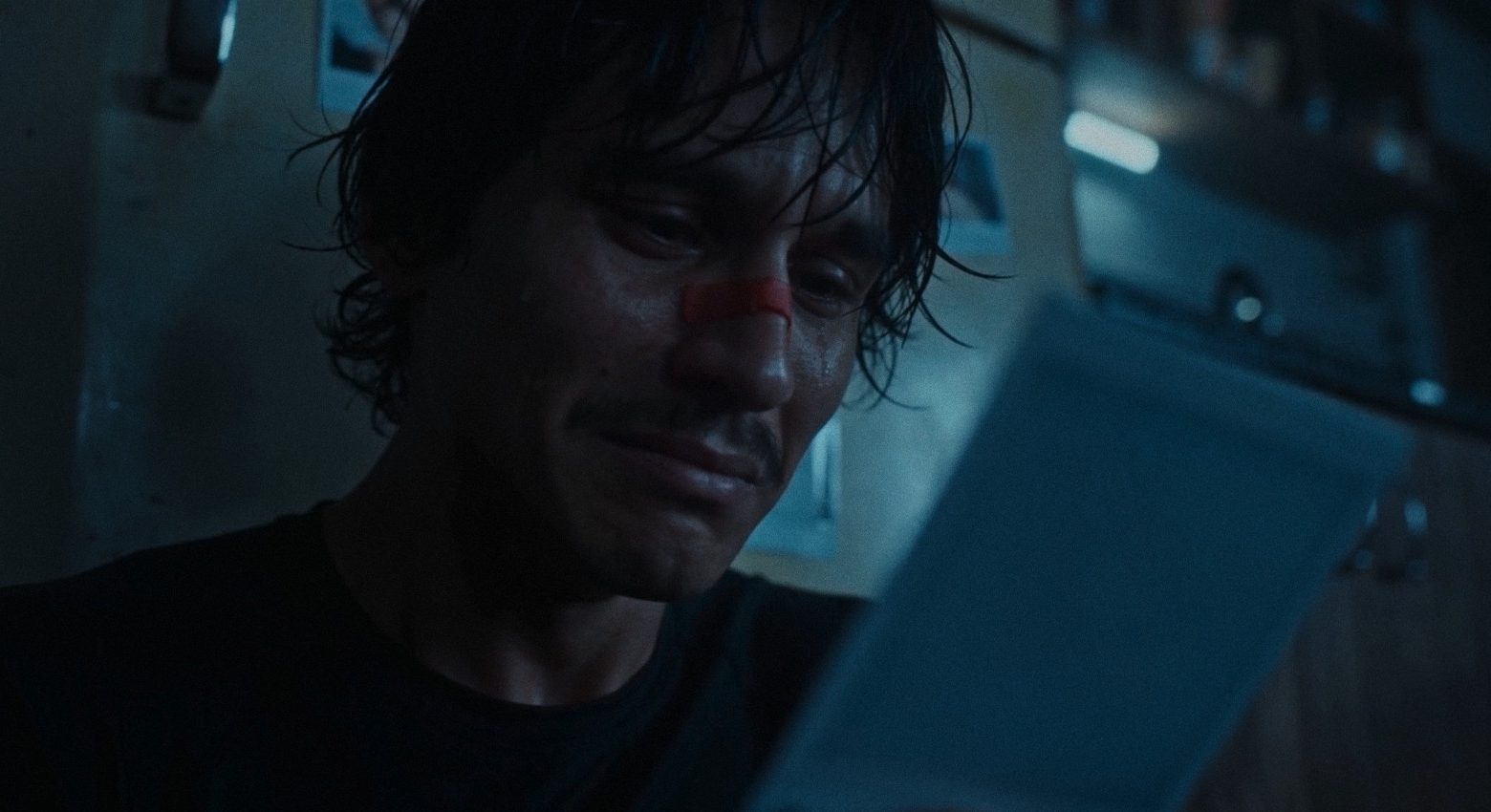
- Every actor and visual in Hell Grind was generated by AI, and Higgsfield's team finished the film in under three weeks.
- Higgsfield raised $400 million in August at a reported $5.4 billion valuation, eight months after an $80 million round that valued it at $1.3 billion.
- Its Cinema Studio platform draws on 33 AI models, among them OpenAI's ImageGPT, Google's Nano Banana and ByteDance's Seedream.
- Rival Runway raised $315 million this year at a $5.3 billion valuation and sold an equity stake to Lionsgate, which works with it on AI content.
Compiled by The InvestorSomething wrong?How this is made
Why it matters
- cost At about $4,200 of compute per finished minute, most of an AI feature's budget goes to whoever supplies models and processing, and crew pay becomes the smaller line.
- exposure Because Cinema Studio runs on models owned by OpenAI, Google and ByteDance, their pricing reaches straight into Higgsfield's cost per minute and its margin.
- constraint The SAG-AFTRA contract's rules on AI use and payment limit how far the major studios that signed it can cut the people share of a budget toward Hell Grind's 20%.
On Fortune's figures, compute came to about $4,200 for each of Hell Grind's 95 finished minutes, out of a total near $5,300 a minute [2]. The $100,000 for people [1] works out to roughly $6,700 a head on an even split across the crew of 15 [3]. Higgsfield put its money into compute and a small team, with no human cast to pay [1][2].
The film was made by the company that sells the tools [1][8]. "We're constantly evaluating new ones," De Silva said of the models inside Cinema Studio [9]. Fortune's account does not break down how much of the $400,000 [1] went to outside model owners and how much stayed on Higgsfield's own systems. If most of it went outside, the biggest recipients of Hell Grind's budget were OpenAI, Google and ByteDance, whose models the platform offers [8]. Higgsfield's share would then be its margin on each compute dollar that passes through.
If model prices fall, compute's 80% share shrinks and people take a bigger slice of a smaller budget [1]. De Silva argues future films will still need directors, screenwriters, set and costume designers and actors [3]. "What we have found is that filmmaking is still an art," De Silva said [4]. If model owners hold their prices, they keep the compute dollar and platforms compete for what is left. Licensing is the other way people come back into the budget. For this year's Cully Hill Boys, Higgsfield licensed the likenesses of four real people, including UFC fighter Israel Adesanya [10]. The new four-year SAG-AFTRA contract, covering a union of 160,000 members, sets guardrails on how AI can be used and when payment is required [6].
I think the compute-heavy reading holds for Hell Grind and is weaker as a claim about who captures value across the industry. Investors have picked their answer. Higgsfield's valuation rose about 4.2 times in eight months [4], and its August raise is 1,000 times Hell Grind's compute bill [5]. At that price the company needs a cut of many studios' budgets (or rather, a cut the model owners cannot squeeze). Lionsgate took the other side by buying equity in Runway, the rival it works with on AI content [12]. "There really isn't a part of the production lifecycle that can't benefit from AI," said Jamie Umpherson, Runway's chief creative officer [13].
The reading is wrong if Higgsfield's next budget puts more than a fifth of spending on people and licences, or if audiences will not pay for films made this way [1]. McKinsey estimates AI could influence up to 20% of original content spending on film and TV by 2030 [5]. Two of 2026's biggest hits, The Odyssey and Obsession, were made with practical effects, and Fortune reports moviegoers were less keen to pay for films that leaned heavily on computer-generated effects [11].
What to watch
- Any breakdown from Higgsfield of how Hell Grind's $400,000 compute bill split between outside model providers and its own systems.
- The share of the Cully Hill Boys budget that went to personnel and likeness licences, set against Hell Grind's 20%.
- Ticket and licensing revenue for Hell Grind, compared with 2026's practical-effects hits such as The Odyssey and Obsession.