Invest1 publisher3 min readPublished
FASB settles its 2027 succession early, and the read is continuity not reset
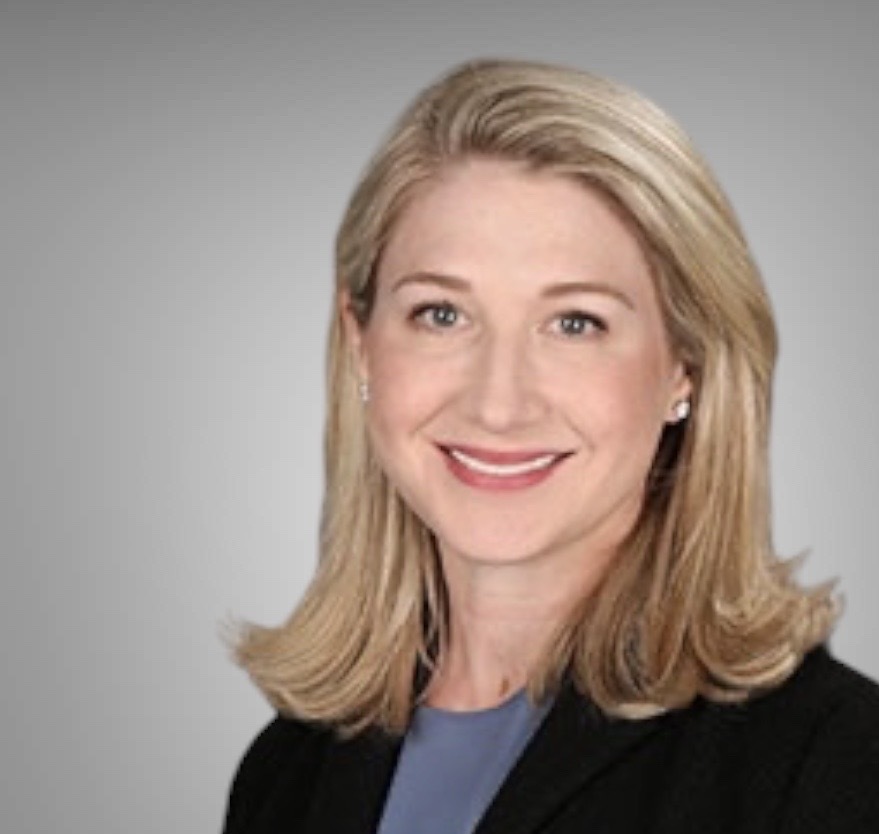
Hillary Salo takes the FASB chair on July 1, 2027 through June 2034. She is the insider who helped build the current agenda, which tells reporting teams what to budget for.
The Investor · Invest desk
Drafted by a language model from the sources cited here and checked against its claim ledger before publication. How we use AISend a correction
What happened
- The Financial Accounting Foundation announced on Tuesday that Hillary Salo will succeed Richard Jones as chair of the Financial Accounting Standards Board.
- The Financial Accounting Foundation is the parent organization of the FASB and the Governmental Accounting Standards Board.
- Salo currently serves as vice chair of the FASB and chair of the Emerging Issues Task Force, a panel that assists the FASB in identifying, discussing and resolving financial accounting issues within the Accounting Standards Codification framework.
- Salo takes over as FASB chair on July 1, 2027, and her term ends on June 30, 2034.
- Jones, a former EY partner, has been FASB chair since July 2020, and his term concludes on June 30, 2027.
Compiled by The InvestorSomething wrong?How this is made
Why it matters
The Financial Accounting Foundation said Tuesday that Hillary Salo, currently vice chair of the Financial Accounting Standards Board and chair of its Emerging Issues Task Force, will succeed Richard Jones as FASB chair [1][3]. She takes the seat on July 1, 2027 and holds it through June 30, 2034 [4], a seven-year term settled well before the handover [17].
The practical content of the announcement is not the name. It is that the FAF, which is the parent organisation of both the FASB and the Governmental Accounting Standards Board [2], has resolved the top job at US standard-setting with a long runway and an internal promotion. Jones, a former EY partner, has chaired the board since July 2020 and finishes on June 30, 2027 [5], also about seven years in the chair [18].
Salo's record is the argument for continuity. She joined the FASB in 2020 from KPMG's New York office, where she was an audit partner and engagement partner for a large global financial services organisation [8], then spent four years on the FASB staff as technical director and EITF chair before moving to the board as vice chair [6]. According to her FASB bio, the technical director job made her responsible for leading the board's standard-setting activities and staff, guiding its agenda reprioritisation, and driving progress on stakeholder priorities [7]. In other words, the person who helped shape and sequence the current agenda will inherit it, after seven years inside the organisation [19].
The rest of the CV is conventional for the role: a professional accounting fellow stint in the SEC's Office of the Chief Accountant [9], and a career that began as a FASB postgraduate technical assistant in 2003, after undergraduate and master's degrees from the University of North Carolina at Chapel Hill, with CPA licences in New York, Illinois and North Carolina [10]. By the time she takes the chair she will be 24 years on from that first FASB posting [20].
The statements were warm and unspecific. Jones said Salo is "a highly respected leader whose experience, credibility, and sound judgment have earned the confidence of the financial reporting community" and cited her "proven ability to guide complex standard-setting priorities forward" [11]. FAF chair Dalia Blass said the appointment "reflects the Trustees' confidence in her judgment, vision, ability to guide the FASB's work, and advance high-quality financial reporting in a changing environment" [12]. Neither points at a change of direction.
Two other moving parts landed the same day. Four new trustees, Christopher Hatto, Kevin McBride, David Miller and Robert "Kinney" Poynter, take five-year terms from January 1, 2027 to December 31, 2031 [13][21], succeeding Diane Nordin, Manju Ganeriwala, Edward "Ted" Goldthorpe and W. Bryan Lewis, whose terms end on December 31, 2026 [14]. And the FAF opened nominations for the board seat Salo vacates: a five-year term starting July 1, 2027 on a seven-member full-time board in Norwalk, Connecticut, with eligibility for a second five-year term [15], which is a possible run to mid-2037 [22].
What to watch is that vacancy. The trustees say they want a high degree of technical accounting experience, an understanding of global financial reporting, and substantive senior-level experience as a partner at a global or national accounting firm [16], which narrows the field to a familiar pool. For budgeting purposes, treat 2027 as a personnel event rather than an agenda event, and price reporting changes off the existing project list rather than off the chair's name.