Science1 publisher3 min readPublished
Bigelow's dark-ocean atlas ties 9,600 genomes to the individual cells they came from
Bigelow Laboratory's GORG-Dark holds more than 9,600 genomes, each from a single sorted cell, including samples from the Mariana Trench and the Antarctic, and the Cell paper reports widespread genetic potential for chemoautotrophy.
The Scientist · Science desk
What happened
- Bigelow Laboratory's Single Cell Genomics Center led GORG-Dark, presented as the first global atlas of single-cell genomes from microbes living in the sunless part of the ocean.
- The resource holds more than 9,600 genomes from individual microbial cells, sampled across depths and locations that include the Mariana Trench and the Antarctic.
- The accompanying analysis appears in Cell under the title "Single-cell-resolved genome atlas of prokaryoplankton inhabiting the ocean's interior".
Compiled by The ScientistSomething wrong?How this is made
Why it matters
- capability A genome attached to a measured cell lets ecologists ask what fraction of cells at a depth carry a pathway, a question that needs a per-cell denominator to answer at all.
- constraint Genetic potential bounds who could be fixing carbon in the dark ocean without supporting a flux estimate, so anyone budgeting deep-sea carbon still has to buy rate measurements.
- decision For biotech prospecting the first step moves from finding organisms to choosing gene clusters, and the cells behind the interesting clusters remain uncultivated.
- precedent Framing the atlas as a pre-disturbance baseline sets up an expectation that future deep-sea industrial activity will be argued against genomic reference data.
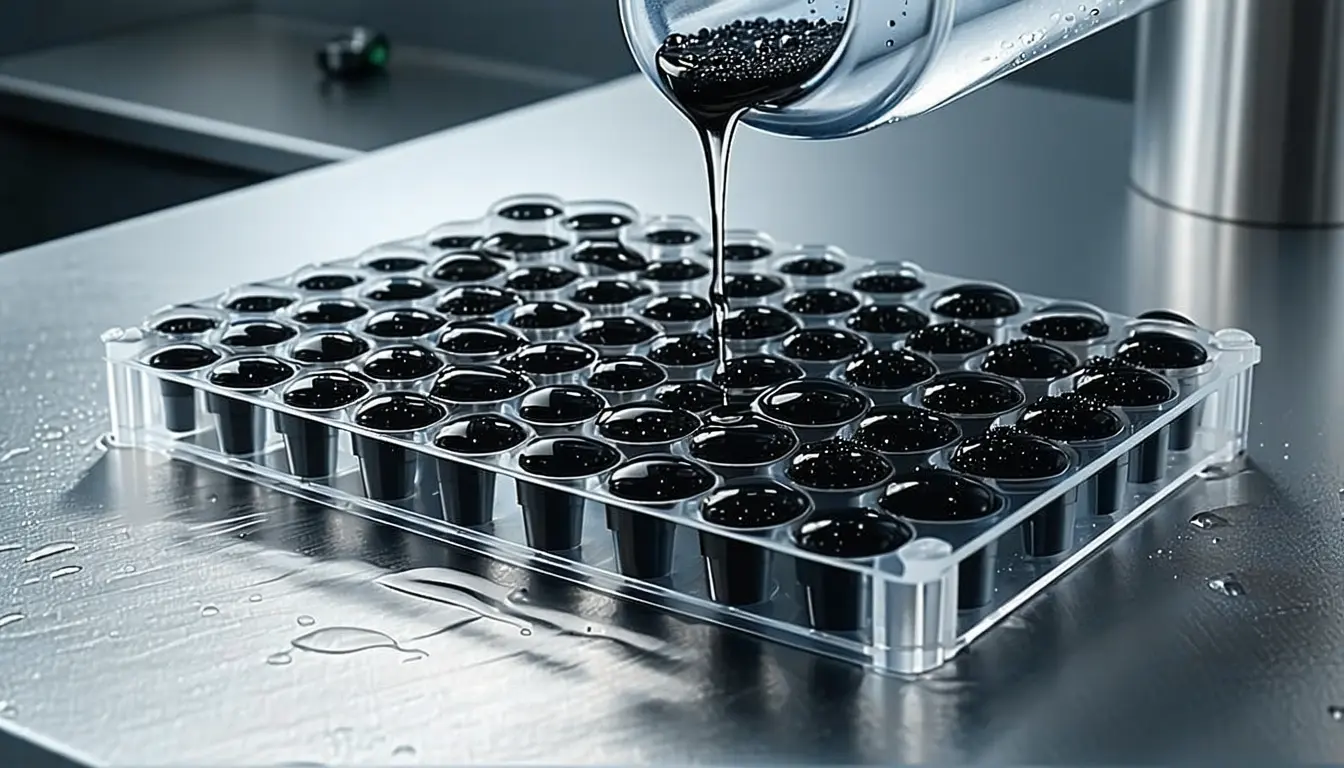
The unit of measurement here is one cell. Bigelow's Center for Aquatic Cytometry isolated individual cells from ocean samples, measured their size and estimated their DNA content, and the Single Cell Genomics Center sequenced them one at a time [4]. More than 9,600 of those cells came out the other end with a genome attached [14].
"This approach allows us to link a genome to a specific cell," said Gregory Gavelis, a bioinformatician at the center [5]. "This precision enables researchers to study, in detail, some of the rarest things in the world" [6].
That link is what makes the catalog countable. If a genome belongs to a known cell, then the question of what fraction of cells at a given depth carry a given pathway has a denominator. Most ecological questions need that form.
Among the capabilities the team reported is chemoautotrophy, growth fuelled by inorganic chemicals rather than sunlight, and the genetic potential for it turned up widely, including in the deepest regions sampled [8]. Genes for a pathway are evidence of capacity. The account does not report whether those cells were fixing carbon when the water came aboard, or at what rate. So the result bounds who might be doing the chemistry in the dark ocean, and it does not yet feed a carbon budget.
The same catalog carries genes associated with making specialized compounds that have possible pharmaceutical and blue biotechnology uses [9]. Tianyi Chang, the paper's first author and a former postdoctoral researcher at Bigelow, put the resource this way: "By turning uncultivated microorganisms from Earth's largest and least understood habitat into a shared, single-cell-resolved genomic catalog, GORG-Dark gives us a powerful resource to explore microbial ecology, evolution, and biotechnology" [7]. The key word is uncultivated. A biosynthetic gene cluster spotted in a database belongs to a cell nobody is growing, so the chemistry still has to be produced somewhere before anyone can test it. The phys.org account did not say where the genomes are hosted or on what terms.
GORG-Dark is the second phase of an effort that began with GORG-Tropics, which sequenced microbes from the sunlit ocean [10]. Bigelow presents the extension downward as a baseline for a habitat that could change as human activity moves farther down the water column [11]. "It is critical to understand what's down there before we change it," Gavelis said [12].
A baseline is only a baseline if someone samples the same way again later. The value of these 9,600 genomes to a future comparison depends on that repeat far more than on the headline count. The Cell paper is titled "Single-cell-resolved genome atlas of prokaryoplankton inhabiting the ocean's interior" [3]. Its author list runs through current and former Bigelow postdoctoral researchers including Alaina Weinheimer, Maria Pachiadaki and Keir Macartney [13].
"The fact that we were able to use this vast amount of data from across the deep ocean is really exciting," said Weinheimer. "It unlocks a lot of research to have individual cell genomes all the way to the bottom of the sea" [15].
What to watch
- Whether Bigelow or anyone else resamples the same stations with the same sorting pipeline. That repeat is what would turn a one-off atlas into a time series.
- Rate measurements on dark-ocean chemoautotrophy that would convert genetic potential into a carbon flux number.
- Public deposition details for the 9,600 genomes, including host, format and reuse terms.