Science1 distinct publisher3 min readPublished
Polyploidy kills most of the organisms it visits. Its survivors include every seed plant alive. Maurine Neiman's snails are recent enough to watch closely, but that closeness does not explain why doubling keeps recurring.
The Scientist · Science desk

Compiled by The ScientistSomething wrong?How this is made
The claim that only a tiny fraction of whole-genome duplications ever stabilize in a lineage [3] rests on a numerator with no denominator behind it. A duplication that kills the cell, or the embryo, or the lineage two generations later, leaves nothing to sequence. What gets counted is the survivors, which is exactly the shape of the evidence when Jonathan Wendel says every seed plant alive carries at least one ancient duplication [6], or when barnacles, insects, trout and arachnids turn out to carry the same signatures [7]. None of that makes the suspected failure rate wrong; it does mean the figure is an inference from what lived rather than a count of what happened.
Douglas Soltis of the Florida Museum of Natural History puts it as a hitter who strikes out a lot and hits home runs when he connects, and calls polyploidy the most important process on the planet that hardly anyone knows anything about [5]. The analogy is honest about the variance and quiet about the average, because a batting average needs recorded at-bats. Even the most-cited home run is unsettled: whether the changes that produced jawed vertebrates trace to ancient duplications is still argued over [8].
The reason any of this is now legible is price. In the early 1990s Kenneth Wolfe's lab at University College Dublin joined an EU scheme paying 2 euros per nucleotide to sequence baker's yeast [10]; by 2022 sequencing ran about $0.000000006 per nucleotide [11]. That is a factor of roughly 300 million [12], and since it compares euros then with dollars now, treat it as an order of magnitude rather than a deflated series. Before sequencing, polyploidy was something you noticed by counting chromosomes under a microscope, and its consequences only became visible base pair by base pair [13] - what Wendel means when he says the tools opened up a world nobody knew was there [14].
Which brings the snail's value into focus. Under a million years is recent enough that the adjustment to a heavier genomic load is still underway rather than sanded flat by time [4], so the intermediate steps can be observed in one genome instead of reconstructed across hundreds of millions of years. What the snail's youth cannot supply is an explanation for why the doubling happened at all, and Neiman says so plainly: the answer is missing for her snails and for every other species [2]. Recurrence is a rate, and rates need the failures counted. My read, with its condition attached: the field will keep improving on the consequences of duplication and stay stuck on its trigger until someone can watch new duplications appear in a population before selection has filtered them. Genome doubling being the most radical mutation available in a single generation [9] is precisely what makes the failures invisible.
Ranked by verification strength, evidence, and original report placement.
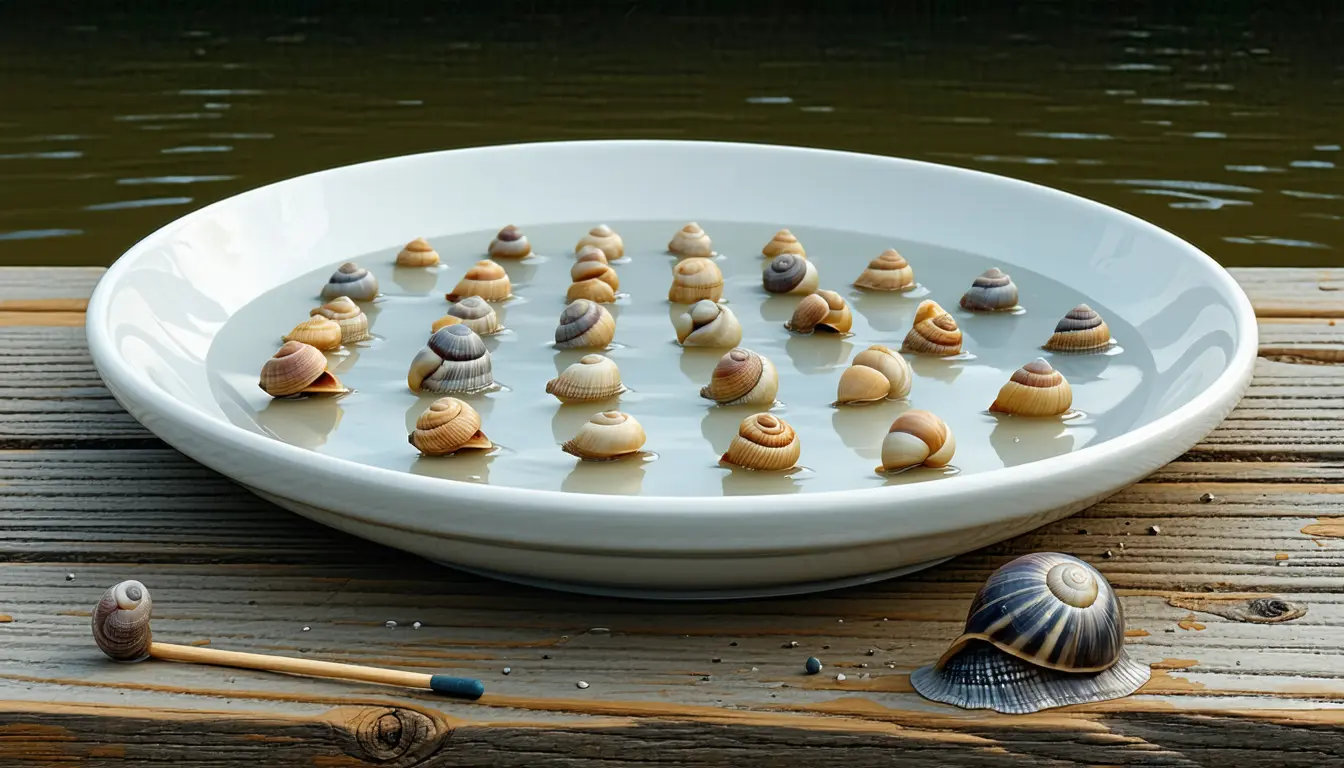
Potamopyrgus antipodarum, a snail no larger than the head of a match found on the shores of New Zealand's Lake Alexandrina, has three or four sets of chromosomes instead of the two sets most animals carry.
Maurine Neiman, an evolutionary biologist at the University of Iowa who studies the species, said: "We actually don't know, for our snails or any other species, why this happens so reliably, again and again and again."
Scientists suspect that an organism inheriting three, four or more sets of chromosomes instead of two (polyploidy) is in most cases a fatal error of cell division, and only a tiny fraction of whole-genome duplication events are thought to stabilize in a lineage.
Neiman's team dated the snail's genome duplication to less than a million years ago, recent in evolutionary terms but long enough for the species to have begun adjusting to its heavier genomic load.
Douglas Soltis, a plant evolutionary geneticist at the Florida Museum of Natural History, said: "We like to think of it as a baseball hitter that strikes out a lot, but when they do hit, it's a home run," and added that "polyploidy is the most important process on the planet that hardly anybody knows anything about."
Jonathan Wendel, an evolutionary biologist at Iowa State University, said genome duplication is hard to avoid among plants: all seed plants living today have experienced at least one ancient whole-genome duplication, and many have undergone more.
Distinct publishers with included, body-backed reporting in this cluster.
1 article · September 2, 2026
Follow any of these and your For You feed starts watching them — no settings page required.
science
Sheeppox DNA pulled from the York Gospels turns library parchment into a pathogen archive1 distinct publisher
science
Mitchell's complaint: we grade models with human exams when the control group is animals and infants1 distinct publisher
science
Yeast fibre in the chow, not the needle: obesity's immune damage looks reversible in mice1 distinct publisher
invest
Four hours in seventy-five years: why AI productivity will not buy you a Friday1 distinct publisher
Evidence-backed comparisons of source perspectives and observed adoption signals. Read the methodology
Which Builder, Operator, and Investor concerns the observed source mix emphasized—not a truth score.
Evidence, demonstrated adoption, hype gap, incentives, and confidence are assessed independently, each on its own current evidence. How these are measured.
Well-sourced consensus, one unchecked number
Four named researchers at four institutions, quoted directly, carry the whole piece, and most of what they say is checkable elsewhere — the seed-plant claim, the animal lineages, the disputed vertebrate origin. The exception is the number that gives the story its news: a duplication dated to under a million years ago, offered with no paper, no method and no independent reading, from the same lab whose interpretation of it fills the rest of the section. The hedges around lethality are honest and also unquantified; 'a tiny fraction' stabilize is a suspicion wearing a statistic's clothes.
Nothing to adopt
This is basic evolutionary biology; no product ships, no version lands, nobody deploys anything. The nearest thing to uptake is the claim that sequencing made duplication visible across the tree of life, but Quanta counts no genomes, no studies and no labs, so there is no quantity here to measure and inventing one would be worse than leaving it blank.
Vegas framing, hedged reporting
The rhetoric runs ahead of the science in style more than in substance. Quanta reaches for a casino and a home-run hitter, and calls genome doubling the most radical mutation possible in a generation, while the question posed in its own third paragraph — why this keeps happening — stays open from first line to last. What keeps the gap small is that the overreach is unattributed prose and the caution is attributed to people: the researchers hedge, the magazine does not. A reader who takes the quotes and skips the metaphors gets an accurate picture.
Specialists arguing their field matters
The people telling you polyploidy is the most important process on the planet are the people who have spent careers on polyploidy — Soltis's line is field advocacy as much as fact, and 'hardly anybody knows anything about it' is the standard opening move of an underfunded speciality. Wolfe's own account is refreshingly free of that pretence: he sequenced yeast because the EU paid two euros a nucleotide and his lab needed the money. What holds the score down is the absence of anything commercial. No vendor, no product, no round, no valuation depends on how this story reads.
One careful account, no second reading
Everything we have comes from a single magazine feature, and single-sourcing normally caps confidence hard. Two things soften it: the reporting is scrupulous about marking what is suspected versus known, and most of the comparative genomics is uncontroversial enough that a second account would likely just repeat it. The thing that would actually move this number is the snail paper — the sub-million-year date carries the story and no one outside Neiman's lab has checked it.