Science1 publisher2 min readPublished
A 262-casualty count from 1970 to 2023 explains football's clear-sky lightning delays
A sports meteorologist's census of US football lightning deaths and injuries gives officials who stop play something to cite, though the per-game odds a stadium wants take more than a count of cases.
The Scientist · Science desk
What happened
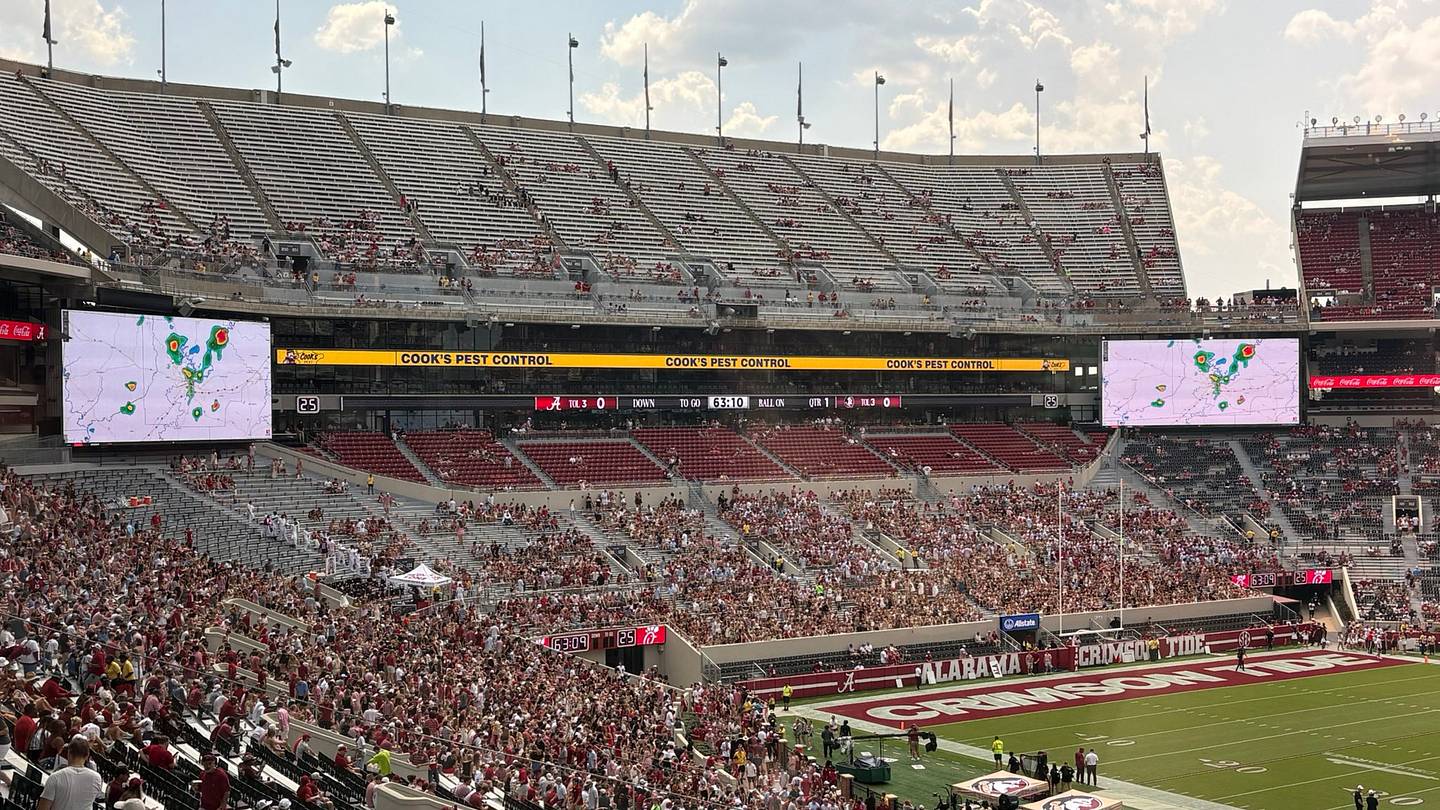
- Nearby lightning forced delays at several college football games on Sept. 19, 2026, among them Florida State at Alabama, North Carolina at Clemson, BYU at Colorado State and Charlotte at Appalachian State.
- A sports meteorologist and a colleague have documented 262 football-related lightning deaths and injuries in the United States between 1970 and 2023.
- That record includes about 40 high school players and coaches injured by one strike during practice in Grapeland, Texas, in 2004, and 12 people injured near Raymond James Stadium after a 2014 NFL game.
- College lightning safety policies, first published in 1997 and updated in the NCAA Sports Medicine Handbook, set out when officials must suspend play and when they may resume it.
Compiled by The ScientistSomething wrong?How this is made
Why it matters
- decision If the Division I Cabinet approves the proposal to start the college season a week earlier from 2027, more games land in the peak late-summer lightning weeks, and the schedulers own that added exposure, not the officials who stop play.
- exposure Clearing the field protects about a hundred people; the crowd is the larger exposed population, and a venue that empties the turf while fans stay in metal seating has followed half the guidance.
- capability A team that employs its own event meteorologist can cut the length of a stoppage, which makes delay duration partly a staffing budget line for the athletic department.
Five a year, roughly. The 262 figure covers 54 years [16], an average of about 4.9 documented deaths and injuries a year across every level of American football [17]. A count of cases answers whether the hazard is real and how bad it gets. The probability a stadium's risk manager is asked for is per game and per crowd, and that needs an exposure count to divide by: games played and people in the stands.
The casualties also arrive in clusters. The two incidents named in the record together account for about 52 people, close to a fifth of the 54-year total [18]. One flash reaching a group is the case the protocol is written for. Electricity traveling through metal seating could injure or kill dozens of fans, and a strike to the turf could push ground current across the field, according to the phys.org article [12]. The outcome can be fatal in other codes: a strike during a televised soccer match in Peru in 2024 killed one player and injured eight [6].
NCAA guidance first appeared in 1997, 27 years into the window the casualty count covers [23]. The article gives the 262 total as a single number spanning both sides of that date, so the record establishes the size of the hazard and the protocol's effect remains an open question.
The complaint from Alabama fans has a physical answer. No rain was falling at Bryant-Denny Stadium when play stopped [2]. Lightning can strike 8 or more miles from its parent thunderstorm, sometimes as a bolt from the blue, and the suspension radius is set at that distance [8]. Most lightning injuries and deaths happen before the rain starts or after it ends, when people think they are safe [11].
The clock is what makes a delay open-ended. Play can resume 30 minutes after the last detected flash, and every new flash inside the radius restarts the count [9]. A 2018 study reviewed 136 college football and NFL games delayed by lightning between 2010 and 2015: half the delays began after kickoff, and most were over in under 90 minutes [10]. A delay that runs the full 90 implies roughly an hour of flashes continuing inside the radius before the quiet half hour began [19]. When the announcement goes out, the resumption time is still an open question [24].
The author, a meteorologist who studies lightning safety around sporting events [25], put the trade-off this way: "a game can always resume, but lightning injuries can last forever" [15].
What to watch
- Whether the Division I Cabinet approves moving the college football season start a week earlier for 2027.
- A casualty count split before and after 1997 would test whether the NCAA protocol changed outcomes.
- Publication of the 262-case record alongside games played and attendance would allow a per-game strike rate.