Science1 publisher3 min readPublished
A record lentil crop and a 52% chickpea fall sit inside the same 61-million-tonne forecast
ABARES has Australia's winter harvest 16 percent above its ten-year average, about 8.4 million tonnes above it, and what remains uncertain is finish rain, southern frost dates and how much nitrogen growers could afford.
The Scientist · Science desk
What happened
- ABARES forecasts 61 million tonnes of Australian winter crops, which would be the fourth-largest harvest on record and 16 percent above the ten-year average after better-than-expected winter rain.
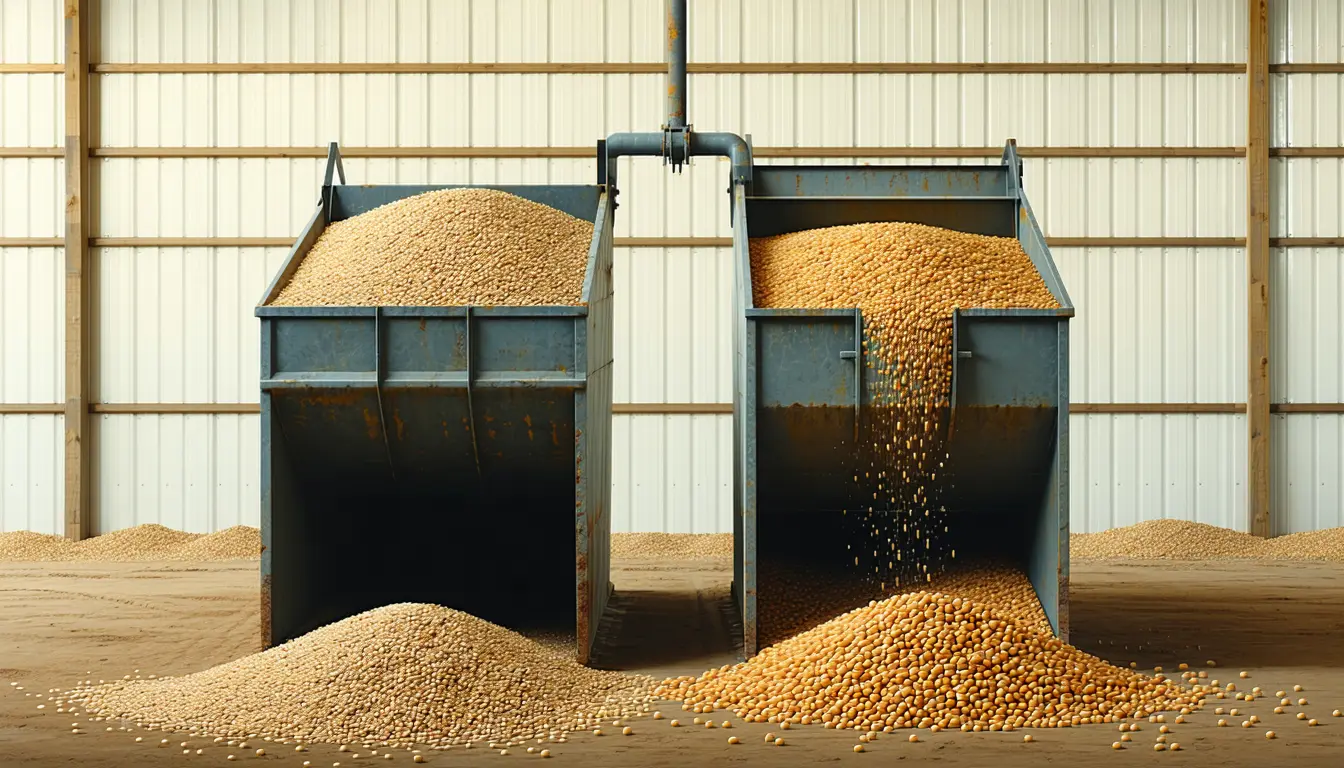
- Inside that same forecast, lentil production is projected to reach a record 2.3 million tonnes while chickpea production could fall by 52 percent.
- The chickpea districts of Queensland and northern New South Wales have been much drier, and growers there expect yields around average or slightly below even after recent rain.
Compiled by The ScientistSomething wrong?How this is made
Why it matters
- constraint On paddocks facing a dry finish, the yield ceiling was effectively set at sowing: more nitrogen cannot be justified on a crop that may run out of water, so a good national number does not translate into a good decision to top up.
- decision A grower choosing between wheat, barley and pulses gets nothing usable from a national tonnage, because the two ends of the cropping belt can be in opposite conditions in the same season.
- contradiction ABARES reports cost-driven switching out of wheat, yet the same account has many growers setting sowing plans on biology and rainfall and doubting the timeliness of government data, so what goes in the ground tracks rainfall and plant biology more closely than input prices.
Most of the uncertainty in a spring crop forecast lands after the forecast. The 61 million tonnes is a projection of what will be harvested, published while the season is still running [1]. The Bureau of Meteorology's spring outlook points to drier conditions across much of southeast Australia and southwestern Western Australia [12].
Divide 61 by 1.16 and the ten-year average comes out near 52.6 million tonnes [1]. That leaves the forecast about 8.4 million tonnes above average [2].
The pulses show how little a national total says about a district. Lentils are forecast at a record 2.3 million tonnes, roughly 3.8 percent of the 61 million [5][3]. Victoria and South Australia grow the vast majority of the national lentil and faba bean crop [6]. A dry or frosty spring in those two states puts the whole 2.3 million tonnes at risk.
Peter Wilson, a Queensland farmer who chairs the Grains Australia Pulse Council and is a director of Wilson International Trade, described conditions in those two states as "very good, with strong soil moisture heading into spring" [7]. In Western Australia, Brad Burns, who farms at Balla northeast of Geraldton, said the season began "almost as good as I've witnessed" [9]. Then the rain largely stopped. His farm received 12 millimetres in August, and some of his early wheat has frost damage, which growers there do not often encounter [10]. His early-sown canola, wheat and lupins are on track for above-average yields, while his later-sown crops could yield poorly without more rain [11].
Nitrogen is where the cost pressure shows up. The wars in Ukraine and the Middle East have made fuel, fertilizer, freight and commodity markets more volatile [14]. High fuel costs and supply constraints limit how much fertilizer growers can apply, and with nitrogen prices climbing and a dry finish forecast, spending on a crop that may run out of water makes little economic sense [15]. ABARES data show fertilizer costs and supply concerns have influenced planting decisions in some regions. Some growers are shifting from wheat to barley, which tends to cope better in dry conditions and typically needs less fertilizer [16].
That response is not uniform. Many growers set planting decisions on plant biology and climatic conditions instead of price forecasts, and some are sceptical about using ABARES forecasts for immediate decisions because government data often lags reality [17]. The article gives the chickpea decline as a percentage only [21].
The same El Niño is having different effects elsewhere. In the drought-hit United Kingdom, farmers are warning of food shortages [18], and the United Nations projects the coming El Niño could push nearly 50 million vulnerable people into acute hunger [19]. Australia remains a major food exporter, and the article says Australians do not need to worry about domestic shortages [20]. Finish rain on the later-sown paddocks and frost dates in the south will decide whether 61 million tonnes holds [11][13].
What to watch
- Whether the next ABARES update revises the 61 million tonnes once the dry finish and any frost damage are in the yield estimates.
- Frost reports from Victoria and South Australia during flowering, since those two states carry most of the record lentil forecast.
- Nitrogen and fuel prices heading into the next planting round, and whether the wheat-to-barley substitution widens beyond the regions ABARES has already flagged.