Science1 distinct publisher3 min readPublished
Goethe University researchers had 1,143 students score five forms of animal keeping on the same scale, and zoos, which face routine inspection under German husbandry guidelines, came out worst of the five.
The Scientist · Science desk

Compiled by The ScientistSomething wrong?How this is made
The design is what makes the ranking usable. Raya Wolf, the lead author, says earlier work has generally taken one sector at a time, livestock farming or zoos, and that nobody had directly compared perceptions across the different forms of husbandry [7]. Five practices rated by the same 1,143 respondents gives 5,715 concern ratings collected under one wording and one scale [16], which is why the ordering within a person is worth reading even though the absolute level of concern belongs to this cohort rather than to Germany.
Who the cohort is limits how far the finding travels. Students at one Frankfurt university, spread across disciplines [2], are not a general-population sample and not a sample of people who keep or work with animals for a living. The questionnaire also asked how concerned respondents were [2], which is a stated attitude, not a ticket bought or a policy supported.
The regulatory picture runs the other way from the ratings. Zoo husbandry in Germany operates under comparatively strict requirements, including the Mammal Husbandry Guidelines and regular inspections, and still drew particularly negative evaluations [13]. Set the ratings against how often each practice is actually checked and the concern ordering points roughly the opposite way [18]. The farming pair shows the same gap between label and content: organic was rated far more favourably than conventional, though the researchers note that under the European Union's Organic Regulation the practical differences are often smaller than people assume [11]. Matthias Kleespies, a co-author, reads that as a sign that knowledge of the specific conditions animals are kept in is sometimes limited [12].
Two explanations fit the zoo result equally well, and this study separates neither. One is the information gap Kleespies describes for the organic label, in which case the remedy is explaining what a modern zoo's conservation and research work actually consists of [12]. The other is that respondents have a fair idea of what zoos do and object anyway, which no amount of explaining touches. The authors lean toward the first, suggesting that zoos are associated with entertainment rather than species conservation or education, and add that emotional social media argument about zoos may feed the perception [8].
One more limit is worth holding onto. The university's announcement gives direction, not magnitude, calling pet ownership and organic farming significantly more favourably assessed and zoos the most negatively rated, without scale values or effect sizes [19]. Whether zoos fell below conventional livestock farming by a sliver or by a wide margin decides whether a zoo association is looking at noise in a student sample or at a durable problem with the case it makes for itself.
Ranked by verification strength, evidence, and original report placement.
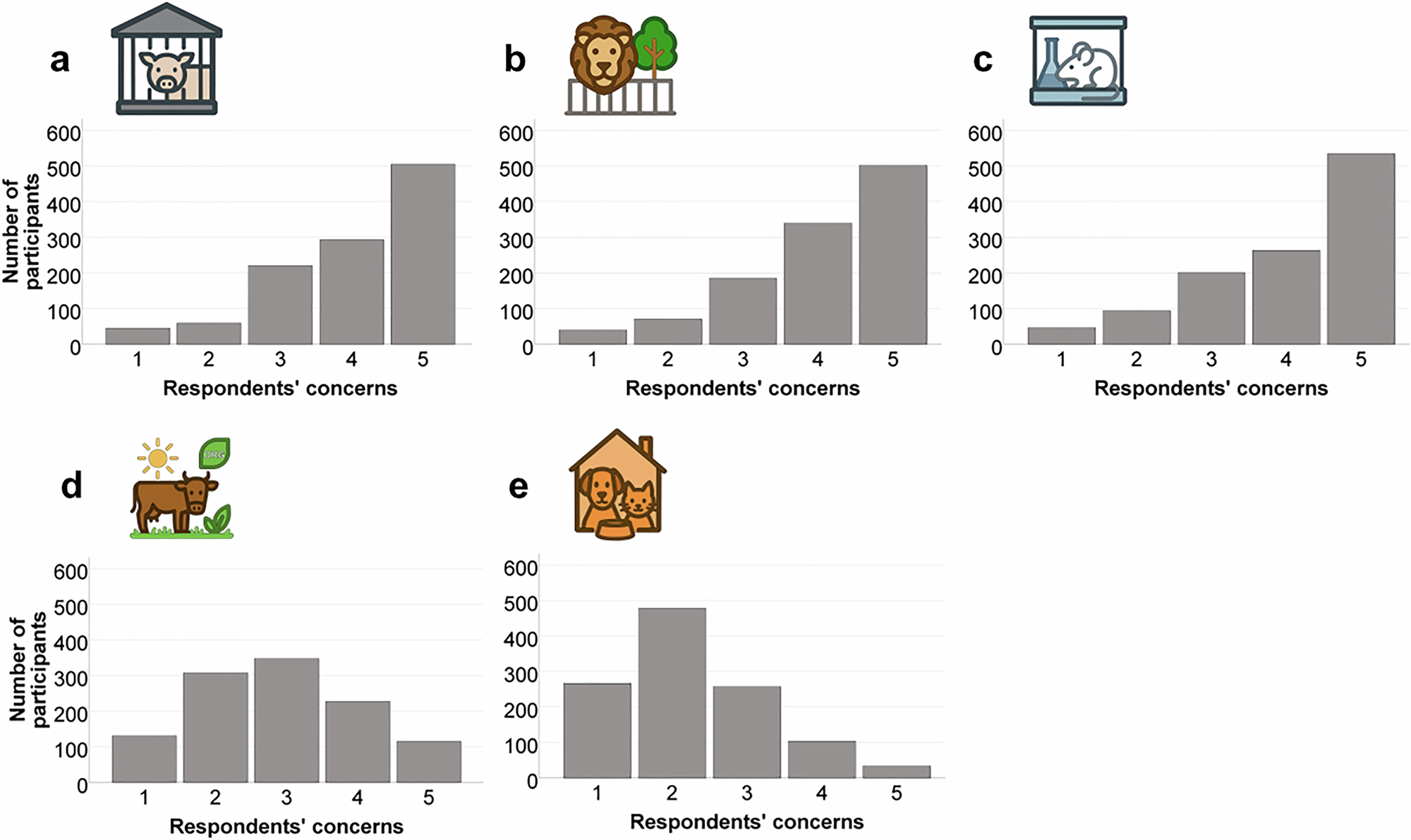
In a study conducted at Goethe University Frankfurt, researchers compared how students assess five different forms of animal husbandry: conventional livestock farming, organic livestock farming, zoo animal husbandry, laboratory animal husbandry and pet ownership.
The survey included 1,143 Goethe University students from a broad range of academic disciplines, who were asked to rate their level of concern about the various forms of animal husbandry.
The research is published in the journal npj Veterinary Sciences.
Conventional livestock farming, laboratory animal husbandry and, most notably, zoo animal husbandry were viewed critically, whereas pet ownership and organic livestock farming received significantly more favorable assessments.
Overall, keeping animals in zoos received the most negative ratings of the five forms surveyed.
Professor Paul Dierkes, head of Goethe University's Department of Biology Education and Zoo Biology, said one of the most surprising findings was that respondents viewed zoo animal husbandry even more critically than conventional livestock farming.
Distinct publishers with included, body-backed reporting in this cluster.
1 article · September 4, 2026
Follow any of these and your For You feed starts watching them — no settings page required.
science
A vaccine communicator's testable claim: hesitancy answers to burden, not to better facts1 distinct publisher
product
How a short GNET essay on AI slop became a settled fact about children's brains1 distinct publisher
science
Fourteen shark teeth place a nutrient-rich Cretaceous shelf under Egypt's Western Desert3 distinct publishers
science
Mitchell's complaint: we grade models with human exams when the control group is animals and infants1 distinct publisher
Evidence-backed comparisons of source perspectives and observed adoption signals. Read the methodology
Which Builder, Operator, and Investor concerns the observed source mix emphasized—not a truth score.
Evidence, demonstrated adoption, hype gap, incentives, and confidence are assessed independently, each on its own current evidence. How these are measured.
One release, direction without magnitudes
Every figure in this story comes from a single Goethe University announcement reproduced by phys.org, and there is essentially one figure: 1,143 respondents. The peer-reviewed paper exists and is cited by DOI in npj Veterinary Sciences, and the design that is described is coherent, with all five practices rated by the same people on one scale. But the results themselves are words, not values, and the release concedes that students at one German university do not stand in for the public.
Survey result with no uptake surface
There is nothing to count. A one-off attitude survey has no releases, deployments or users, and our coverage records no citations, replications or policy uses of the Frankfurt findings.
Framing runs ahead of the ratings
Goethe University is more careful than its own headline: it says the sample is unrepresentative and admits nobody asked participants why they answered as they did. The tilt comes from the running order, which places the negative zoo ratings against Germany's inspection regime and leads the reader toward a public-ignorance reading that concern scores alone cannot deliver. The overstatement is real but modest, and it is interpretive rather than numerical.
Zoo biologists on how zoos are judged
The finding that zoos are judged more harshly than conventional livestock farming comes from Goethe University's Department of Biology Education and Zoo Biology, and the remedy the authors propose is better public education about animal keeping, which is that department's own field. None of that makes the ratings wrong, but the diagnosis of a public knowledge deficit has an interested author, and no zoo operator, farming association or welfare group appears alongside it.
Firm spine, unchecked side claims
The core holds up: a real paper with a DOI, a stated sample, three named authors on the record about what they found. Three supporting statements do not: that nobody has compared these five practices before, that EU organic rules leave less daylight from conventional farming than people assume, and that welfare breaches concentrate in private homes. Each is asserted once, in the institution's own announcement, and none is sourced.