Product1 publisher3 min readPublished
Freckle offers a $199 kids' phone as an alternative to cellular watches
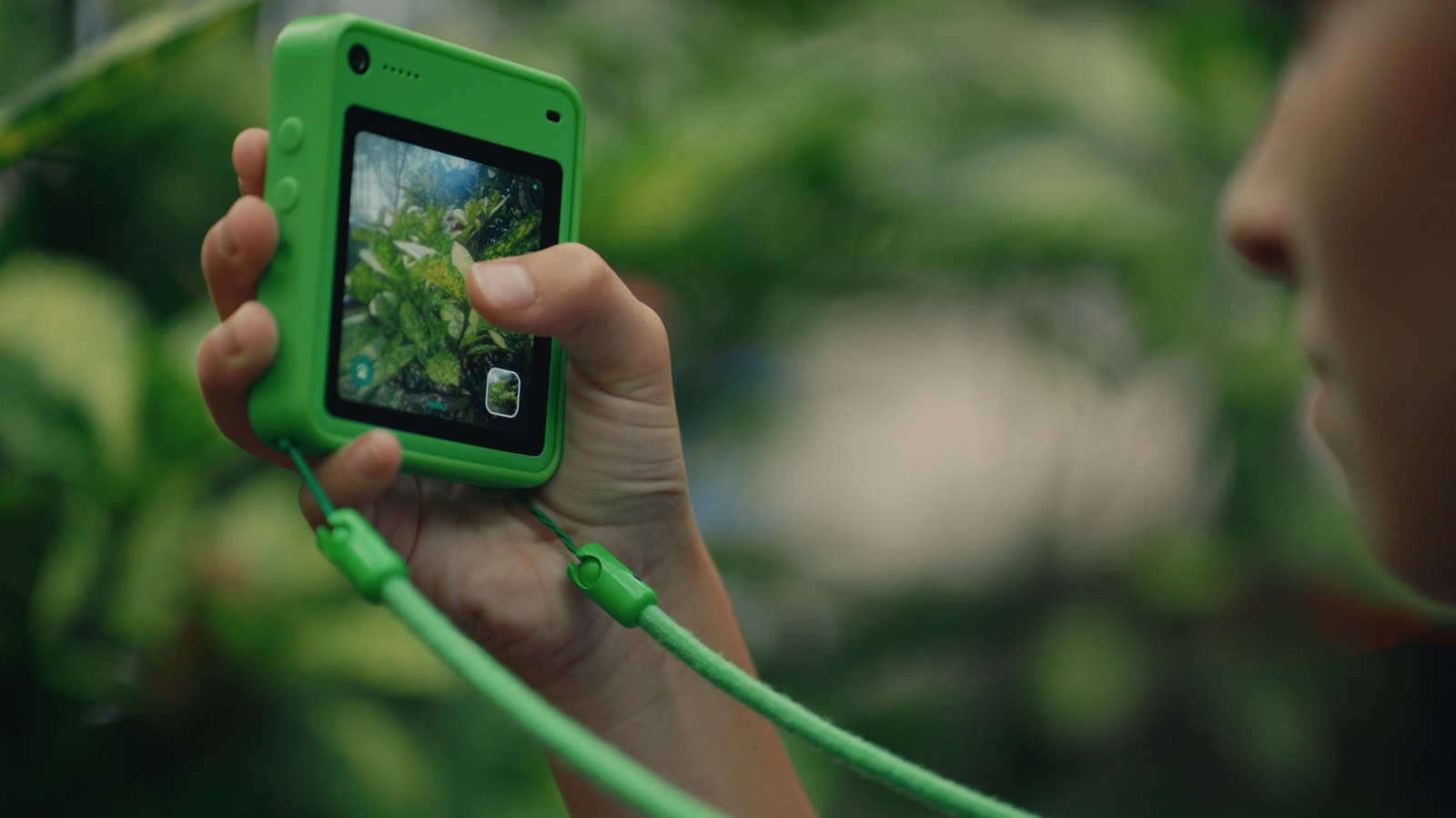
Freckle's $199 phone for kids aged 7 to 13 has no app store or open web and only calls contacts parents approve. Its map, walkie-talkie and tap-to-pay make the case against a cellular watch mainly where children already walk on their own.
The Product Desk · Product desk
Drafted by a language model from the sources cited here and checked against its claim ledger before publication. How we use AISend a correction
What happened
- The phone also requires a $25 cellular subscription, according to Engadget's launch report.
- Parents can set 'Quests', such as photographing several flowers outside, or use missions the company has built in.
- Engadget's reviewer judged it best suited to New York City and other walkable places where kids are not car dependent.
Compiled by The Product DeskSomething wrong?How this is made
Why it matters
- decision Parents who now choose between a cellular watch and no device at all have a third option. Which one fits turns on whether the child gets around without a car.
- constraint The walkie-talkie only reaches nearby Freckles, so that feature is worth something only if a child's friends own the same device.
- cost Because the $25 cellular subscription sits on top of the $199 price, a Freckle left in a drawer after the first month still costs the family money.
Engadget's reviewer has a seven-year-old, and she was planning to get her an Apple Watch eventually [10]. She wrote that she would like her daughter to bike around their suburban neighborhood on her own [10]. The New York City startup [14] has to win over parents like her, who have already picked a watch as the first device.
By Engadget's account, most parents either keep smartphones away until the teenage years or buy a less capable device, such as a cellular Apple Watch, for location tracking and emergency calls [1]. Freckle is betting kids will take the device outside and use it. A child can photograph an object and have the AI describe it, check a mini-map, talk to friends with nearby Freckles over a walkie-talkie, or tap to pay for a snack or a transit ride [5]. Parents buy a watch so they can find the child.
The pitch is freedom. Engadget set Freckle against trackers such as AngelSense, which it said sell fear [8]. According to founder and CEO Sam Terris, the company wants kids to feel more sovereign and capable while staying connected to their parents [11]. Most of the product is defined by what it leaves out. ClayOS has no app store, no open web, no streaming video apps and no social media [3]. Calls and texts go only to people the parents choose [4]. The 3.1-inch screen is small on purpose [7].
The components are easier to judge one at a time. The device is $199 and requires a $25 cellular subscription [2]. The launch report does not say how often the $25 is billed, and it includes no usage figures from families. The reviewer's comparison with the Rabbit R1 was made "on paper" [13]. The walkie-talkie reaches only other Freckles nearby [5], so its value depends on how many of a child's friends own one.
Quests need the most care when a parent looks at results. A parent sets a task, such as photographing several flowers outside, or picks one of the company's built-in missions [6]. When a child finishes the flower quest, that mostly shows the parent likes quests. Whether the child likes the device shows in whether it leaves the house on a Saturday with no quest set.
Geography decides a lot of this. The reviewer judged Freckle best suited to New York City and other walkable places where kids are not car dependent, with possible uses in museums and parks [9]. For her own daughter, she wrote, the Freckle "would also be far more useful for navigation and communication than any smartwatch" [12].
A parent can sort the decision on two axes. One is whether the child already gets places without a car. The other is whether the parent needs only location and emergency calls, or also wants the child to find routes, pay and reach friends. A car-dependent child who only needs to be findable is covered by the watch, or by waiting [1]. A child in a walkable area with the same needs is also covered by the watch, and Freckle is an upgrade the family pays extra for. The walkable child who needs the extras is where Engadget's reviewer sees Freckle fitting best [9]. The car-dependent child who needs the extras gets a map for streets they are driven down and a walkie-talkie that works only if the neighbors buy Freckles too [5]. After a month, the number of days the Freckle left the house with no quest set is the figure to weigh against the $25 subscription [2].
What to watch
- Whether Freckle publishes how often the $25 subscription is billed and how tap-to-pay is funded and capped.
- Hands-on reviews from families who have used the device for weeks, especially outside walkable cities.
- Whether enough kids in a single school or neighborhood buy Freckles for the walkie-talkie to reach anyone.