Invest1 distinct publisher2 min readPublished
The interagency rescission changes little, because the CFPB's April rewrite of Regulation B did the work. What is left is state disparate-impact exposure without the federal tool for answering it.
The Investor · Invest desk

Compiled by The InvestorSomething wrong?How this is made
The National Fair Housing Alliance's own arithmetic describes a narrow channel. Its estimate of 57,282 consumers reached between 2022 and 2024 [11] averages about 19,100 a year [3], and the $82 million it says those programs saved works out to roughly $1,431 per borrower [1]. That is real money at a closing table and immaterial on any large bank's mortgage book. The same estimate claims $17.2 billion in economic activity [11], about 210 times the savings figure [2], which is a different sort of number, and the material at hand does not show how the group built it.
What actually closed the channel was the CFPB's April amendment to Regulation B. The rule had permitted creditors to extend credit to historically disadvantaged groups [5]; the bureau reread it as barring for-profit creditors from doing so on the basis of race, color, national origin or gender, effective in July [8]. Richard Andreano, Jr. of Ballard Spahr told American Banker that this was what ended depositories offering the programs [10], and described the interagency rescission as "almost a housekeeping matter" that the agencies "finally got around to" [9]. Before either step, the CFPB and the Department of Housing and Urban Development had each pulled their own guidance [15], and a year before the April rule Trump signed an executive order seeking to eliminate disparate-impact liability in federal programs "to the maximum degree possible" [16].
The part worth pricing is what remains. Federal supervisors have removed the encouragement [1] and, on the federal side, the enforcement theory the CFPB previously used against redlining [16]. California, Massachusetts and New Jersey still allow disparate-impact claims in lending [17]. A bank operating in those states holds outcome-based exposure while losing the only documented instrument it had for moving those outcomes, and it can no longer cite interagency guidance when a state regulator asks what it did about a gap.
The NFHA sued the CFPB in May and the case is pending [14]. A ruling in the group's favor would land on lenders that have already dismantled the underwriting overlays and staffing behind these programs, which is why a housekeeping notice still costs something: reversal is a rebuild rather than a restart. Nikitra Bailey of the NFHA says the borrowers affected will be pushed toward predatory and high-cost lenders [13]; that is a forecast, and the pending suit is the only venue where it gets argued.
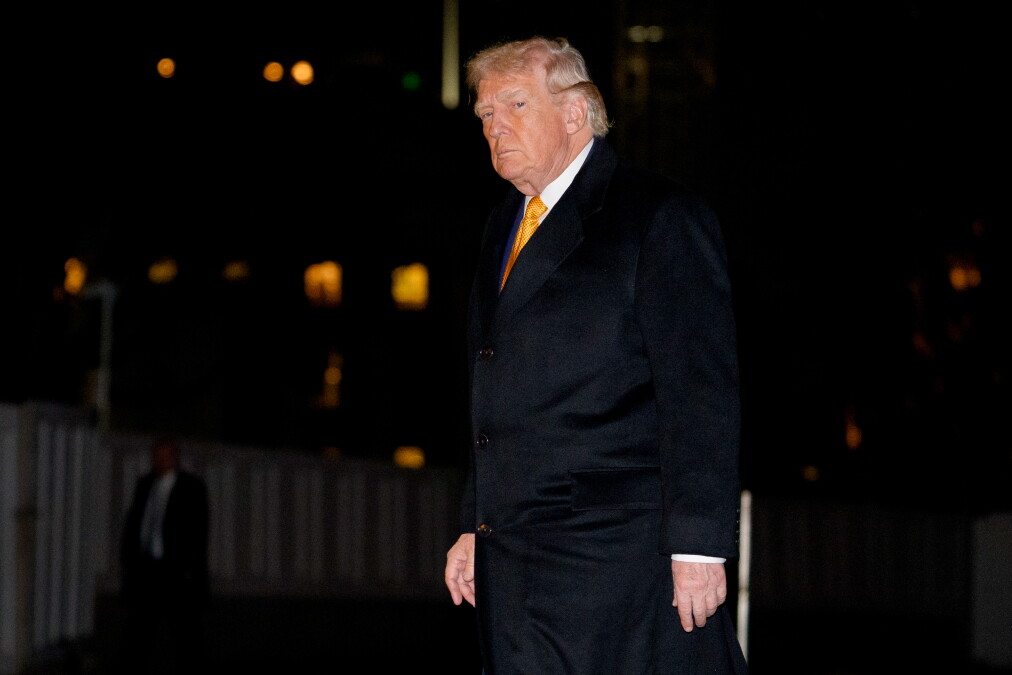
Ranked by verification strength, evidence, and original report placement.
Federal agencies rolled back Biden-era guidance that encouraged creditors to offer special purpose credit programs to underserved communities.
The new notice called the special purpose credit programs "discriminatory."
The notice said: "Federal law does not authorize any generalized remedial 'equity' initiatives absent specific cases of unlawful discrimination, and creditors should not rely upon previous guidance which may have suggested otherwise."
The notice said prior interpretations "cannot be reconciled with the statutory text of ECOA and the [Fair Housing Act], which expressly prohibit discrimination against individuals based on prohibited characteristics."
SPCPs were created by the Equal Credit Opportunity Act, a 1974 law; its enforcement mechanism, Regulation B, not only forbade discrimination but permitted the creation of programs to actively extend credit to historically disadvantaged groups.
At least two big banks shelved their special purpose credit programs before the latest guidance was issued, and neither responded to American Banker's request for comment on the status of their programs.
Follow any of these and your For You feed starts watching them — no settings page required.
Evidence-backed comparisons of source perspectives and observed adoption signals. Read the methodology
Which Builder, Operator, and Investor concerns the observed source mix emphasized—not a truth score.
Evidence, demonstrated adoption, hype gap, incentives, and confidence are assessed independently, each on its own current evidence. How these are measured.
Primary notice language and named sources, but one publisher and truncated text
The regulatory sequence is documented with direct quotations from the rescission notice, the dated April 2026 Regulation B amendment and its July effective date, a named outside counsel, and a named advocacy executive. Weaknesses cap the score: both articles come from a single publisher, both supplied bodies are truncated at material points (the two exiting banks are unnamed; the five-year limitations argument breaks off), the two accounts disagree on the day of the action, and no docket or rule citation is provided.
Wind-down largely complete before the formal rescission
Behavioral evidence points one direction: the July-effective Regulation B amendment is identified by outside counsel as what ended depository programs, at least two big banks shelved theirs before the interagency notice, and CFPB and HUD had already withdrawn their encouraging guidance. Prior scale is quantified only by the advocacy group's own 2022-2024 estimate, and the number of institutions still running programs is not disclosed, so the measure reflects a well-attested but incompletely counted withdrawal.
Mild overstatement, concentrated in headline framing and advocacy math
The cluster's own framing is deflationary and matches the evidence: the interagency notice is characterized as housekeeping while the April Regulation B rewrite did the operative work. Modest overstatement remains on two edges: one article opens by saying the directive 'may have sealed the fate' of SPCPs when its own expert says the fate was sealed in July, and the advocacy group's $17.2 billion economic-activity figure, roughly 210 times its claimed $82 million in borrowing-cost savings, is presented without methodology while the same group is suing over the rule.
Every named source has a stake in how this reads
Incentives are unusually legible. The NFHA supplies all impact figures and is simultaneously the plaintiff suing the CFPB over the rule it is criticizing. The outside counsel minimizing the rescission leads a mortgage banking practice that advises the lenders subject to it. The agencies' rationale is stated in their own notice and follows an executive order directing the elimination of disparate impact liability. The two banks that quietly exited declined to comment, leaving the regulated parties' view unrepresented.
Sequence solid, magnitudes and exposure unresolved
Confidence is moderate. The regulatory chronology and the fact of the wind-down are corroborated within the cluster and consistent with the quoted notice, so the core narrative is dependable. But everything downstream is soft: a single publisher, truncated bodies, unnamed institutions, an unfinished limitations argument, no sizing of residual state disparate-impact exposure, and a pending lawsuit that could alter the rule. Cross-publisher and primary-document confirmation would be needed to raise this.
product
FTC signs deals not to enforce its own fair-lending orders against three auto-lending defendants1 distinct publisher
invest
FIFA's $4.2bn spinoff died of a boycott threat, not a funding gap1 distinct publisher
invest
A Sept. 15 cloture date, and a 24.5% price on the CFTC-SEC line ever being drawn1 distinct publisher
invest
Your Landed Cost Is Being Litigated By Companies With $306,000 Problems1 distinct publisher
Distinct publishers with included, body-backed reporting in this cluster.
2 articles · August 26, 2026