Product1 distinct publisher3 min readPublished
Federal advice tells Americans to eat fatty fish and to pick salmon, an instruction that holds only while the species keeps standing in for the nutrient. The USDA-led study says the feed underneath it changed.
The Product Desk · Product desk

Compiled by The Product DeskSomething wrong?How this is made
The person at the fish counter is not running a fatty-acid assay. She is buying the fillet a handout named, twice a week, and ticking the box. The handout names a species [2]. What she is buying it for is a nutrient, and the species is a stand-in for the nutrient, good only while the fish keeps eating what it ate when the composition figures were compiled.
That is the part the USDA-led work disturbs. Farmed salmon are carnivores whose diet moved off the small forage fish that were over-exploited to feed the farms, and onto a mix that includes land-based oils and crops such as soy and canola [3]. The label still says salmon; what changed is what is now on the plate underneath it [1].
Scale matters because the advice does not distinguish. Nearly 70 percent of the salmon eaten worldwide comes out of pens and cages [6], so roughly seven of every ten servings the guidance points people toward is a farmed fish raised on the new feed [7].
What the reporting does not carry is a magnitude. "Dropped considerably" is the description [1]; there is no percentage and no per-serving figure that would let a hospital dietitian restate 8 ounces as 12 [11]. The authors say their sample was not large enough to require a change to government advice, and that a broader and more representative study is warranted [4]. USDA declined an interview and did not answer questions by email [5]. So the honest reading is a direction without a number, and the direction has been published before: a 2016 study reported similar declines and attributed them to the same crop-heavy feed [8], which makes this at least the second time the finding has appeared [9]. Laura Lee Cascada of the Aquaculture Accountability Project, a watchdog group, says the old figures are still the ones used in national dietary guidance, and that people will keep having the wrong idea about how many omegas they are getting [10]. The paper's own request is for more sampling; Cascada's is for the guidance to change, and it is her request, not the paper's, that has no study behind it demanding it happen now.
For anyone who writes food instructions other people follow, the useful split runs on two axes: whether the instruction names the outcome or a stand-in for it, and whether you hold a dated measurement of the stand-in. If the instruction names the outcome and the measurement is fresh, it holds up fine. If the outcome is named but the measurement has gone stale, the failure is loud, because somebody eventually notices the figure is old. A stand-in paired with a fresh measurement is workable too. But a stand-in paired with a stale measurement, which is where "choose salmon" now sits, fails quietly, passing every internal review until an outside team runs an assay. The cheap correction is a measured-on year written next to every proxy in the recommendation.
The version of the instruction that survives a changing supply chain names the nutrient and the amount instead of the fish. That costs legibility, because people recognise salmon and do not recognise a milligram target, and it is the only form that breaks in the open when the feed changes underneath it.
Ranked by verification strength, evidence, and original report placement.
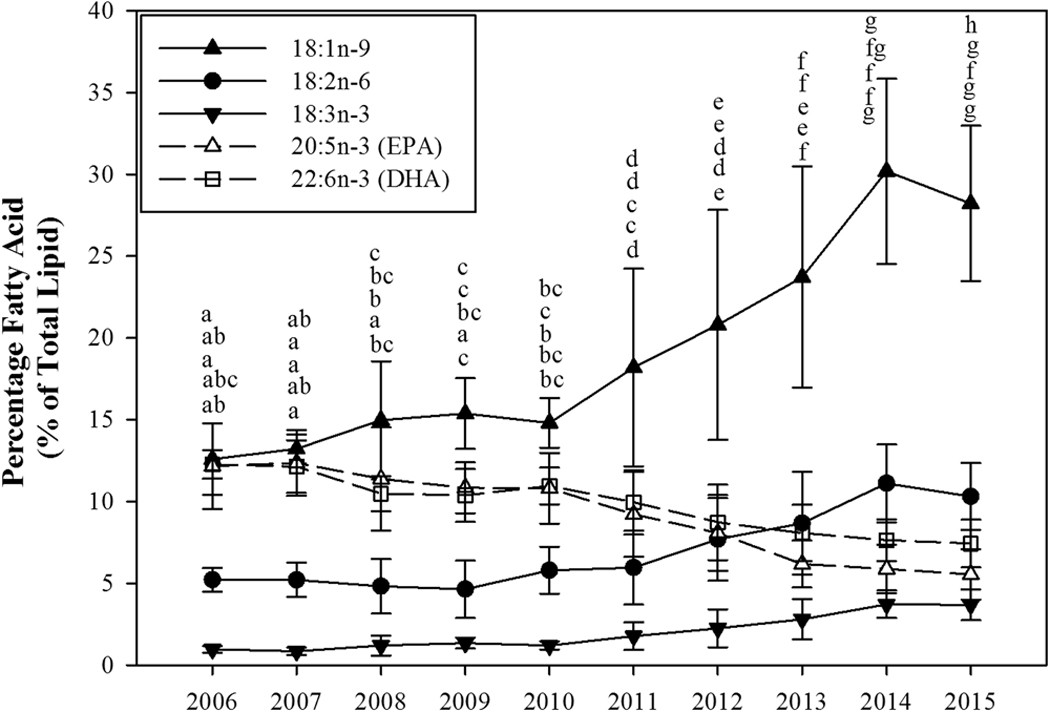
New research led by USDA scientists finds that levels of omega-3 fatty acids in farmed salmon have dropped considerably, potentially making the agency's own dietary advice, and similar recommendations including from the American Heart Association, outdated and insufficient.
The USDA's Dietary Guidelines for Americans recommend eating at least 8 ounces of fish a week and urge people to choose salmon or other species similarly high in heart-healthy omega-3 fatty acids.
The study attributes the omega-3 decline to a major shift in the diets of the naturally carnivorous salmon, from smaller fish species that were over-exploited to feed farmed fish, to a mix that includes land-based oils and crops including soy and canola.
The report's authors note that the sample they examined was not large enough to require changing the government's advice and that "a broader and more representative study is warranted."
The USDA declined requests for an interview and did not answer questions via email.
Nearly 70 percent of the salmon consumed on the planet are raised in pens and cages.
Distinct publishers with included, body-backed reporting in this cluster.
1 article · September 6, 2026
Follow any of these and your For You feed starts watching them — no settings page required.
invest
When the marginal bidder is a billionaire, farmland stops being priced off what it grows1 distinct publisher
build
The FCC closed the border on imported robots, so RoboStore is becoming a factory1 distinct publisher
invest
FDA foreign food inspections are running at 53% of their fiscal 2024 pace1 distinct publisher
science
Coronary calcium earns one narrow job: breaking statin ties in the 3-to-10 percent band1 distinct publisher
Evidence-backed comparisons of source perspectives and observed adoption signals. Read the methodology
Which Builder, Operator, and Investor concerns the observed source mix emphasized—not a truth score.
Evidence, demonstrated adoption, hype gap, incentives, and confidence are assessed independently, each on its own current evidence. How these are measured.
Single outlet, single paper, missing figure
Everything rests on Ars Technica's reading of a USDA-led study it neither names nor dates, and the only figures in the piece describe the recommendation and the farmed share rather than the nutrient. Two things hold the score up: the researchers' own limitation is quoted rather than buried, and a 2016 study is said to have found the same direction for the same reason.
No response on the record
Nothing in this reporting shows anyone acting on the finding. The Dietary Guidelines remain as published, no revision process is described, and no producer, retailer, health body, or agency is shown reacting.
Hedged language, missing magnitude
Ars Technica hedges in its own headline and prints the authors' statement that their sample cannot justify changing federal advice, so the framing stays close to the work. The tilt comes from the word 'considerably' sitting where a percentage should be: a reader is told the guidance may be insufficient without any way to judge whether an 8-ounce serving now falls short of anything.
Watchdog quoted, department silent
The only outside voice is the director of a project set up to scrutinise fish farming, and she is the one who says consumers are being misled. Pulling the other way, the result comes from USDA scientists whose finding undercuts the numbers behind USDA advice, and the department declined the interview and left emailed questions alone.
Direction firm, magnitude open
Two studies a decade apart point the same way, and the feed change they blame goes unchallenged anywhere in this reporting, so the direction looks reasonably safe. Sample size, magnitude, and any real effect on the 8-ounce recommendation stay unknown, with one publisher carrying the entire account.