Science1 distinct publisher3 min readPublished
York University's team picked a windy Atlantic coastline to confirm that breaking waves loft forever chemicals ashore, and instead measured PFAS that track long-range transport. Dry fallout mattered more.
The Scientist · Science desk

Compiled by The ScientistSomething wrong?How this is made
The design is what makes this null worth reading. A negative result is only as trustworthy as the chance the study gave itself of finding a positive, and this one stacked the odds toward a hit: driving wind, crashing waves and extensive coastline [12], sampled at forested watersheds within 30 km of the shore [6][7], with sodium carried along as an internal check. Sodium is what sea spray unambiguously delivers, which is why it works as a tracer [8]. If aerosol from breaking waves were also delivering PFAS, the two should rise and fall together. Persaud reports they did not [8].
What the announcement does not give is the shape of that null: no correlation figure, no concentration range, no site count beyond "several" locations up to 30 km from the eastern coast [6]. A weak association across a handful of watersheds is a different object from a tight zero across dozens. On the material available, the defensible reading is directional rather than quantitative: at these sites, sea spray was not the route that mattered, and what turned up was mostly perfluoroalkyl acids of the kind formed when precursor compounds break down after travelling from industrial and commercial regions in Canada, the United States and possibly further [9][10].
There are limits on how far the conclusion travels. Deposition sampling measures what lands, in rain or as dry fallout [6], which is not a measurement of what a person standing in the surf inhales; the reassurance about summer coastal exposure rests on an inference from flux to dose. And spray can only carry what the water holds. Newfoundland is a worst case for spray production [12], which is not the same as a worst case for spray loading, and the material reports no PFAS concentration for the nearshore water. Young's conclusion, that this sort of sea spray is not a major source of global pollution [13], is a claim about the global budget. A stretch of coast with a firefighting-foam history behind it [11] is a separate question this work does not close.
Given all that, the ranking that follows is reasonably clear. Coastal aerosol as a distinct PFAS pathway has now failed its most favourable field test [1][3], so the marginal monitoring dollar buys more information sited downwind of source regions than along a beach. Meanwhile the finding the authors present as a methodological aside is the one with budget implications: dry deposition mattered enough to change the accounting, in a region where it rains a lot [14][15], and it is not routinely collected [14]. A programme that samples only precipitation is publishing a partial total, and Persaud's point about telling wet and dry apart is really about not misplacing these compounds on the map [16].
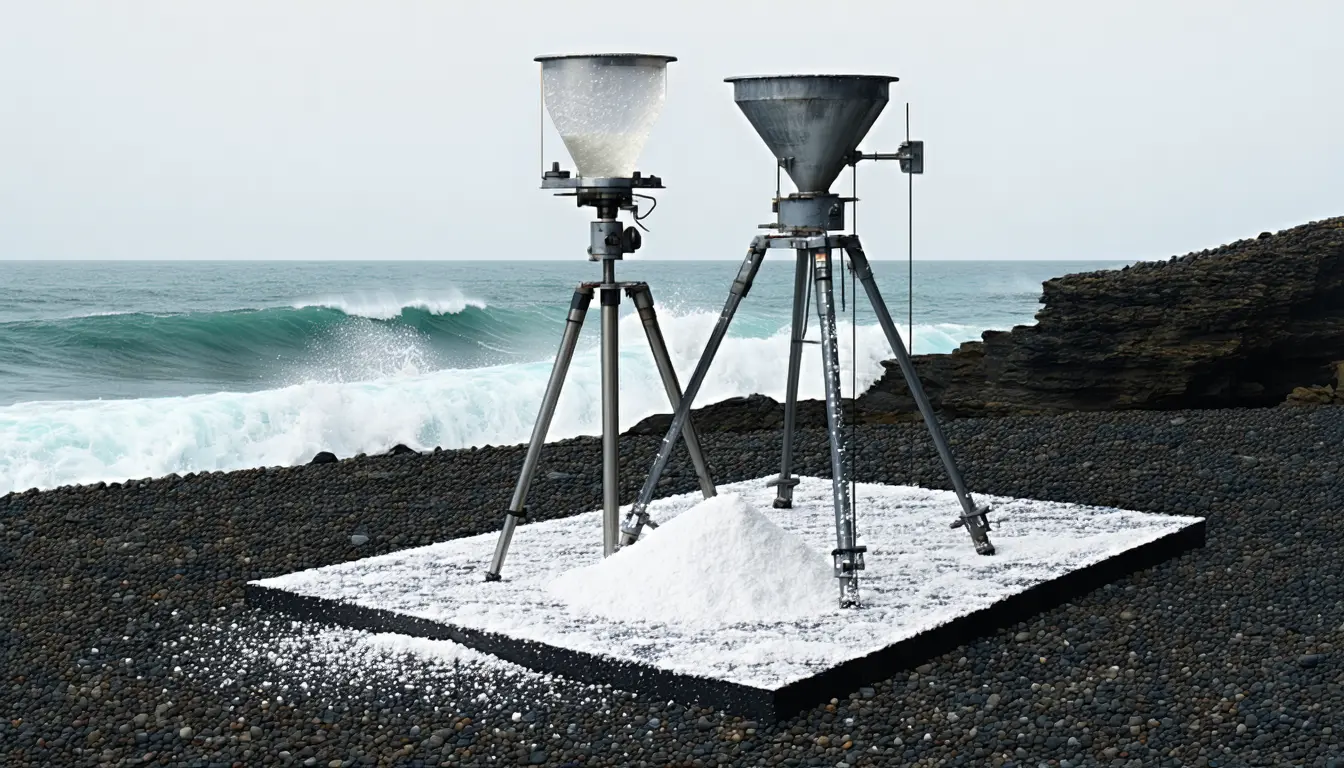
Ranked by verification strength, evidence, and original report placement.
York University researchers found little evidence of PFAS contamination from marine aerosols in coastal areas affected by Atlantic sea spray, a finding that surprised them; the study was published in Environmental Science: Processes & Impacts.
The study looked specifically at areas affected by sea spray from the Atlantic Ocean generated by waves breaking along the coast of Newfoundland and Labrador.
Senior author Cora Young, an atmospheric chemist and Guy Warwick Rogers Chair in York University's Faculty of Science, said the study was designed specifically to see if sea spray was contributing to a mobilization of PFAS in coastal regions, that the team expected quite a lot of PFAS from sea spray, and that they were quite surprised not to see anything indicating sea spray was contributing.
Lead author Daniel Persaud, a York PhD student, Young and the team conducted fieldwork expecting their results to support the earlier findings.
The researchers collected and analyzed both wet-deposition samples from precipitation such as rain and dry deposition of dust settling from atmospheric particles and gases, at several locations up to 30 kilometers (19 miles) from the eastern coast.
The sampling sites were forested watersheds in the Newfoundland and Labrador Boreal Ecosystem Latitudinal Transect, all influenced by marine aerosols and selected for their proximity to the ocean.
Distinct publishers with included, body-backed reporting in this cluster.
phys.org
1 article · September 1, 2026
Follow any of these and your For You feed starts watching them — no settings page required.
science
Wildfire smoke is also a fertilizer delivery route, and no deposition budget counts it1 distinct publisher
science
Petermann's 30-square-mile calving was the small one: two bigger sections are already cracked2 distinct publishers
science
Two nests in thirty years: what a single Haida Gwaii murrelet find fixes1 distinct publisher
Evidence-backed comparisons of source perspectives and observed adoption signals. Read the methodology
Which Builder, Operator, and Investor concerns the observed source mix emphasized—not a truth score.
Evidence, demonstrated adoption, hype gap, incentives, and confidence are assessed independently, each on its own current evidence. How these are measured.
Peer-reviewed paper, press-release retelling
A cited, peer-reviewed paper with a DOI sits behind this, which puts it well ahead of a conference-slide claim. What reached print is another matter: no concentrations, no site count, no sampling window, and no measure of how weak the sodium–PFAS association was, even though that association is the whole finding. Readers are asked to accept a quantitative null result as reported speech from the two people who produced it.
No uptake on the record
Publication is the only event our coverage records. No monitoring programme has added dry-deposition sampling because of this, no agency has revised coastal exposure guidance, and no other group has tried to reproduce the null result. We will not score uptake from a paper's appearance.
Reassurance outruns the measurements
The headline says coastal exposure fears may be overblown and Young calls it a good-news story — yet the same reporting says PFAS were found at every site. Sea spray was struck off the list of sources; the contamination stayed. Then one Atlantic transect is stretched into 'not a major source of global pollution' on the argument that Newfoundland is a worst case. The de-hyping of an older claim has quietly acquired hype of its own.
One institution, both quotes, its own verdict
Framing, quotes and the closing 'good-news' judgement all come from the university whose researchers ran the study; no outside chemist appears to test a result that contradicts earlier modelling. Government partners — the Canadian Forest Service, Natural Resources Canada, Environment and Climate Change Canada — are named as collaborators while funding goes undisclosed. No commercial interest is visible, but a surprising negative finding is unusually quotable, and this piece was written by people who benefit from it being quoted.
Clear on what was said, blind to the data
We can state with reasonable certainty what the York team reports and roughly how it sampled. We cannot check any of it: one publisher, one institution, no figures, no replication, and no named prior work to compare against. Enough to pass along with attribution; not enough to build a coastal exposure argument on.