Product1 distinct publisher3 min readPublished
The Explorer Edition brings its own cellular link and uploads the transcript while the meeting is still running, which lands the recording question in employer policy before procurement ever sees the hardware.
The Product Desk · Product desk

Compiled by The Product DeskSomething wrong?How this is made
The whole consent mechanism is a button under one person's thumb. Plaud told TechRadar that recording is manually triggered by a press [5], and when the site asked how everyone else in the room finds out, the company pointed at the wearer: follow local law, and inform participants where consent is required [6]. TechRadar reported that the team mentioned no audible or visible indication that recording is under way [7]. So the other people in the conversation are depending on a colleague to say a sentence out loud while also trying not to miss the action items.
The cellular radio is the part a procurement review will skim, because it reads as a feature rather than a control question. Plaud includes 4G connectivity at no additional cost [3], and recordings upload automatically for transcription and summarisation as they happen [4]. Hardware that carries its own connection does not need the guest wifi, and does not need an app on a phone your MDM manages. Blocking a domain or refusing an install are levers that sit on paths this device can route around.
On autonomy, Plaud's answer is more careful than most. Anything that changes state or leaves the environment, such as sending an email or deleting a file, pauses for the user's approval [8], while reading and querying the user's own data inside Plaud runs unattended in what the company calls a closed, trusted environment [9]. "The point isn't that it never misunderstands; it's that the user stays in control," the team told TechRadar [10]. That describes the agent's outbound behaviour rather than the capture step, which needs approval from nobody but the wearer [5].
Separate the thing being pitched from the thing arriving in someone's ear. Plaud named four third-party tools for agent actions, Gmail, Google Calendar, Notion and Slack [11][14], then told TechRadar that "broader new Plaud Intelligence agent capabilities will be available in a future update" [12]; at launch, the agent responds to a press and hold on the Agent Button, with hands-free "Hey Plaud" due in later firmware [13]. What lands first is a cellular audio recorder with a cloud transcript.
Two axes decide this for whoever owns it, and neither is a feature comparison. Does the capture path run through infrastructure you control? Does the finished transcript land in an account you can place under legal hold? A company-run conference bridge is a yes on both. A personally bought Plaud One is a no on both: capture over a carrier link [3], a transcript created automatically in a consumer account [4], and consent resting on a verbal promise the wearer was asked to make [6].
A ban is the weakest option on that grid, because it cannot reach the capture path and it pushes the verbatim record of your client meetings into accounts your legal team will never search. Buying the devices on purpose, for the handful of roles that need them, gets you the record and a disclosure line you can audit; the cost is that you inherit the consent question in writing, and you are the party that answers for a recording made where the wearer forgot to ask.
The forcing function is a short list: the meeting types you would not want transcribed into a vendor account nobody at your company administers, checked against whether your recording policy says anything at all about hardware that supplies its own network. If it does not, the wearer's judgement is your policy [6].
Ranked by verification strength, evidence, and original report placement.
Plaud One Explorer Edition was announced for pre-order as a wearable AI device primarily aimed at professionals, designed to capture conversations so it can produce actions and reports based on the wearer's working day.
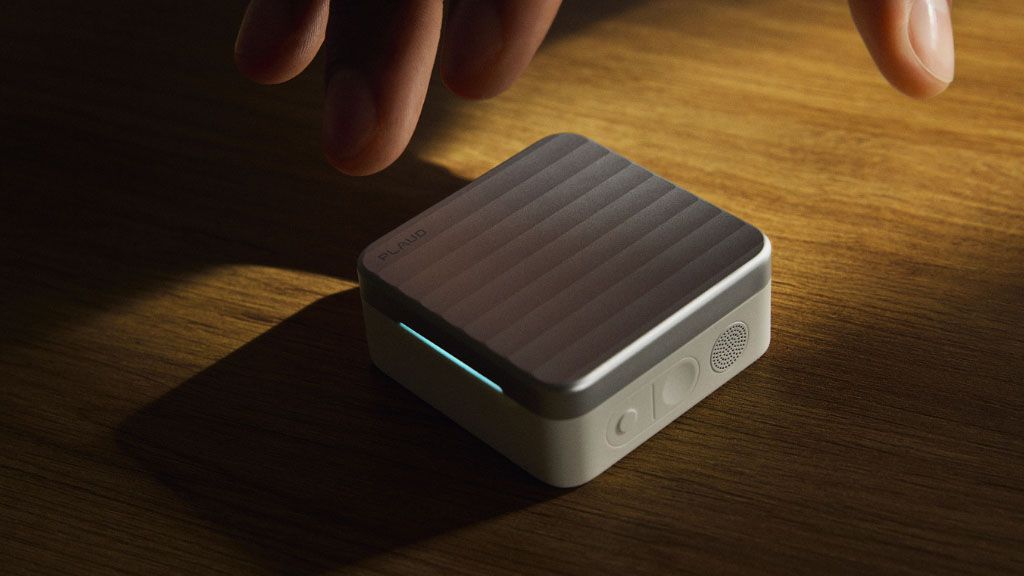
Plaud One can be worn as earbuds or used through its standalone case, and can capture both phone calls and in-person conversations.
The device features built-in 4G connectivity at no additional cost.
Recordings are uploaded automatically for transcription and summarisation as they happen.
Asked whether recording is manually triggered, Plaud told TechRadar: "Yes, recording is manually triggered with the press of a button."
Plaud told TechRadar it "encourages users to follow local laws and best practices for recording consent" and that "where consent is required, users should inform participants before recording."
Distinct publishers with included, body-backed reporting in this cluster.
Follow any of these and your For You feed starts watching them — no settings page required.
product
Plaud's cellular earbuds hand the recording-consent problem to employers4 distinct publishers
product
Claude Can Now Press Send In Gmail, And Your Workspace Admin Owns That Decision1 distinct publisher
product
watchOS 27 demotes the honeycomb: five most-used apps plus Siri is the new default1 distinct publisher
security
A staging password went into a Google Doc, and Google's autocomplete found it first1 distinct publisher
Evidence-backed comparisons of source perspectives and observed adoption signals. Read the methodology
Which Builder, Operator, and Investor concerns the observed source mix emphasized—not a truth score.
Evidence, demonstrated adoption, hype gap, incentives, and confidence are assessed independently, each on its own current evidence. How these are measured.
Single-source vendor Q&A, no independent verification
Every substantive claim traces to one article in one outlet, and within it to attributed statements from the Plaud team. The reporting is specific and the quotes are direct, which makes the vendor's position well documented, but nothing — transcription quality, the approval gate, the closed-environment boundary, eSIM behaviour — was independently tested or corroborated by a second publisher.
Pre-order only, nothing shipped or measured
The only adoption signal is that pre-orders opened alongside a price and included eSIM. There are no shipments, install counts, enterprise deployments, benchmarks or usage disclosures, and the differentiating agent capability is explicitly not available at launch.
Agent narrative runs ahead of shipping capability
The product is presented around agentic action across Gmail, Google Calendar, Notion and Slack, yet the vendor concedes that broader Plaud Intelligence capabilities and hands-free activation both arrive after launch, and no capability was independently demonstrated. Separately, the 'user stays in control' framing is overstated relative to the operator reality that capture and off-network upload happen before any approval gate applies, and that no recording indicator was described.
Vendor-supplied launch narrative in exchange for exclusivity
Plaud is promoting an open pre-order and controls every factual assertion in the record, including the reassuring answers on consent, approval gates and data deletion. The publisher's incentive runs parallel: the piece is badged as an exclusive built on privileged access to the vendor team, which favours quoting the vendor's framing over testing it. Both sides benefit from the launch being covered as capability rather than as policy exposure.
Facts are clear, substance is unverified
Confidence that Plaud said these things is high; confidence that the product behaves as described is low. One publisher, one interview, no shipped units, no independent measurement, and a deferred feature set mean the assessment is stable only on the record of vendor statements, not on product reality.