Science1 publisher2 min readPublished
Dogs obeying a restraint command produced the frontal theta humans show under self-control
A Budapest group logged 226 half-minute EEG recordings from 14 dogs and found frontal theta stronger while the animals obeyed a command than while they sat idle. That undercuts the reflex account of obedience; deliberation is a further claim the recordings do not support.
The Scientist · Science desk
What happened
- Researchers at ELTE's Department of Ethology and the HUN-REN Research Centre of Natural Sciences report that dogs restraining their behaviour on command show brain activity resembling the human self-control signature.
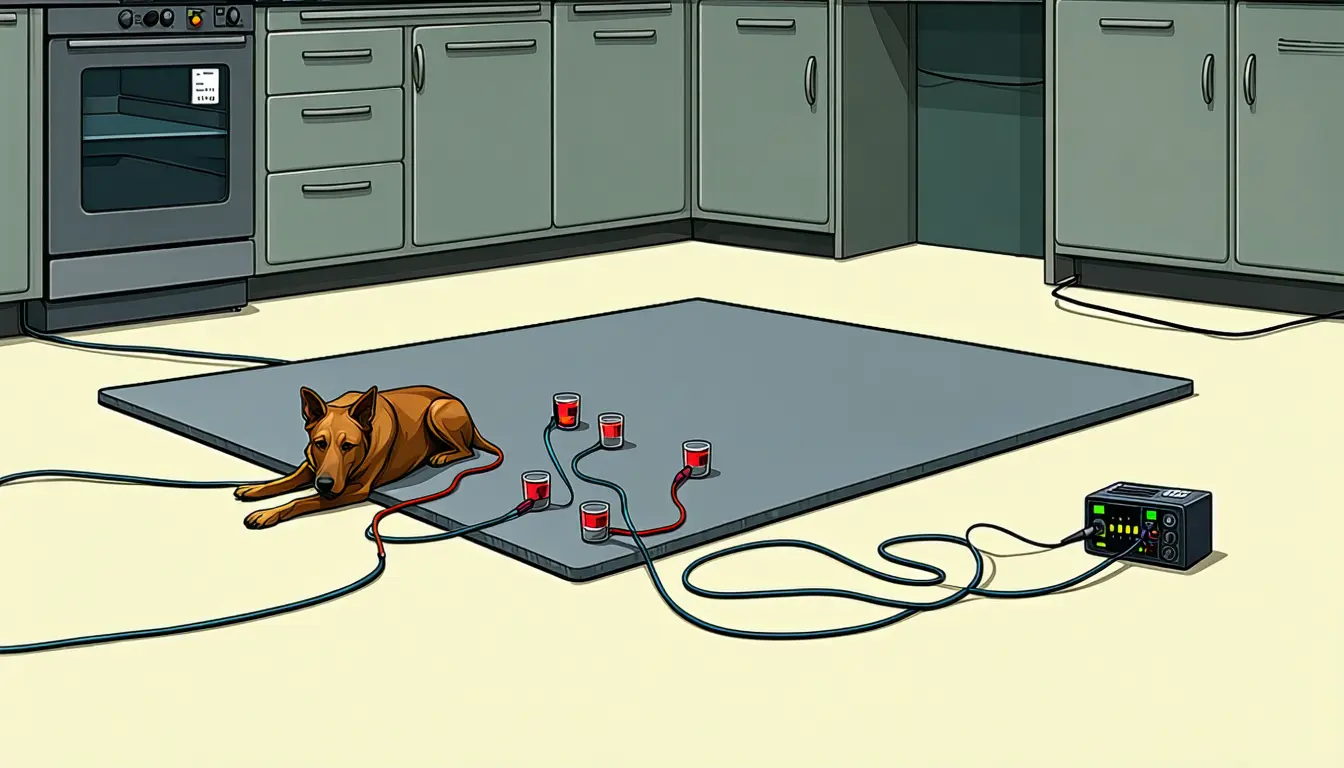
- The dataset is 226 awake, noninvasive EEG recordings of about half a minute each from 14 dogs, with every recording labelled as the animal either obeying a command or idle.
- Theta was more pronounced in the obedience recordings, and the team says the activity resembled human theta in both frequency and localization.
- The paper appears in Animal Cognition as "A human-like EEG signature of cognitive control in the domestic dog", with Ivaylo Borislavov Iotchev as first author.
Compiled by The ScientistSomething wrong?How this is made
Why it matters
- capability Awake EEG costs less than fMRI, so work on the dog frontal lobe stops depending on scanner access; Iotchev expects more studies of canine mental processes to follow.
- precedent If the theta measure holds, pet dogs become a candidate population for testing frontal-lobe accounts of ADHD and weight gain on a faster life cycle than human cohorts allow. Kis says the measure is what makes that comparison testable.
- constraint The study compared obeying with idle, not one training method with another, so treating it as instruction on how to teach restraint claims far more than a 14-dog EEG comparison can support.
- constraint A disease-model programme needs to tell individual animals apart, and that will take more than 14 dogs with about sixteen half-minute segments each.
The test was built so that a null result would have been the permissive one. If a dog meets a restraint command with something like a freeze reflex, frontal theta has no reason to track whether the animal is obeying. "The absence of such an effect would have left open the possibility that dogs obey commands automatically," said Iotchev of the HUN-REN Research Centre of Natural Sciences [5]. The recordings went the other way: "we instead observed EEG activity that resembles human theta in both frequency and localization," he said [6]. In people, frontal-lobe involvement in self-control shows up on EEG as increased frontal theta [7].
The resemblance being claimed is between signals, in frequency and in location [6]. The comparison rests on two conditions, obeying and idle [3]. A commanded dog and an idle dog differ in inhibition; they also differ in whether an owner has just spoken and in what the dog is attending to. The design as described shows frontal activity is modulated when a dog withholds a grab it could make [20]. Whether inhibition is what causes that modulation is left open.
Add the recordings up and the corpus comes to roughly 113 minutes of EEG in total, about eight minutes per animal across some sixteen segments each [17][18]. The announcement gives the direction of the theta difference but not its size [19]. Half-minute windows from awake animals are what noninvasive recording in dogs allows [4].
Iotchev put the dog frontal lobe in company with a better-studied one. "We know a lot more about this part of the brain as it operates in the rat," he said [16], and: "The frontal lobes of a dog have received surprisingly little attention so far, given how many people believe that their pawed companions have a rich inner life" [13].
Kis and Gácsi, who supervised the study, have spent years testing whether dogs can inform human conditions such as ADHD and obesity [9]. "Dogs live and age faster than humans but move in the same environments and adapt to the same social and physical challenges," Gácsi said [10]. The frontal link is the reason they want the EEG measure. "In humans, failures in the function of the frontal lobes play a role in both ADHD and abnormal weight gain," Kis said [11], adding that measuring those correlates in dogs would let the group test how closely the canine versions resemble the human ones [12].
What to watch
- Whether the group runs a third condition in which a dog attends to its owner without withholding a response, which would separate inhibition from attention.
- The announcement does not summarise effect size or per-dog consistency; the Animal Cognition paper itself reports both.
- Whether frontal theta separates dogs with attention or impulsivity problems from controls in the Kis and Gacsi disease-model work.