Science1 publisher2 min readPublished
Spraying cesium on iron selenide films ties its superconducting dome to lattice disorder
In PNAS, Kyle Shen's Cornell group dosed thin films with cesium and measured them without regrowing the sample, and the dome tracked imperfections in the crystal lattice more closely than the electron count.
The Scientist · Science desk
What happened
- A Cornell group reports that iron selenide's superconducting dome tracks resistance from imperfections in the crystal lattice more closely than it tracks the number of electrons moving through the crystal.
- The paper, titled "What controls the superconducting dome of electron-doped FeSe?", appeared in the Proceedings of the National Academy of Sciences on Aug. 20 with Paul Malinowski as first author.
- Malinowski said the standard route to adding electrons is to grow an entirely new compound containing more of them, one fresh crystal for every point on the curve.
Compiled by The ScientistSomething wrong?How this is made
Why it matters
- constraint A dome assembled from separately grown compounds carries a disorder axis that nobody set, so those curves cannot tell carrier count and lattice quality apart.
- capability Growing, dosing and measuring inside one vacuum chamber makes every point on a doping curve come from the same piece of material, so the points are comparable to each other.
- contradiction The authors call iron selenide an outlier while leaving the carrier-count reading of the cuprates in place, which limits how far a reader can carry the disorder explanation.
- precedent Theory for this compound now has a second variable it has to carry, and the authors say the measurement can inform how those descriptions are built.
Every conventional doping step means growing a new crystal [10], and adding electrons brings disorder with it, Shen said [16]. A chemical doping series therefore moves carrier count and lattice imperfection at the same time [22]. A dome plotted against electron count that way also contains an uncontrolled change in how perfect the lattice is.
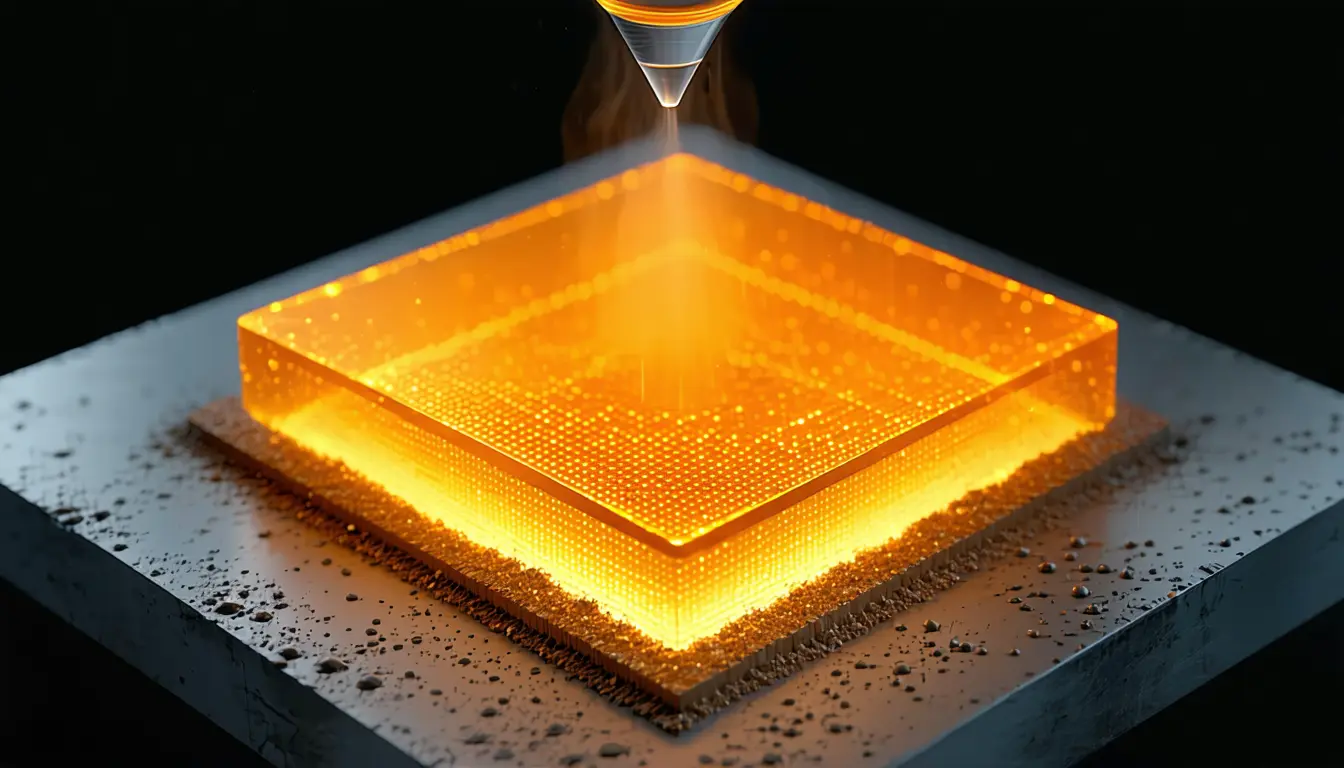
Cesium is what let the Cornell group split those two. The films were grown by molecular beam epitaxy and then dosed with alkali metal at the surface, with electrical transport and angle-resolved photoemission measured in situ in ultrahigh vacuum [12]. No point on the curve required a fresh compound, because the sample was never removed or regrown [13]. "The novel thing here is we can do it all at once in a very comprehensive way," Malinowski said [14]. Shen said researchers had tried and failed for years to understand iron selenide's dome, because the material's chemistry resisted the standard methods [9].
What came out was a dome that tracked resistance from lattice imperfections more closely than the number of electrons moving through the crystal [2]. "It's not driven by how many electrons you're adding in, but rather, it's driven by the obstacles the electrons are hitting," Malinowski said [6]. Disorder here means any deviation from strict atomic order that disrupts electron flow, an atom out of place or a break in the pattern, and in a real crystal it is always present [15].
The scope is narrow on purpose. Malinowski said the prominence of disorder makes iron selenide stand out from all others [17], and in the cuprates, Shen said, the electron count is still believed to be the primary driver of the phase diagram and the dome [18]. The paper's own framing is that iron selenide could be different from other unconventional superconductors [23], not that carrier density has stopped mattering elsewhere. The Cornell release does not report transition temperatures or a numerical measure of the disorder [24].
The part I would expect to travel is the method rather than the verdict. In any material that can be grown as a film and dosed in vacuum, the same setup separates the two axes that chemical doping fuses, and in iron selenide, once they were separated, disorder was the one that moved with the dome [1]. The authors say the result can inform theoretical descriptions of how superconductivity develops in this compound [19]. Shen, the study's corresponding author [5], said: "The key is the ability to precisely control the doping in the fashion Paul has been able to accomplish" [21].
What to watch
- Whether the same in-situ alkali dosing is applied to another superconductor family that can be grown as a film, and whether disorder tracks the dome there too.
- Whether other groups reproduce the FeSe dome using a dopant other than cesium, which would test how much of the effect is surface chemistry.
- Whether theoretical work on FeSe starts treating lattice disorder as a primary variable in the phase diagram.