Build1 distinct publisher3 min readPublished
Builders FirstSource led the whole round and signed a five-year commercial agreement covering its roughly 565 locations. No integration schedule or deployment size has been published.
The Engineer · Build desk

Compiled by The EngineerSomething wrong?How this is made
Divide the supplier's own figures and the shape of the channel appears: more than 140,000 customers across roughly 565 locations is about 248 accounts per branch [4][5]. Those are purchasing relationships at a publicly traded building-materials supplier [2], which is why the agreement is worth more to a 2022-vintage software company than the cash is [13]. It is also the limit. Nothing published so far turns branch access into installed seats.
The five years is a term, not a quantity. The announced scope covers product development, integrations and AI features for residential builders [3], and the planned function list runs to AI chat, e-signatures, tasks, QR codes, finish selections, visual coordination and warranty management, wired to estimating, procurement, construction and homeowner support [6]. Neither party has put out an integration schedule, an initial deployment size, or a measured productivity result [7]. So the contract fixes duration and intent; the volume is still to be negotiated inside a company that has its own product managers.
Those product managers already ship the overlapping thing. Builders FirstSource markets myBLDR as a project-management platform spanning design, document storage, homebuyer selections, schedules, budgets, material quotes, orders and deliveries, with a wider suite covering community planning, 3D home models and construction workflows [8][9]. Digs' software reads standard construction documents and builds a spatially organised record of a home, with AI-assisted file management, plan collaboration and homeowner handoff on top [15]. Put plainly, the newcomer has to arrive as a layer inside someone else's interface without becoming the extra disconnected workspace both firms say they are trying to eliminate [10]. That makes roadmap priority a partner conversation rather than a founder decision.
The part that explains why a materials distributor would underwrite this sits after move-in. Digs wants the record to stay with the homeowner, carrying product details, warranties, maintenance history and project history, and expects that data to support later repair, retail and home-service transactions, a market Ryan Fink was already chasing at Streem [11]. A supplier whose relationship with a house currently ends when the last delivery truck leaves gets a reason to be in the building for the next thirty years. That is a distribution asset for the investor, not only for the startup.
The founders have sold into this thesis twice already: Atheer acquired Fink's gesture-recognition company ONtheGO Platforms in 2015, and Frontdoor acquired Streem in 2019 [14]. Co-founder Ty Frackiewicz worked as a homebuilder before running product at Streem [13]. Fink's framing in the announcement is that Digs is "building the AI platform that understands every home" [12]. The model claim is the pitch. The mechanism is a contract that puts a young vendor's software in front of a customer list it could not have assembled on its own within the same five years [16], and the reason to watch it is that the same signature can be allowed to lapse.
Ranked by verification strength, evidence, and original report placement.
Per runtimewire's analysis, the overlap creates the main execution test: Digs has to add an AI and homeowner-data layer to Builders FirstSource's existing products without asking builders to adopt another disconnected workspace, the problem both sides say they are trying to remove.
According to runtimewire, the arrangement gives Digs a potential route to customers that would take a young enterprise software vendor years to assemble independently.
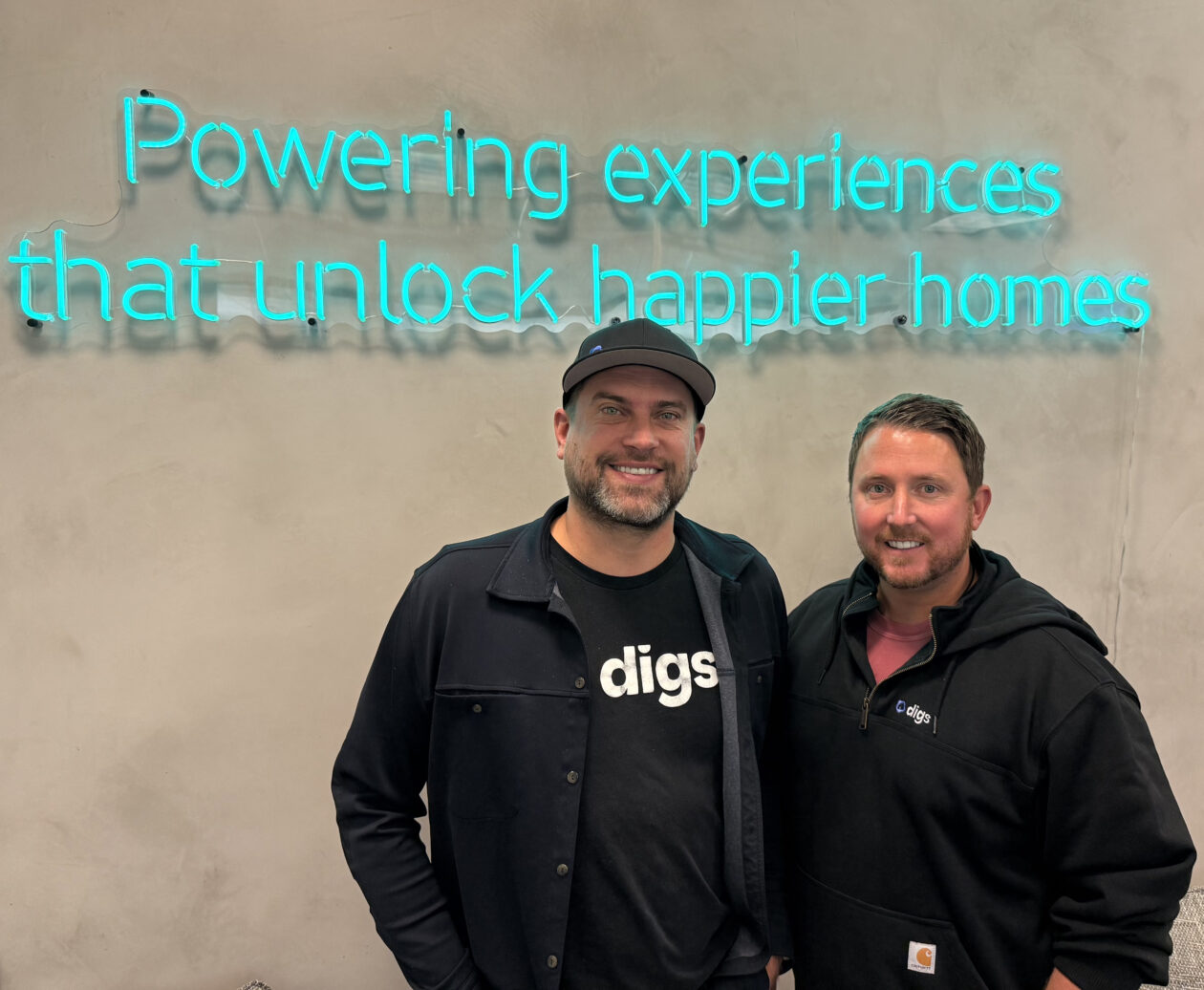
Ryan Fink has raised $25.3 million for Digs, of Vancouver, Washington, pairing the Series A with a five-year commercial agreement that could give the company access to Builders FirstSource's 565-location network.
Builders FirstSource, a publicly traded building-materials supplier, is the sole lead investor in the round, according to a joint announcement published Tuesday.
Builders FirstSource will also work with Digs on product development, integrations and AI features for residential builders.
Builders FirstSource says it operates approximately 565 locations across 43 states and serves more than 140,000 customers.
Follow any of these and your For You feed starts watching them — no settings page required.
Evidence-backed comparisons of source perspectives and observed adoption signals. Read the methodology
Which Builder, Operator, and Investor concerns the observed source mix emphasized—not a truth score.
Evidence, demonstrated adoption, hype gap, incentives, and confidence are assessed independently, each on its own current evidence. How these are measured.
Primary announcement, single outlet
Deal terms are specific and attributable to a joint announcement relayed with Business Wire cited as primary source, and the publisher labels the analytical inferences as its own. But the cluster contains exactly one publisher, no independent corroboration of the funding or the agreement, no valuation or participant detail, and the supplier's scale figures and Digs' traction figures are self-reported.
Announced, not deployed
What exists today is a contract and an equity investment, not measurable usage inside the channel. The article states there is no integration schedule, no initial deployment size and no measured productivity results, and the only usage figures are Digs' unaudited self-report of nearly 10,000 homes on the platform predating this round. The ~565 locations are an addressable network, not deployments.
Ambition ahead of shipped integration
Framing runs well ahead of demonstrated substance: "the AI platform that understands every home," a homeowner-owned digital twin extending into repair and retail transactions, and a 565-branch, 140,000-customer channel, set against planned-only features, an unspecified integration path and no committed purchasing. The gap is moderate rather than severe because the same article discloses the missing schedule, deployment size, results and revenue guarantees, and flags the myBLDR overlap as the main execution test.
Lead investor is also the counterparty
Incentive entanglement is unusually high and is the story's defining feature: Builders FirstSource is sole lead investor, product co-developer and route to market simultaneously, and the announcement is a joint promotional artifact issued by both beneficiaries. Digs' valuation, participants and any purchasing commitments are undisclosed, and its traction figures are self-supplied, so almost every quantitative input originates with a party holding equity or reputational stake in the framing.
Moderate: clean facts, unverified outcomes
Confidence is moderate. The verifiable layer (round size, sole lead, five-year term, supplier scale claims, founder history, incumbent product overlap) is internally consistent and clearly attributed, and the publisher marks its own inferences. The unverifiable layer (whether the channel converts, whether the layered product ships, unaudited traction) dominates the forward-looking read, and there is only one publisher and one source item in the cluster.
invest
Treasury's stablecoin rule makes the listing venue liable, not just the issuer4 distinct publishers
Distinct publishers with included, body-backed reporting in this cluster.
1 article · August 25, 2026