Invest1 publisher3 min readPublished
New Jersey's shelf-label freeze outlasts Walmart's December rollout deadline
Governor Mikie Sherrill signed the Fair Price Protection Act in July, halting new electronic shelf labels for a year while the state studies them. Walmart, which promised digital tags in all 2,300 of its US stores by the end of the year, calls the law an overreaction.
The Investor · Invest desk
What happened
- New Jersey's Fair Price Protection Act, signed in July, bans discriminatory surveillance pricing and puts a one-year moratorium on new electronic shelf labels while the state studies the technology's effects.
- Walmart has committed to installing electronic shelf labels across all 2,300 of its US stores by the end of the year, and its North Bergen supercenter had about 90% of its tags converted as of last month.
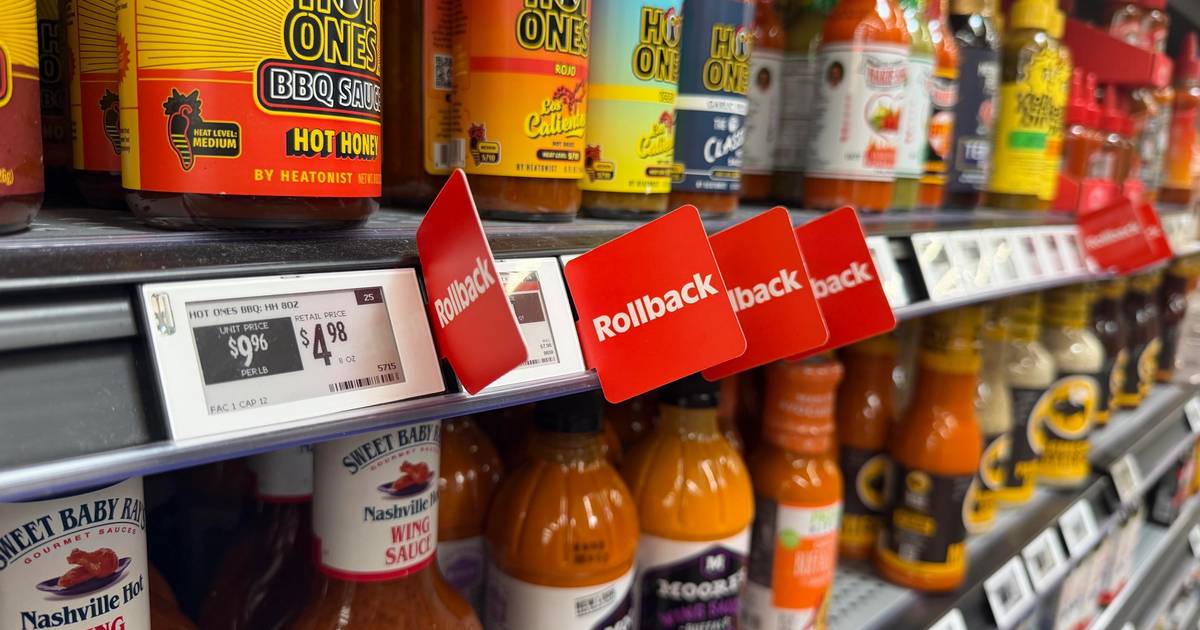
- On a store tour, a Walmart team leader keyed $10 into a price field for a bottle of barbeque sauce, nearly tripling it, and the system refused the change; the refusal was the point of the demonstration.
- Kroger has added the labels at a number of stores across the country and Whole Foods is testing digital tags at nearly 50 locations.
Compiled by The InvestorSomething wrong?How this is made
Why it matters
- constraint The completion date of a 2,300-store hardware program now depends on a state study's calendar, and no amount of capex shortens the twelve months.
- contradiction Walmart is defending a store-level price lockout and label hardware with no camera; the statute is aimed at prices set from personal data, so the two sides are not describing the same object.
- precedent With two states enacted and more bills pending, New Jersey's findings become drafting material for the next legislature, and vendors are selling into an outcome their customers do not control.
- exposure The UFCW's price-gouging and job-loss framing puts labor into a capex argument, so retailers have to defend headcount effects as well as pricing integrity.
The statute and the store tour are about different steps in a price. New Jersey's law defines discriminatory surveillance pricing as using personal data to set prices [2], and the one-year pause on new labels is attached to a state study of what the technology does [3]. What the North Bergen tour showed is a permission setting inside a single store. "We cannot take prices up in the store," Kyle Boyd, the store manager, told Retail Brew. "We can only take prices down in the store." [7] Increases to a base price, as opposed to a rollback or a promotion, happen at the corporate level [8].
Walmart's written answer sticks to the hardware. "DSLs operate on a closed system and do not interact with shoppers or collect any information about them," Robyn Babbitt, the company's director of corporate communications, said in an email to Retail Brew [9]. "There is nothing like a camera or microphone in them; they just display prices," she said [10]. She called the legislation an "overreaction" [11].
The cost shows up in the timing. The act was signed in July and freezes new labels for twelve months [1][3], while the company's commitment covers all 2,300 US stores by the end of the year [4]. On those two dates the freeze runs about six months past the completion target. The law's effective date is not in the record [1].
If the study clears the technology, the delay is a year of new installs in one state inside a 2,300-store program [4], and the political risk cost weeks. If the study produces findings, those findings become drafting material for the bills already pending in several states, where Maryland has passed a similar law this year [16]. The union offers a third path. Ademola Oyefeso, international vice president of the United Food and Commercial Workers, said, "A retailer may not be doing it right now, but they are laying the groundwork for it." He pointed to Norway, where grocery chains repriced rapidly on a daily basis after installing digital tags [13][15]. The UFCW wants the labels banned outright, calling them a "tool for price-gouging and job loss" [14].
In my view the study decides the rest. The strongest example of individualized pricing in the record comes from a report by the Groundwork Collaborative, Consumer Reports and More Perfect Union, which claimed Instacart's AI pricing tool offers individualized prices on the same items [17]. The freeze applies to the hardware. The National Grocers Association drew that line before the signing. In a statement urging Sherrill to change the bill, Macy Lemon, its vice president of state government affairs, said "Electronic shelf labels are not tools for surge pricing, but rather tools for efficiency and affordability" [12].
A finished rollout would break this reading. If all 2,300 stores are converted on schedule with New Jersey included [4], the moratorium bit only on stores Walmart had not started. The North Bergen supercenter was already at roughly 90% conversion last month [5], with about a tenth of its tags still on paper [3].
What to watch
- Whether the New Jersey study publishes findings before the twelve-month moratorium lapses, and what it says about repricing frequency.
- Whether the bills pending in other states copy New Jersey's moratorium-plus-study structure or Maryland's language.
- Whether the UFCW's demand for an outright ban finds a sponsor in any state legislature.