Leadership2 publishers2 min readPublished
Supreme Court leaves the midterms running on the mail-ballot process states already use
Monday evening's order in USPS v. California stops the late-August mail-ballot rules that election officials said they could not implement in time, and officers from both parties say the 2026 cycle now proceeds unchanged.
The Board Room · Leadership desk
What happened
- The Supreme Court decided United States Postal Service v. California on Monday evening, rejecting Trump's bid to restrict mail ballots for the midterm elections.
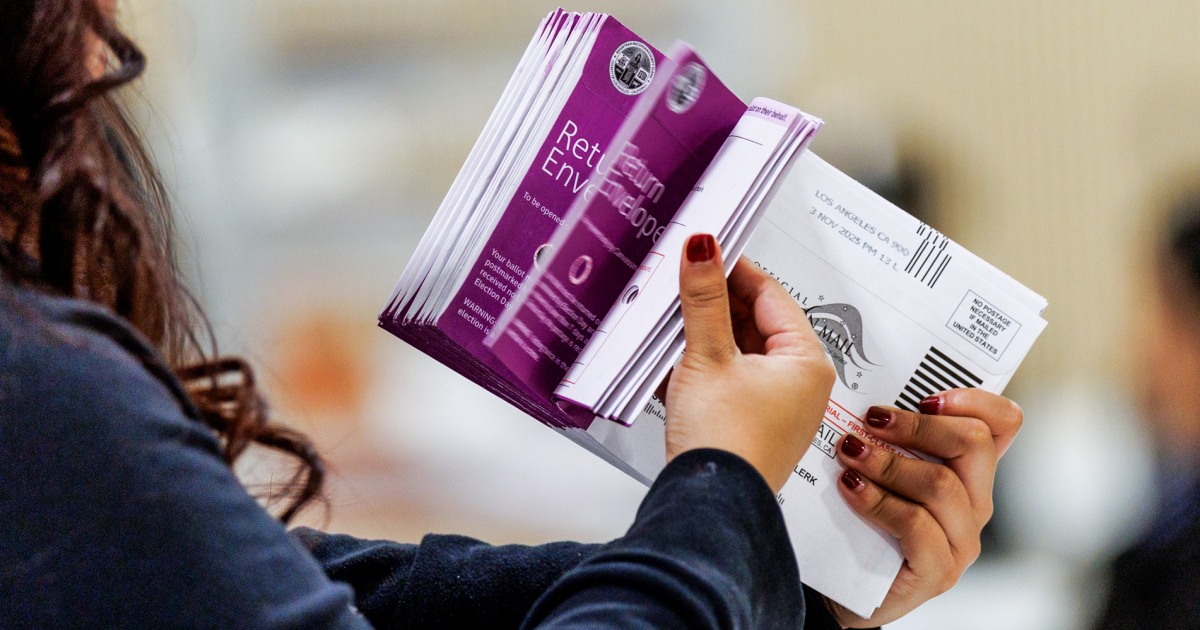
- The rules at issue required ballots to go out in envelopes carrying federally mandated design features and preapproved by a federal official, with the Postal Service refusing to deliver non-compliant ones.
- Another requirement had state officials entering certain voter data into an online platform that does not exist yet, which the administration said would be available shortly.
- Alabama, North Carolina and Wisconsin had already begun sending mail ballots to voters over the past week, while the new federal system was still not active.
Compiled by The Board RoomSomething wrong?How this is made
Why it matters
- decision Anyone who built a 2026 plan around ballots not reaching voters on time can now plan on the mailing process states have run for years, and repoint the hedge.
- cost Had the rules held, state election offices would have absorbed envelope redesign, federal preapproval and per-piece scanning inside the same weeks they were mailing ballots. Vox reported that was beyond what many could have managed.
- precedent The next federal mandate aimed at election administration will be argued against an order that, according to Vox, not even the dissenting justices defended on presidential power.
- contradiction Vox reported that the order forecloses this kind of attack entirely, while also predicting more attempts within weeks, and that second half is where the residual planning risk sits.
The requirement that mattered most operationally was the scanning. Each mail ballot envelope was to be individually scanned, in a process the Trump administration said would take "less than a minute per mailpiece" [8]. Take that figure at a full minute. One station clears 60 envelopes an hour, and 480 in an eight-hour shift [20]. States had to find that capacity in the weeks between the late-August announcement and the first mailings [5], and election officials said there was no way to carry out a complete overhaul in that window [10].
Officials from both parties described the same outcome. Washington's secretary of state Steve Hobbs, a Democrat, said the decision means work "to carry out a safe, secure, and accurate election" can continue "without having to upend our election processes to meet unrealistic ballot mail requirements" [12]. Utah Lt Gov Deidre Henderson, a Republican who serves as her state's chief election officer, said on social media that the decision means "Utahns can have confidence that the 2026 election will proceed as normal" [13]. States keep sending ballots under the same processes they have used for years [11].
Vox reported that the brief order slips in a line indicating Trump exceeded his authority and cannot implement such an attack on voting by mail under any circumstances [3]. Democrats were also much more likely to vote by mail than Republicans in the last several US election cycles, according to Vox [18].
A week earlier the same Court ordered Missouri to use the congressional maps it used in 2024, which elected two Democrats, instead of new maps expected to elect seven Republicans and one Democrat [14]. Those figures describe an eight-seat delegation moving from six Republicans and two Democrats to seven and one, a net change of one seat [21]. Republicans hold six of the nine seats on the Court [17]. Vox quoted Dartmouth political scientist Brendan Nyhan, who wrote after the Court's unusually liberal 2015 term that "the court's recent decisions may reflect a change in the cases being considered by the court rather than a shift in the preferences of the justices" [19].
For anyone holding a 2026 contingency plan, the durable part of this is small and specific. Ballots go out under the process states used before [11], so the scanning stations, envelope redesigns and platform enrolment implied by the August rules come off the schedule. Vox's reported line about presidential authority may cover the next federal mandate as well, but the sources describe one order in one case.
What to watch
- Whether the online voter-data platform states were told to use ever goes live, and what states are asked to load into it.
- Whether further attempts to change midterm rules reach the Court before ballots are counted, as Vox expects.
- Whether any fuller opinion confines the holding to the timing problem or to presidential authority over election administration.