Leadership1 distinct publisher3 min readPublished
More than 100 jurisdictions have cancelled Flock contracts and Texas has blocked state purchases, yet opposition to plate readers in one's own community still polls at 46%, and some councils simply switch vendors.
The Board Room · Leadership desk

Compiled by The Board RoomSomething wrong?How this is made
The scan volume is what makes this a governance problem rather than a hardware one. Roughly 2bn scans a month across about 120,000 cameras works out to some 16,700 plates per camera per month, near 555 a day [23]. At that density the movement pattern is the real asset, not any single photograph, and that pattern is what an officer misusing the system gets without extra effort [4].
Flock, founded in 2017, made plate readers far more common than they were, and its software lets separate law enforcement agencies share data, so a scan by one police department can quickly be used in another state [15][16]. Immigration and Customs Enforcement frequently uses the network the cameras feed [5]. A council voting on a camera contract is therefore voting on an export arrangement it does not administer, and Matthew Guariglia of the Electronic Frontier Foundation put the durability problem plainly to the Guardian: the equipment outlasts the administration that installed it [18]. Flock did not respond to the Guardian's request for a statement before publication [20].
The Institute for Justice counts more than 100 jurisdictions that have cancelled [13], but the record gives no total for how many jurisdictions run Flock, so that 100 cannot be turned into a share [25]. What is measurable is direction. Washington Post polling puts opposition to plate readers in one's own community at 46%, 13 points above the previous year [6], and Jay Stanley of the ACLU told the Guardian he had not seen a grassroots uprising against surveillance technology like it in more than 20 years there [17].
The Guardian sets this alongside opposition to datacenter construction, which polls near 75% [8]. Those figures sit 29 points apart [24]. A mayor facing a full room is facing an energised plurality rather than a settled majority, which is exactly the gap a contested renewal vote turns on.
Dropping Flock is the board-deck answer for this quarter, and it is incomplete, because municipal leaders across the political spectrum have done that and then bought a different brand of plate reader and kept scanning [14]. The remedies above them have the same shape. Greg Abbott blocked Texas state agencies from procuring Flock products [9], and the bill Ro Khanna is cosponsoring with Thomas Massie would bar federal funds from being used to purchase Flock cameras [12]. Vendor-scoped bans settle the supplier question and leave the capability question untouched.
Within this quarter, a renewal draws a crowded town hall of the kind seen over the past six months [19], and it may draw federal attention: Josh Hawley has an investigation open into potential Flock privacy abuses [11], while Bernie Sanders has promised legislation to restrict the cameras' use [10]. Over the longer run the question is whether cross-agency data sharing gets governed by statute or left to contract language. A council that cancels and re-signs with another vendor keeps the same exposure under a new supplier, and the next misuse report will land on the new contract.
Ranked by verification strength, evidence, and original report placement.
There are about 120,000 Flock cameras across the US.
Flock cameras conduct roughly 2bn scans per month.
Flock was founded in 2017 and has made automated license plate readers far more prevalent than they used to be.
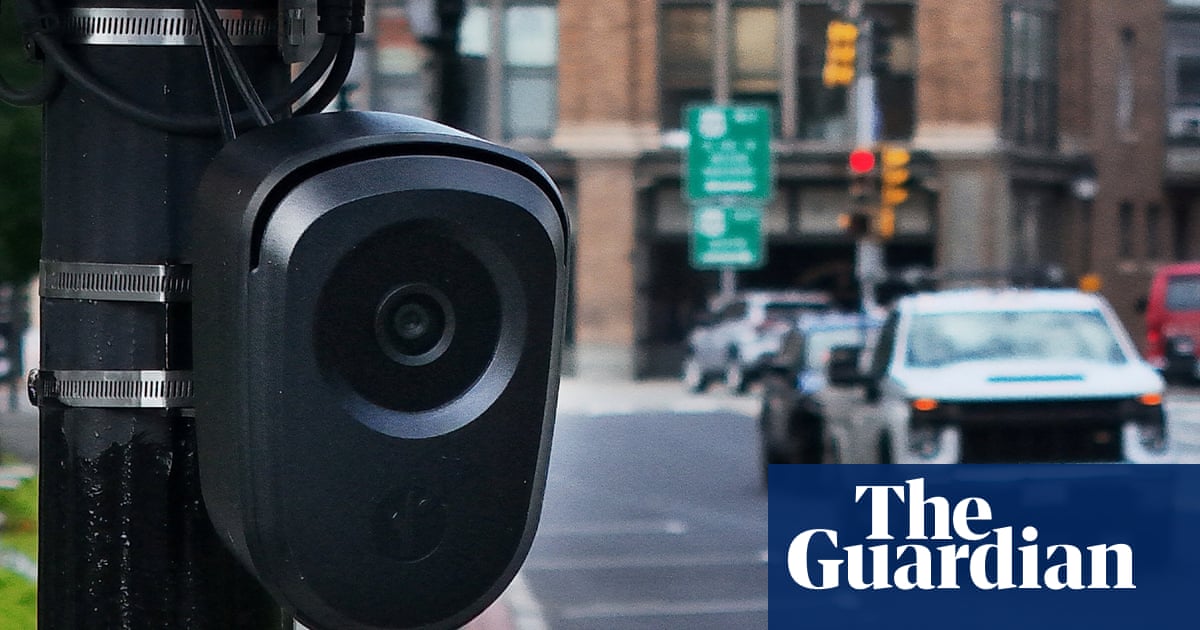
Flock's cameras are automated license plate readers that photograph plates so police and security companies can log the movement of cars in a given area.
Flock is facing controversy after reports of abuses of its cameras by police officers in multiple states, who used them to stalk ex-lovers and to track people seeking abortions.
The network the Flock cameras feed into is frequently utilized by US Immigration and Customs Enforcement.
Distinct publishers with included, body-backed reporting in this cluster.
1 article · September 5, 2026
Follow any of these and your For You feed starts watching them — no settings page required.
build
Flock cut retention to seven days and published the number that made 30 indefensible1 distinct publisher
product
Florida revokes every highway plate-reader permit with a memo signed by an assistant secretary1 distinct publisher
product
Flock cuts plate-read retention to seven days, and admits defaults beat policy7 distinct publishers
invest
A bipartisan push against Flock puts 6,000 municipal renewals in play1 distinct publisher
Evidence-backed comparisons of source perspectives and observed adoption signals. Read the methodology
Which Builder, Operator, and Investor concerns the observed source mix emphasized—not a truth score.
Evidence, demonstrated adoption, hype gap, incentives, and confidence are assessed independently, each on its own current evidence. How these are measured.
One newsroom relaying other people's counts
Everything countable in this story reaches the reader through the Guardian. The opposition polling and the rise in Flock mentions are Washington Post work as summarised, the cancellation total is the Institute for Justice's tally, and the 120,000 cameras and 2bn monthly scans carry no attribution whatever. Flock did not answer, no department that runs the cameras is quoted, and the misuse reports are referred to without naming the states or the outlets that broke them.
Very wide install base, unmeasurable churn
The install base is the sturdiest thing here: roughly 120,000 cameras, about 2bn scans a month, and an immigration agency described as a frequent user of the shared network. The counter-current is real but unquantifiable — 100-plus cancelled contracts and a state purchasing block on one side, no contract total to measure them against on the other, and the Guardian's own note that some councils simply buy a rival camera and carry on.
Uprising framing outruns its own polling
The backlash, described as a rare bipartisan uprising, polls at 46% opposition to plate readers in one's own community in the same piece, still a minority even after a 13-point jump. The datacenter analogy the Guardian reaches for sits 29 points higher in opposition. The strongest evidence of reversal, the cancelled contracts, is presented without a base, and the reporting concedes that scanning sometimes continues under a new label, showing procurement being reassigned while the scanning itself continues.
Advocates supply the quotes and the numbers
Nobody in this story has an interest in defending the cameras. The two policy analysts work for civil-liberties organisations, the law professor closes with 'it's up to all of us to stop them', the cancellation count comes from a non-profit rather than from public records, and DeFlock exists specifically to drive that count higher. Flock's silence leaves the vendor and police side of the argument unrepresented, so the reporting's direction and its sourcing point the same way.
Institutional facts firmer than the arithmetic
The verifiable-on-the-record parts hold up well: a named governor's purchasing block, a named senator's investigation, a named pair of cosponsors, a dated founding. The quantities are softer — an unattributed fleet count, relayed polling, a tally with no base — so the shape of the backlash is better established than its size, and the trajectory after publication is anyone's guess since the count is described only as 'so far'.