Science1 publisher3 min readPublished
Three captive-reared crocodiles stayed put after release into Bangladesh's Sundarbans
Murdoch University tracked five saltwater crocodiles by satellite for several months. The three that had spent 8 to 22 years in captivity settled into small areas, and the wild male moved 132 km headed back.
The Scientist · Science desk
What happened
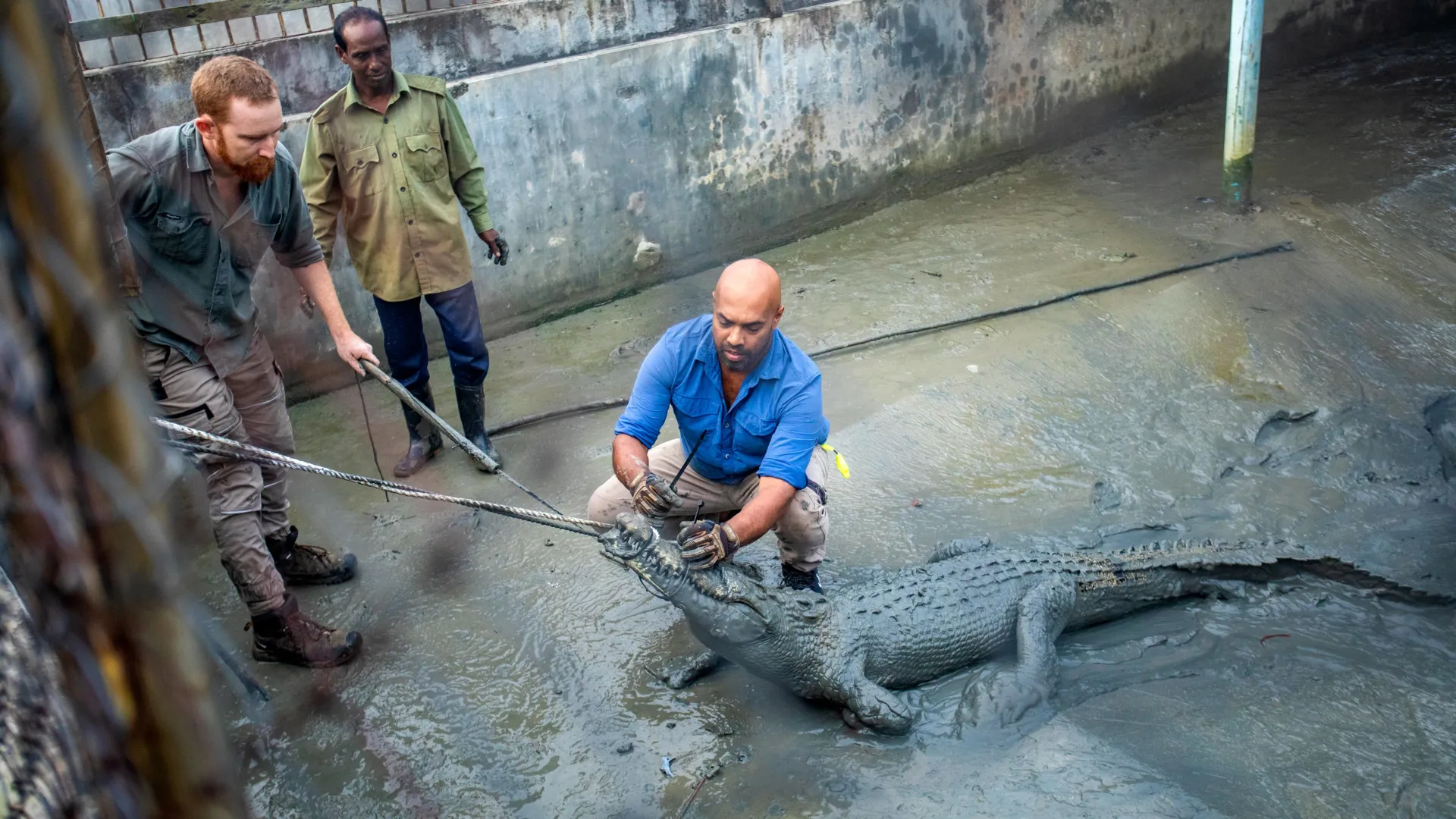
- Researchers fitted five mature saltwater crocodiles with satellite tags in Bangladesh's Sundarbans mangrove forest, one of the country's last major refuges for the species.
- Three of the five were captive-reared females that had spent 8 to 22 years in captivity, and none of them showed signs of trying to return to the breeding facility where they had lived.
- Somaweera said the three settled into small, well-defined areas and moved much like the local wild crocodile that was caught and released at the same site.
Compiled by The ScientistSomething wrong?How this is made
Why it matters
- decision Programme designers weighing hatchling releases against adult releases can drop homing as the reason to rule the adult option out, and choose on survival and cost instead.
- constraint Three animals from one facility cannot set a release size or a stocking rate, and the tracking window closes before anyone can count whether the released females survive to nest.
- exposure Managers who deal with problem wild adults by moving them get no comfort from this work: the one translocated animal was still orienting toward the place it was taken from.
- precedent If the finding holds at larger numbers, breeding centres holding surplus adults become a source of restocking animals, and their long-held stock acquires a use it did not have.
Homing is the specific reason relocation tends to fail with crocodilians. Ru Somaweera, the behavioural ecologist and adjunct associate professor at Murdoch University, worked on the study. "Crocodiles are remarkably good at finding their way home, often returning to their original capture sites and limiting the success of relocation programs," he said [8][14]. The narrower question here was whether an animal that has known only an enclosure for years treats the enclosure as the place to go back to. "If crocodiles who are bred and raised in captivity subsequently return to their enclosures or breeding facilities after being released, attempts to reintroduce them into the wild as part of conservation efforts will ultimately fail," Somaweera said [10].
The five tags were doing different jobs. Three went on the animals of interest, captive-reared females with 8 to 22 years of captivity behind them [2]. A fourth went on a local wild crocodile caught and released at the same site, which shows what resident movement looks like in that stretch of mangrove [2]. The fifth went on Jongra, a wild male moved about 132 km from his home [6]. He did what a homing crocodile is expected to do: he covered more ground each day than any other animal tracked, ranged over an exceptionally large area, and logged single days of more than 30 km, all oriented toward his capture site [7].
At his fastest recorded day, 132 km is a little over four days of travel, and the tracking ran for several months without him arriving [16][3][7].
The population these animals joined is small. The most recent survey put the Sundarbans at 140 mature individuals [12], so three mature females is an addition of roughly 2 percent [15]. Bangladesh has protected the species since 1973 and the numbers have shown no measurable recovery [11].
Murdoch University's summary says the result suggests that releasing larger, mature captive crocodiles could help restore depleted populations more successfully than relying only on vulnerable hatchlings [18]. That case rests on two things. One is Somaweera's account of current practice: "The traditional approach has been to use hatchlings in reintroduction programs, but their survival rates are extremely low and they take a long time to reach reproductive maturity" [9]. The other is three animals that never headed for the facility [4]. No hatchlings were tracked alongside them, so the two approaches have not been compared on the outcome a population depends on, and the Murdoch account reports movement and home ranges only [20].
One caution about the internal contrast: the three settled animals were female and Jongra was male, so sex and displacement history vary together across that comparison [2][6]. The design does support two things. Eight to 22 years of captivity left these three females with no detectable pull back to the breeding centre [4]. They moved like the resident wild animal instead [5]. Somaweera said that "understanding whether larger, captive-bred crocodiles can be used instead represents an important knowledge gap" [17].
What to watch
- Whether any of the three released females nests in the wild, which is the outcome a restocking programme is meant to produce.
- A tracked cohort that includes captive-reared males, since the only male here was the translocated wild animal.
- Whether Jongra reaches his original capture site after the tracking period reported by Murdoch University.