Product1 publisher3 min readPublished Updated
CivilGrid turns the three-day hunt for whose pipe it is into a subscription
Spark led a $26M round on the premise that buried-asset records can be bought once instead of chased per project. The one outcome number on offer comes from a customer's own study of paving it could have skipped.
The Product Desk · Product desk
What happened
- CivilGrid raised a $26 million Series A led by Spark Capital, with Afore, A*, Ford Street Ventures, SNR, and Energy Impact Partners, a fund whose limited partners include utility companies.
- Founder Josh Mackanic started the company in 2020 after a decade as an engineer at Pacific Gas and Electric.
- A utility the size of PG&E can see only the electric and gas lines it owns, while the water and sewer pipes crossing the same trench, and the records of where they sit, belong to other companies.
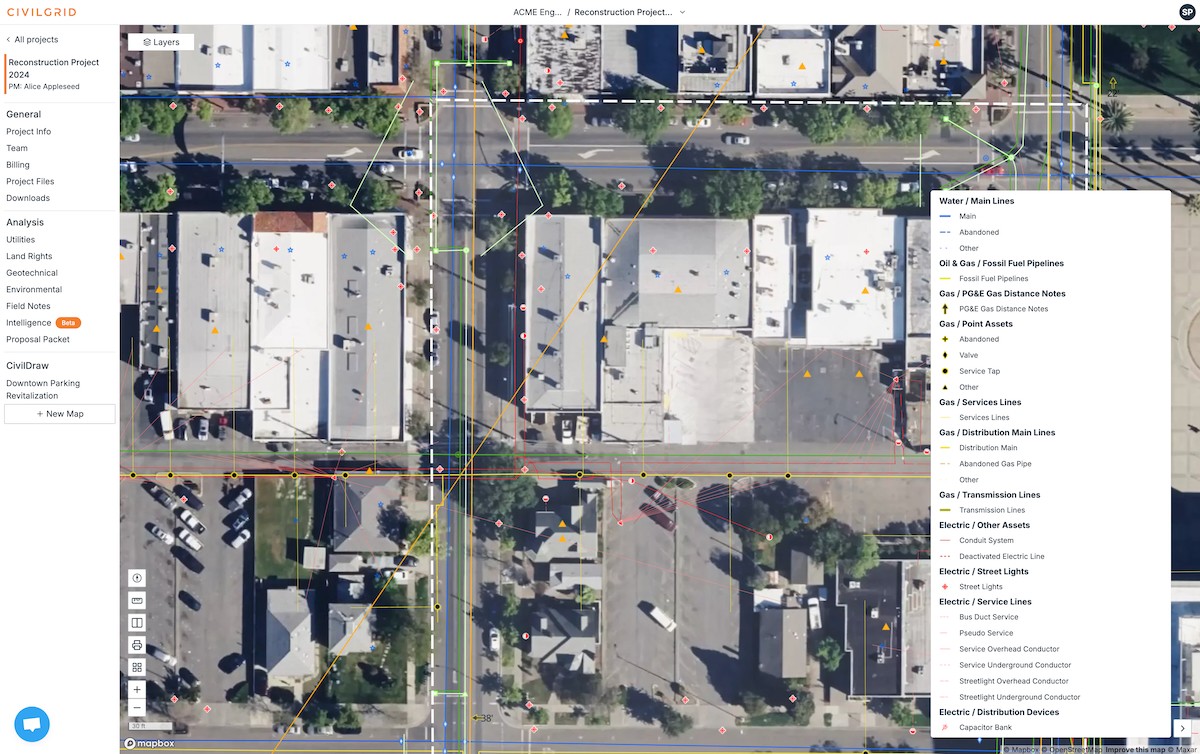
- CivilGrid bundles utility asset records, property ownership and environmental regulation into one map and sells access to governments, civil engineering firms and utilities, PG&E among them.
- A case study PG&E ran itself found $60 million in avoidable paving costs across 1,600 planned gas distribution projects when the map was used during planning.
Compiled by The Product DeskSomething wrong?How this is made
Why it matters
- decision A buyer weighing a subscription against the status quo now has one price signal to argue from, and it is a utility's own estimate of paving it could have skipped, at roughly $37,500 a project.
- constraint Value is capped by coverage that has to be negotiated record holder by record holder, so what a county gets depends on whether its water and sewer owners ever handed over files, not on the software.
- exposure Moving from supplying constraints to recommending alignments and filing permits puts the vendor's opinion into the approval record, and a purchase order written for reference data does not say who eats a bad recommendation.
- precedent A utility-backed fund writing a cheque here makes renting the aggregation, rather than staffing it internally, the expected posture for the next utility asked the same question.
Josh Mackanic's founding story is a phone-call story. An unrecorded pipe turned up in one of his excavations at PG&E, and establishing who owned it and whether the crew could tap it took three days and $60,000 in delay [2]. The search, not the shovel, is the unit of work CivilGrid is priced against.
Which makes the choice of outcome number worth a second look. The savings PG&E identified are paving costs, spread across 1,600 planned gas distribution projects [8], which works out to roughly $37,500 a project [9]. That is money saved at the planning desk, not in the trench. The account does not explain the mechanism by which the map produces a paving saving, and the study was run by the same customer that supplied the endorsement quote, from PG&E's Christine Cowsert [7]. No customer count, renewal figure, or measured change in strike rates appears anywhere in it [14]. Treat it as a live utility doing arithmetic on its own pipeline: more than most Series A decks carry, less than an independent result.
Here is what teams tell themselves they are buying: strike prevention, because 200,000 strikes a year is the harm in the pitch [4]. Here is what somebody will actually open it for on Monday: deciding where the pipe goes before the design freezes. Mackanic describes his core user as the person at the very early stages of deciding what gets built [11]. Field safety and pre-design engineering are different jobs, and in most utilities and engineering firms they are different budget lines.
The moat claim deserves close reading, because it is not a software claim. Mackanic says better subsurface visibility is not a new idea, and that what nobody had done was collect and secure the data and build relationships with the parties most likely to pay for it [12]. Coverage assembled that way is local. A dataset that is complete inside PG&E's territory tells a county three states away nothing about whether its own water district ever handed over a file. Note the ratio: the savings a single utility says it found are about 2.3 times the whole round [10]. If that holds anywhere else, the hard part is not finding buyers, it is getting the next record holder to open its drawer, which is roughly Mackanic's own argument for why utilities running lean would rather this came from outside [13].
Two axes settle whether this is a purchase or a demo. First, where your delay starts: in the pre-design question of what is down there, or in the field once the crew is already standing on it. Second, whether the record holders in your footprint, the water district and the county and the neighbouring gas utility, are actually in the dataset for the jurisdictions you build in. Both yes, and the subscription retires a recurring scramble that currently gets paid for in delay days. Either one no, and you are buying a very good map of somebody else's ground, then making the same phone calls.
What to watch
- A savings study from a customer other than PG&E, or one a buyer did not run on its own pipeline, would move the case study from anecdote toward evidence.
- Whether the permit-filing product ships, and what the contract says about who carries the error when a recommended alignment is wrong.
- Whether the utility limited partners behind Energy Impact Partners turn up as paying customers, not only as investors.