Product1 publisher3 min readPublished
Orano and the CEA say their Grenoble pilot line reliably makes N45UH magnets
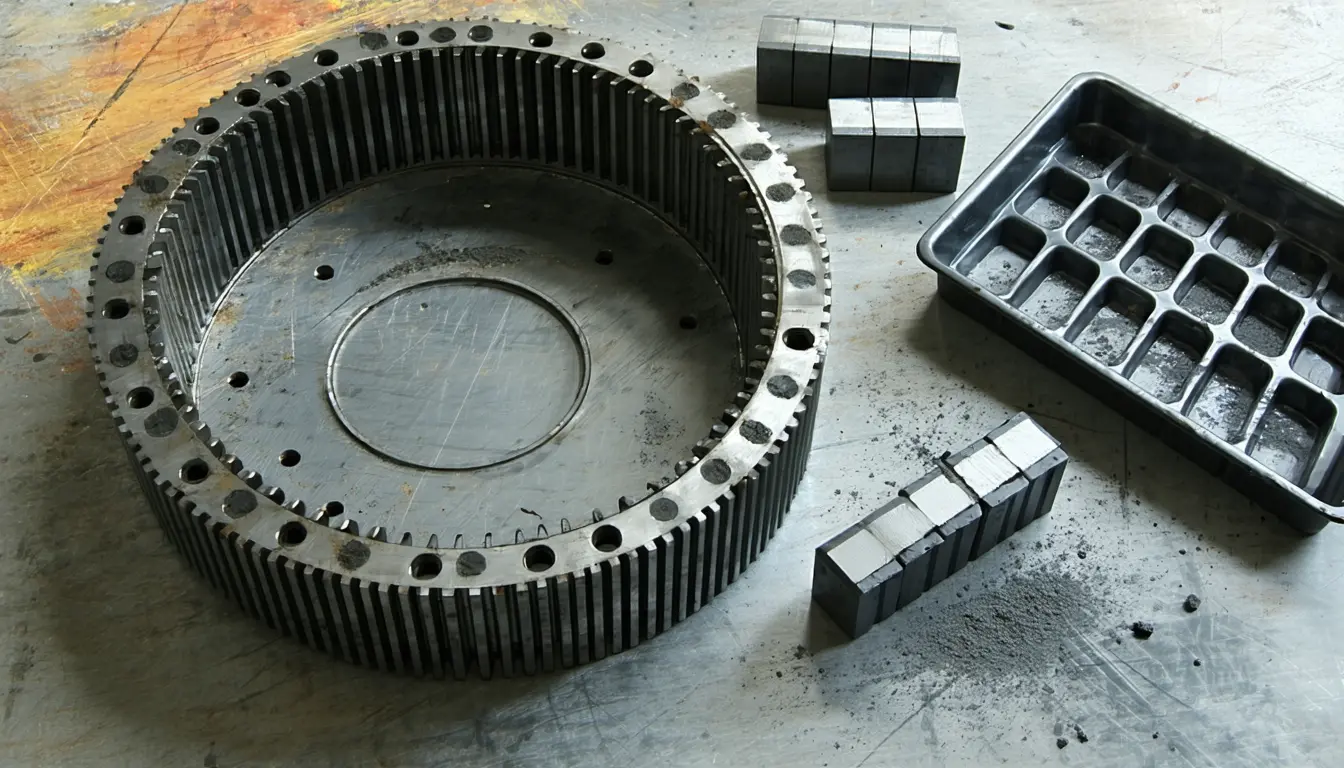
Orano and the CEA say a Grenoble pilot line reliably makes N45UH magnets, in an EU that gets 98% of its rare-earth magnets from China. Motor and actuator buyers can start tracking the process for qualification, but the industrial line has not been built.
The Product Desk · Product desk
What happened
- Orano and the CEA said their Grenoble pilot line has reliably produced N45UH-grade neodymium-iron-boron permanent magnets.
- The grade is aimed at motors, generators, actuators and magnetic sensors used in electric mobility, energy, robotics and defense.
- The partners say their next work is on process performance and on adding recycled raw materials, as they build toward future industrial production in Europe.
- The project sits inside two consortia, France's five-member Magnolia, formed in 2022, and the 14-member European Magellan group coordinated by Orano, formed in 2024.
Compiled by The Product DeskSomething wrong?How this is made
Why it matters
- capability Europe now has in-house process know-how for a heat-resistant grade that few players worldwide can make, so hot-running motor programmes have a local candidate to test once samples are available.
- constraint A magnet made in France can still depend on Chinese oxide, and the recycled feedstock meant to reduce that dependence comes from a stream recovered at under 1 percent.
- decision Only buyers whose parts need a UH-class grade and whose qualification window comes after industrial capacity exists have a reason to spend engineering hours on Grenoble now.
A sourcing lead at a European motor maker will probably have this story forwarded to them on Monday, along with a one-line question from upstairs: is there finally a second source? What Orano and the CEA published describes a pilot manufacturing process. The partners say the Grenoble line exists to support future industrial production capacity in Europe [9]. They did not disclose an output volume, a price, a customer or where the line's rare-earth oxide comes from.
The release shows one grade, made reliably, at pilot scale [1]. The partners' statement says the result confirms "the maturity of the process" [17]. Philippe Stohr, director of the Department of Energy at the CEA, was more measured. "The results achieved on this pilot line show that the ambition we set out a year ago is now close to becoming a reality with the successful production of this magnet grade," Stohr said [10].
Orano's stronger claim is about know-how. "Beyond the performance achieved in just one year, the key takeaway is that we now have mastery of every aspect of the manufacturing process," said Guillaume Dureau, Orano's senior executive vice president for projects and engineering [12]. According to the coverage of the release, only a small number of players worldwide have the full range of expertise needed to make these magnets [7].
A buyer's exposure sits upstream of the magnet. Stohr described the platform as part of a French chain that runs from rare-earth refining to finished magnets [11]. China produces about 95 percent of the world's rare-earth oxides and supplies 70 percent of Europe's rare-earth imports, according to World Economic Forum figures for 2025 [6]. That means a magnet made in France can still start out as Chinese oxide. Recycled input would reduce that dependence, but rare-earth recovery rates are below 1 percent [8]. The gap in scale is also wide. Suppliers outside China cover about 2 percent of EU rare-earth magnet demand [16].
I would sort the Monday answer on two axes. The first is heat. N45UH is designed for parts that run hot [3], so the buyer this line is aimed at is a team whose motors or actuators need a UH-class grade. The second is timing: does your next supplier qualification fall inside your current supply plan, or after a European industrial line exists?
Take hot parts first. If the qualification window comes later, early contact makes sense. Asking the partners for samples and a qualification path costs engineering hours spent on a supplier with no disclosed volume. In return, the team finds out early whether Grenoble material passes its own tests. If the decision is due now, the supply plan stays as it is, and that 2 percent share is the whole of the non-Chinese option [16].
For cooler parts, on either timeline, the release covers a single grade [1]. A team that doesn't need UH-class heat resistance has no result here to test against. I'd recommend that only hot-running programmes with a later qualification window spend time on Grenoble now.
What to watch
- An Orano-CEA announcement of a site, capacity figure or start date for an industrial magnet plant in Europe.
- A named customer or offtake agreement for the magnets, from inside the Magnolia and Magellan consortia or outside them.
- Performance results from the line once recycled raw materials are part of its feedstock.