Invest1 publisher3 min readPublished
Strip out TSMC and the rest of the TAIEX rose about 58% this year
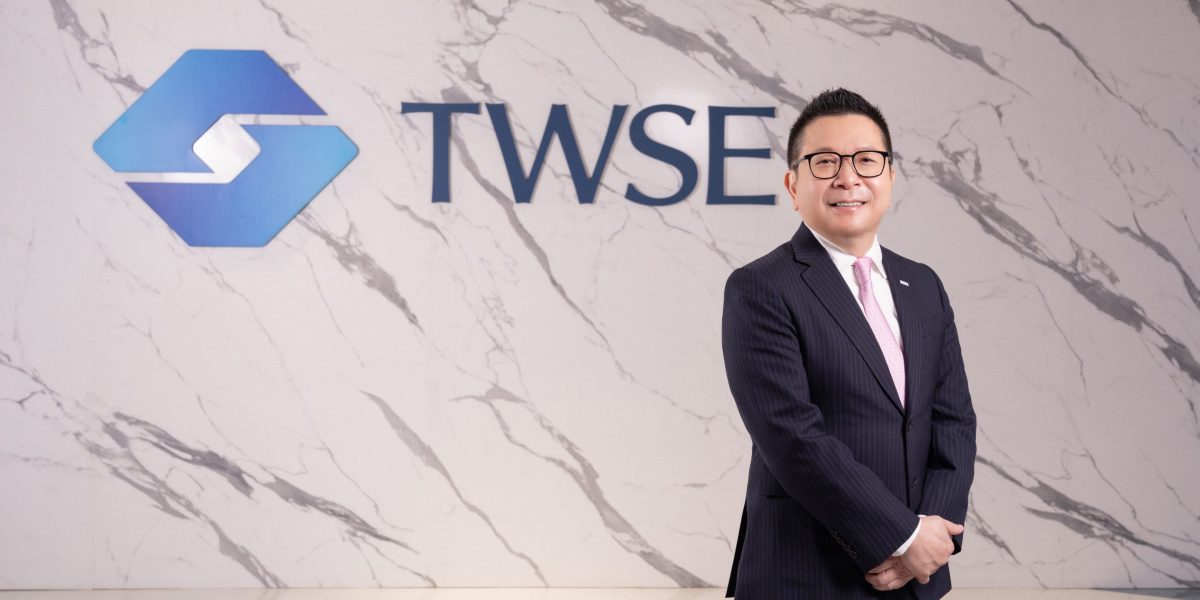
Sherman Lin, chair of the Taiwan Stock Exchange, wants the benchmark broadened past the chipmaker that is 40% of it. The other 60% already outran TSMC this year, and most of it sells into the same AI cycle.
The Investor · Invest desk
What happened
- Taiwan became the world's fifth largest stock market by total value in May, behind only the U.S., mainland China, Japan and Hong Kong, according to Bloomberg calculations.
- Taiwan raised $3.3 billion over 70 IPOs last year, a record for its exchanges, against $37.4 billion over 119 deals in Hong Kong in the same period.
- Lin's suggestion of longer trading hours was knocked down by Taiwan's top regulator as "not a priority", and the market still closes at 1:30 PM.
Compiled by The InvestorSomething wrong?How this is made
Why it matters
- constraint At about $47 million a listing, a record IPO year adds too little new value to shift a benchmark where one company holds 40%, so the exchange's diversification depends on the prices of companies already listed.
- exposure Adding more AI supply chain names lowers the single-name weight while leaving index holders exposed to the same order book that sets TSMC's earnings.
- decision Lin's three-year estimate for the AI window dates the deadline for his governance push, and it forces a choice about whether the exchange spends that window courting listings or pressing existing companies on payouts.
- contradiction The return data cuts against the single-stock reading of Taiwan's ascent: the 40% holding trailed the index it dominates, so the rest of the market carried the larger share of the gain.
Take the benchmark's year apart. A 40% holding that rose 50% contributed about 20 percentage points of the TAIEX's roughly 55% gain [16], which leaves 35 points to come from the other 60% of the index, or a return near 58% on everything that is not the chipmaker [17]. That calculation holds TSMC's weight at 40% [2] across the whole period, and a weight moves when the largest name lags, so 58% is an approximation and not a measured figure. It still points away from the concentration worry. TSMC supplied about 36% of this year's index gain while carrying 40% of the market value [18].
What Lin wants to add is the part worth arguing with. Fortune's Nick Gordon, who interviewed him by Zoom over the summer [4], reports that Lin and his colleagues are broadening Taiwan's appeal toward other companies in the AI supply chain, and toward "hidden champions", profitable companies in sectors that more electronics-focused investors may overlook [5]. The first of those lowers the single-name weight and leaves the demand cycle intact. "TSMC is undoubtedly Taiwan's most iconic company," Lin said. "But our real competitive advantage is not that we have one or two world-class companies. It's that we have the world's most complete and competitive AI ecosystem" [13][14].
The new-supply channel is small. Taiwan raised $3.3 billion over 70 IPOs last year, a record for the island's exchanges [6], which is about $47 million a deal [19]; Hong Kong raised $37.4 billion over 119 deals in the same period [7], about $314 million a deal [20], eleven times the proceeds on 1.7 times the deal count [21]. Deals that size do not move a denominator where one company is 40% [2].
That leaves the prices of companies already listed, which is what the exchange's "Power Up" governance program is aimed at, following Japan and South Korea [8]. Japan's push on transparent disclosure, share buybacks and the unwinding of cross-shareholdings helped lift that market to record highs [9].
The clock is Lin's own. He sees the AI rise as a chance for Taiwan to lift its profile, one that might run its course in three years [12]. How much of the agenda the exchange controls is a separate question: trading closes at 1:30 PM [10], and when Lin suggested longer hours, Taiwan's top regulator knocked it down as "not a priority" [11].
So the weight comes down, if it comes down, through a re-rating of listed non-TSMC names, on a governance program measured against a three-year window [8][12]. Two results would break that. A 2026 listing tally several times last year's $3.3 billion would make new supply a genuine channel [6]. So would a chip drawdown in which the hidden champions hold the index up, which would show the other 60% is diversified in substance rather than in ticker count [5][17].
What to watch
- Whether Taiwan's 2026 listing tally runs several times last year's $3.3 billion over 70 deals.
- Any sign Taiwan's top regulator revisits the 1:30 PM close after calling longer hours not a priority.
- Whether Power Up yields buybacks and unwound cross-holdings, or only better disclosure.