Invest1 publisher3 min readPublished
A Canadian exporter is stocking US warehouses against a tariff that has not arrived
Washington's duties of up to 50 percent now cover nearly $20 billion of Canadian goods, about $10 billion at the top rate. The Council of Canadian Innovators says one of its members is holding extra US inventory anyway.
The Investor · Invest desk
What happened
- The United States has imposed tariffs of up to 50 percent on nearly $20 billion worth of Canadian goods, according to Daniel Perry, director of federal affairs at the Council of Canadian Innovators.
- In CCI's latest CEO survey, 39 percent of respondents named access to customers as their greatest barrier to growth, placing it ahead of either capital or talent.
- Perry puts collective government purchasing at roughly 15 percent of Canada's economy and says Canadian procurement has too often been run as an administrative exercise.
Compiled by The InvestorSomething wrong?How this is made
Why it matters
- cost The hedge is paid whether or not the duty ever lands, because cash converted into US-warehoused stock is unavailable for payroll or product until that stock sells.
- constraint A published rate can be written into a contract; the possibility of a future executive order cannot, so exporters price with padding or shorten the terms they are willing to quote.
- decision Using 15 percent of the economy as an industrial tool would require Ottawa to buy on grounds other than lowest compliant price, and to defend those awards when it loses the cheapest bid.
A published rate is a line in a pricing model. The next executive order, investigation or negotiating tactic could land on any product, sector or technology. Daniel Perry, the Council of Canadian Innovators' director of federal affairs [2], wrote that pricing that possibility is much more difficult [5]. At the top rate the current list runs to roughly $10 billion of duty, half of nearly $20 billion [1][12]. That figure is knowable. Three months out, nobody can say what the rate will be, and Perry wrote that his members are asking which products might be hit next and whether digital services will be targeted [15].
"For scaling companies, uncertainty itself has become a tariff," Perry wrote [4].
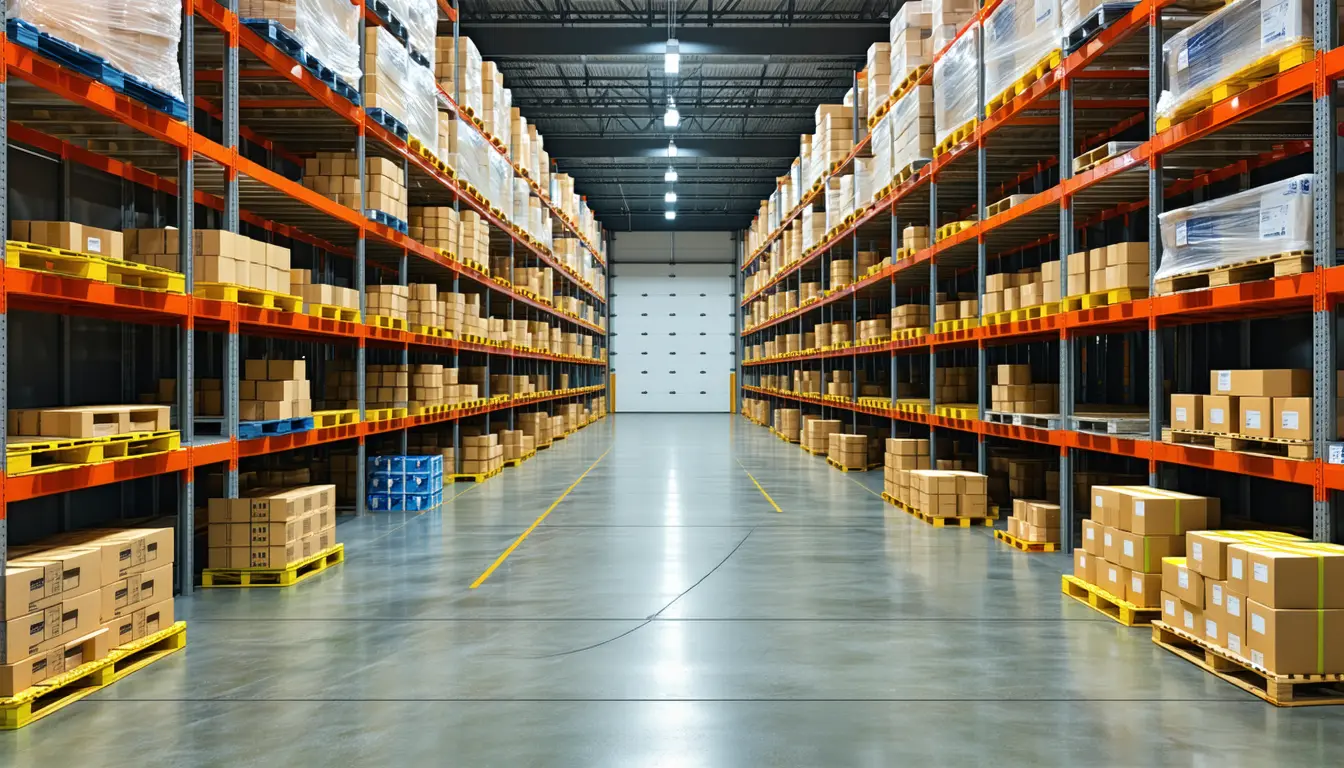
Inventory is the one behaviour in the piece with a balance sheet attached to it. One CCI member has been carrying additional stock in US warehouses although its products are not currently subject to a tariff. The company cannot confidently predict what the border will look like even months from now [3]. Perry does not name the company or give the size of the position [14]. Goods shipped early and parked in a US warehouse are already paid for. That money sits on a pallet instead of funding payroll, a sales hire or the next release. The premium on that policy is storage, financing and obsolescence on stock that may never draw a duty at all.
Perry points to procurement. Governments collectively buy goods and services equivalent to roughly 15 percent of Canada's economy [6]. He wrote that Canadian procurement has too often been treated primarily as an administrative exercise: define a requirement, run a competition, and purchase the compliant product at an acceptable price [9]. For a scaling company, he wrote, a government customer creates recurring revenue, validates the product in a demanding environment, and provides a reference customer that helps it sell elsewhere [10]. That ask rests on a survey number: 39 percent of respondents to CCI's latest CEO poll named access to customers as their greatest barrier to growth, ahead of either capital or talent [7]. Perry represents those CEOs, and a redirected procurement budget lands in their revenue lines.
He also widens the frame past this dispute. "What we are witnessing is not an aberration from an otherwise predictable international economic order," Perry wrote [8]. He listed tariffs, subsidies, procurement, regulation, investment controls and access to technology as the instruments major powers now use [13].
If Ottawa and Washington land an agreement that holds, the member who pre-positioned inventory paid for coverage it did not need, and the competitor that ran lean books a better quarter. If the uncertainty premium goes into US price lists, the American buyer pays it and the exporter's margin survives. And if customers are the binding constraint for 39 percent of these CEOs [7], trade defence that preserves existing US access leaves that constraint exactly where it was. Perry half concedes that when he writes that new markets cannot replace the United States overnight [11].
In my view the hedging is real and the aggregate is small: the evidence here is one anonymous warehouse and one survey question [3][7], not a capex series. The claim weakens if members unwind those US inventory positions the week a deal is signed, and it weakens further if CCI's next survey moves capital or talent ahead of customers.
What to watch
- CCI's next CEO survey, and whether access to customers stays ahead of capital and talent at 39 percent.
- Whether members unwind their US inventory positions once a Canada-US agreement is signed.
- Any Canadian procurement reform that buys on grounds other than lowest compliant price.